A Year in the District: What DC Street Photography Taught Me
Street photography has a way of turning time into evidence. Not proof in the legal sense, but proof that something felt a certain way. Over the past year, walking the streets of Washington, DC with a camera, I’ve learned that street photography isn’t really about decisive moments. It’s about living with uncertainty long enough that meaning eventually shows up.
The city taught me that lesson again and again.
Power, Proximity, and the Mask
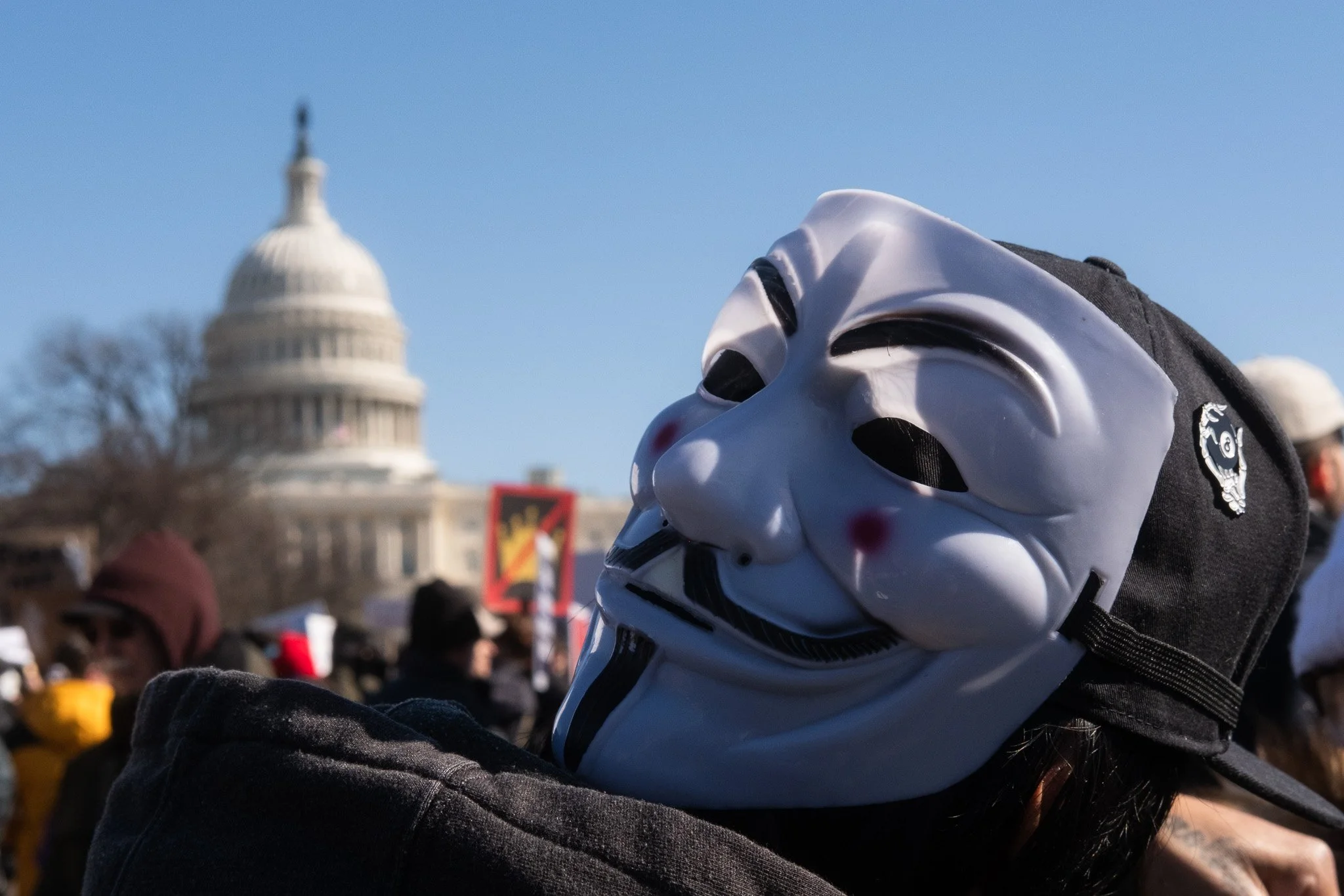
An Anonymous mask at a DOGE protest at the US Capitol in 2025.
One image from the year stays with me: a masked figure in the foreground, the U.S. Capitol soft in the distance. The mask—anonymous, theatrical, slightly unsettling—floats between observer and institution. In DC street photography, symbols are never subtle. Power is architectural. Dissent is visual. Meaning is layered whether you want it to be or not.
Street photography in Washington, DC forces you to confront scale. Individuals constantly exist in conversation with monuments, ideologies, and history itself. Photographing that relationship taught me restraint. You don’t need to explain everything in the frame. Let the symbols argue with each other.
Performance as Public Language
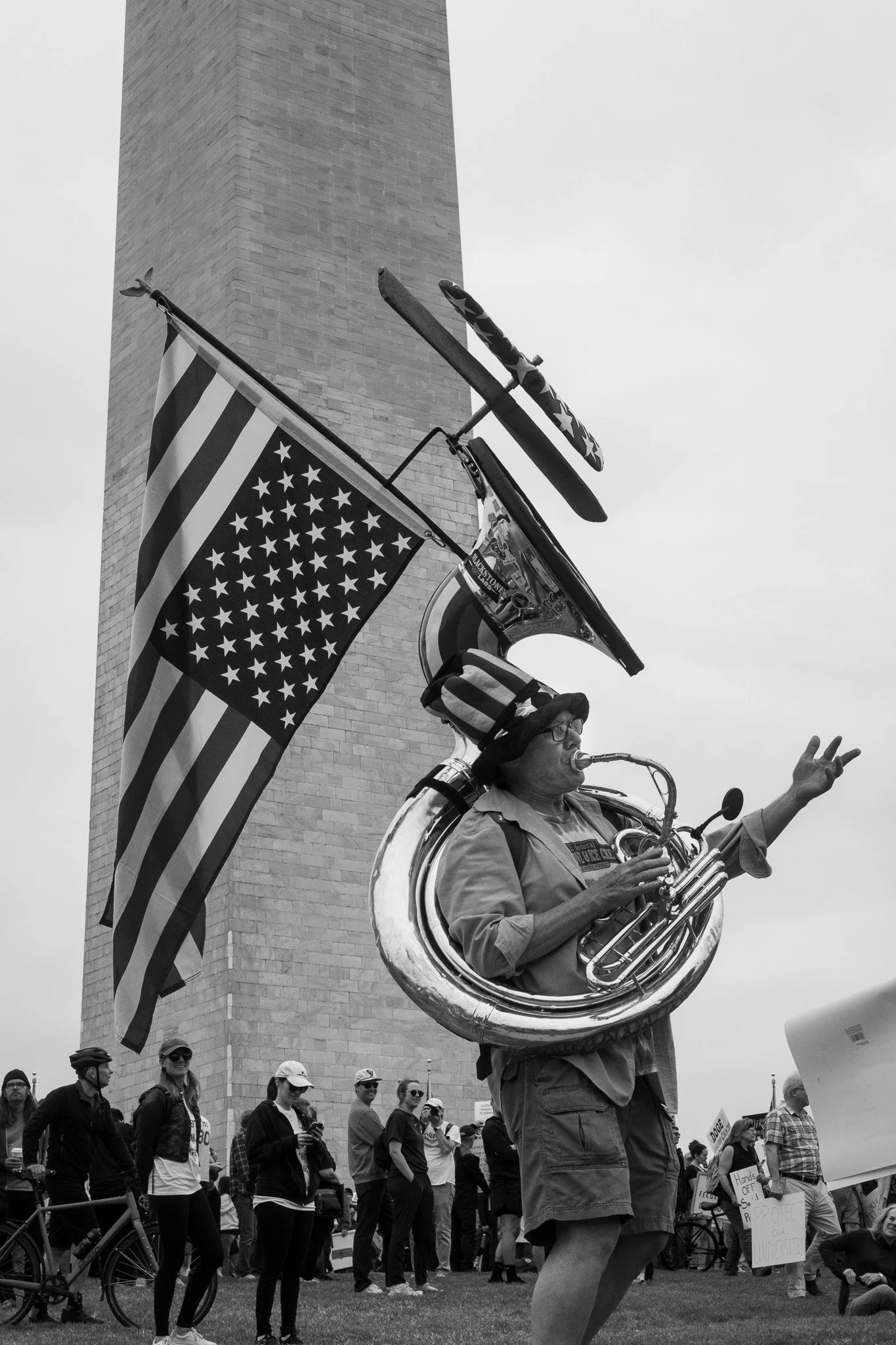
A performer at a political protest at the Washington Monument, 2025.
Another moment unfolded near the Washington Monument: a sousaphone player mid-gesture, American flag unfurled behind him, passersby orbiting the scene. It felt less like a performance and more like translation—music turning public space into something communal, if only for a few minutes.
Street photography taught me to pay attention to these temporary stages. Cities are full of unscheduled performances. Someone always steps forward to fill the silence. The photographer’s job isn’t to direct the scene, but to recognize when the ordinary slips into something expressive and ephemeral.
Quiet Fireworks, Private Moments
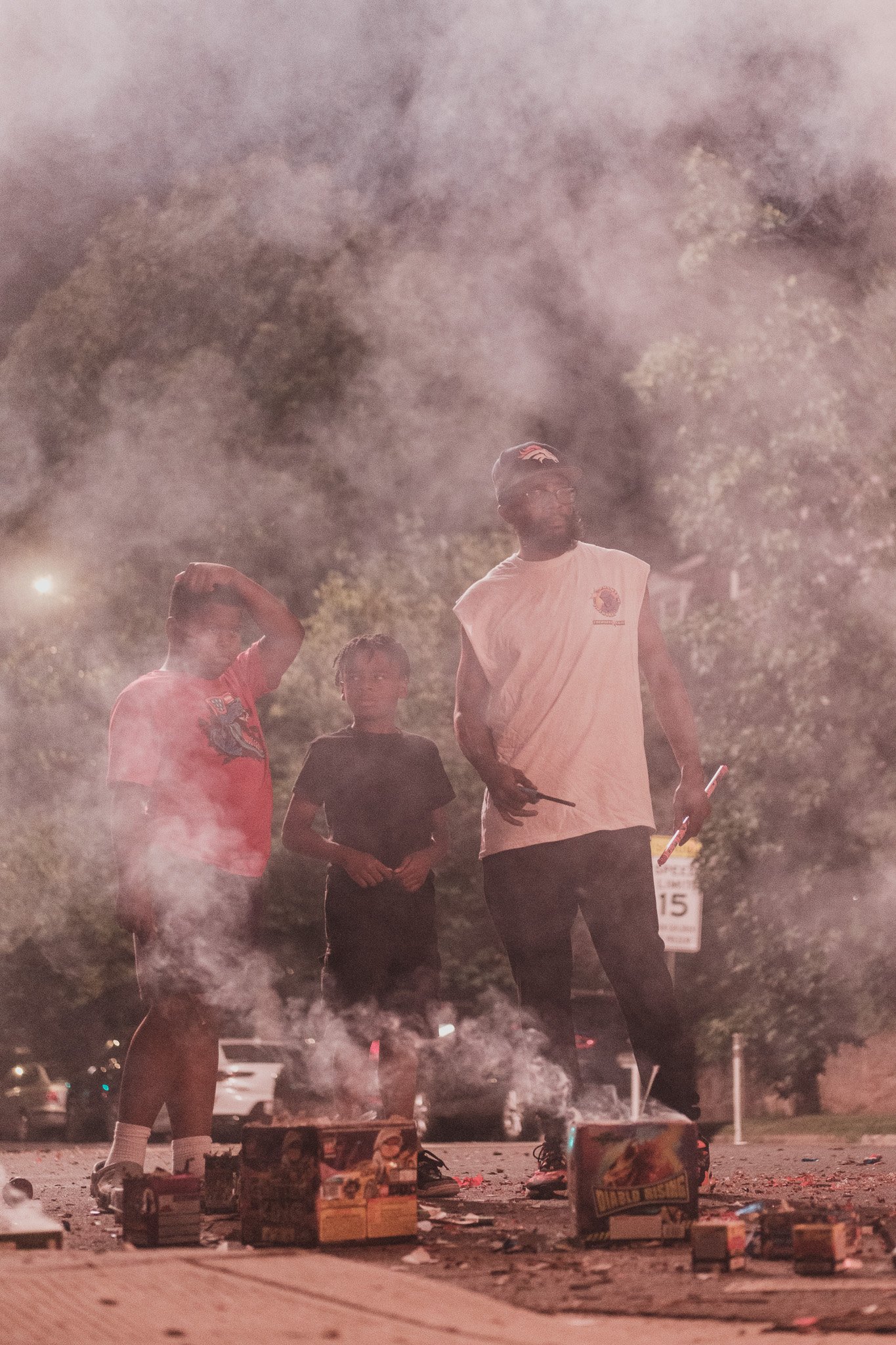
A Capitol Hill Fourth of July street celebration.
The most personal image from the year wasn’t dramatic in the traditional sense. Three figures standing in the haze of spent fireworks on a residential street. No monuments. No spectacle. Just smoke, light, and a small family moment unfolding after the noise had passed.
Street photography sharpened my sensitivity to these quieter scenes. Not every photograph needs a crowd or a headline. Sometimes the most honest images happen after the event, when people are still processing what just occurred. The city exhales. Life resumes.
What the Streets Actually Teach You
Over time, DC street photography taught me a few durable lessons:
Patience matters more than speed. The city repeats itself, but never exactly the same way.
Context is everything. A gesture means one thing on an empty block and another when framed against history.
Empathy sharpens vision. The more you respect your subjects, the more clearly you see them.
Street photography isn’t about collecting images. It’s about learning how to stand in public space without needing to control it.
Closing Thoughts
A year of street photography in Washington, DC didn’t give me answers. It gave me better questions—and the patience to wait for moments that don’t announce themselves.
Cities change. People adapt. Symbols shift meaning depending on who’s holding them and who’s watching. Street photography, at its best, doesn’t freeze those changes. It acknowledges them, quietly, one frame at a time.
The District taught me that the street is never just a backdrop. It’s an ongoing conversation. The camera simply listens.
If you need ideas for good street photography locations in Washington DC, check out this post.