Why I’m Creating a Street Photography Project About Chinatowns
Chinatowns keep refusing to behave.
That refusal—quiet, persistent, and deeply human—is the reason this street photography project exists.
As a street photographer, I’m drawn to places where life happens in the open, where the boundary between public and private space is thin and negotiable. Chinatowns embody that tension. They are not curated, sanitized, or optimized for easy consumption. They are lived-in neighborhoods where the street itself functions as a living room, workplace, and meeting ground.
Street Photography and the Power of Public Life
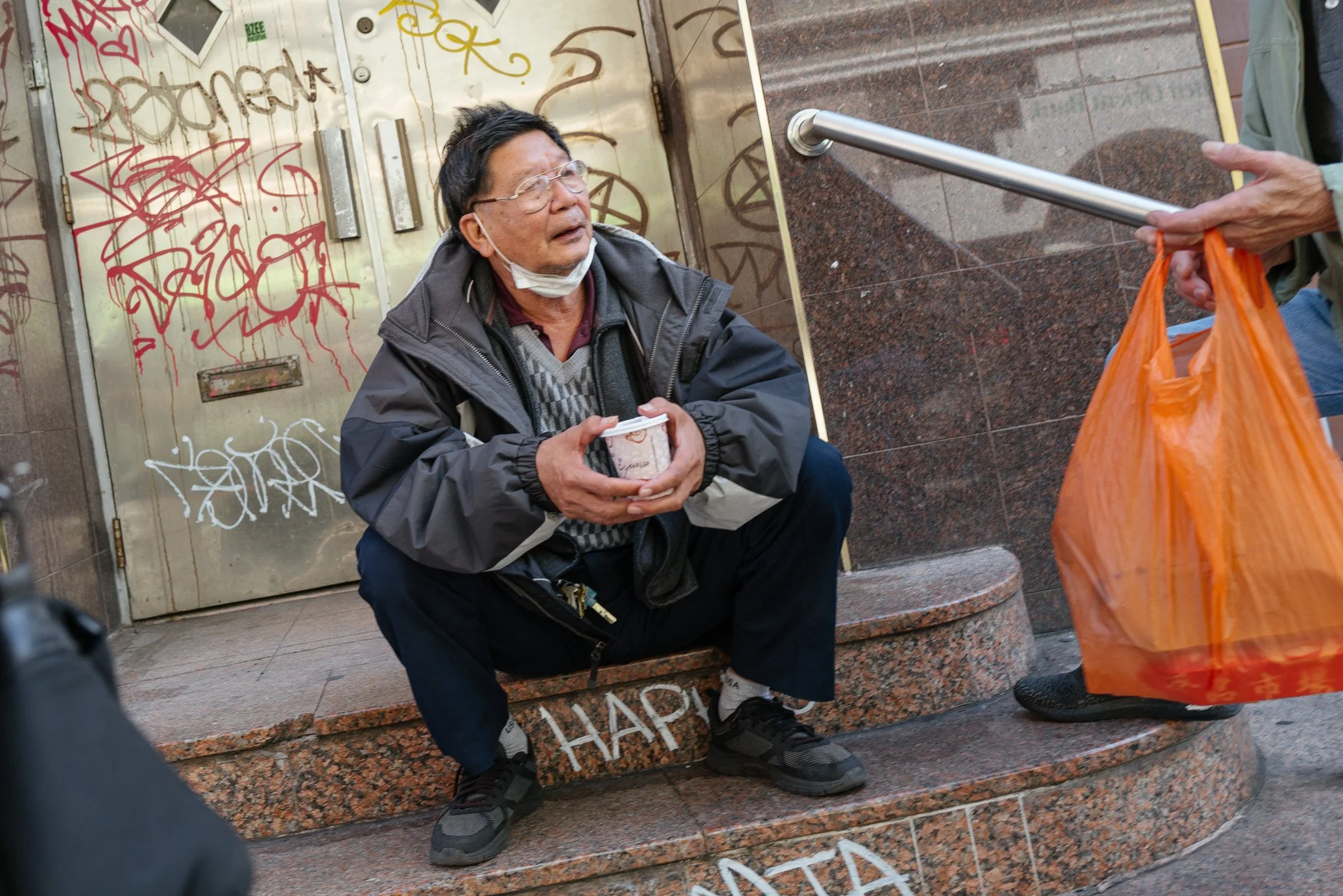
Street photo of a man sitting on the street in Manhattan’s Chinatown
In the first photograph, a man crouches on worn stone steps, a paper cup resting in his hands. Graffiti scratches across the metal door behind him. A passerby’s orange plastic bag cuts through the frame, unplanned but essential.
This is street photography at its core: unfiltered public life, unfolding without regard for aesthetics or permission. The subject is not performing. The city is not staging itself. The street is simply doing what it always does—holding people mid-gesture, mid-thought, mid-transaction.
Chinatowns amplify this quality. People linger. They sit where they can. They pause in shared spaces. The street becomes a place to exist, not just pass through.
Blurred Boundaries: Photographing Work and Labor in Chinatown
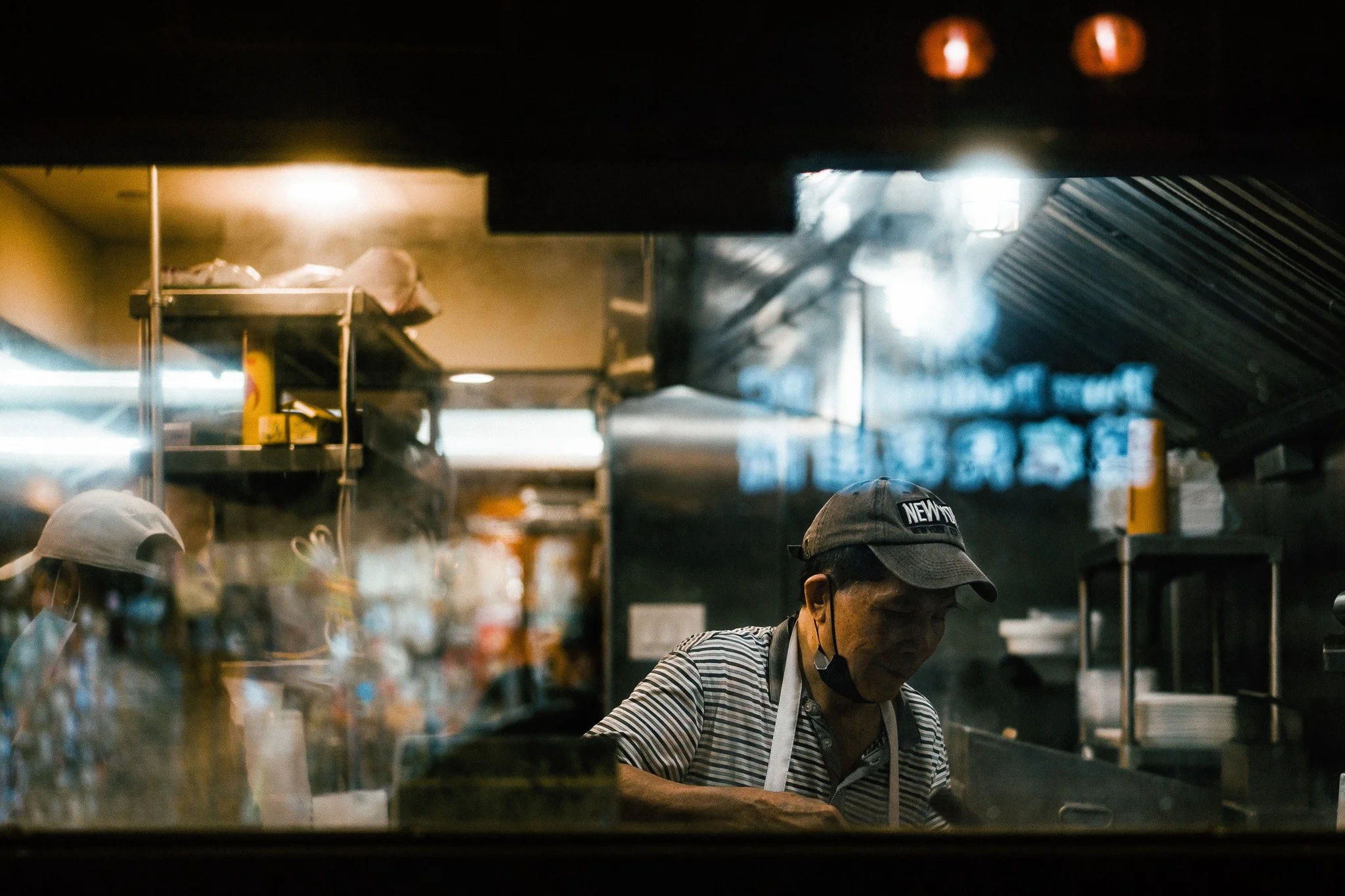
Street photo of a cook at work in Manhattan’s Chinatown
The second image moves indoors, but only technically. Shot through glass, the photograph captures a cook at work, surrounded by reflections, steam, and fluorescent light. The city presses in from both sides of the window.
For street photography, these in-between spaces are gold. Chinatown storefronts rarely separate labor from public view. Kitchens, counters, and workspaces bleed visually into the sidewalk. Even when the camera looks “inside,” it’s still documenting street life.
This permeability—between inside and outside, work and witness—is part of what makes Chinatown such a compelling subject for long-term street photography projects.
Night Streets, Lantern Light, and the Rhythm of Chinatown
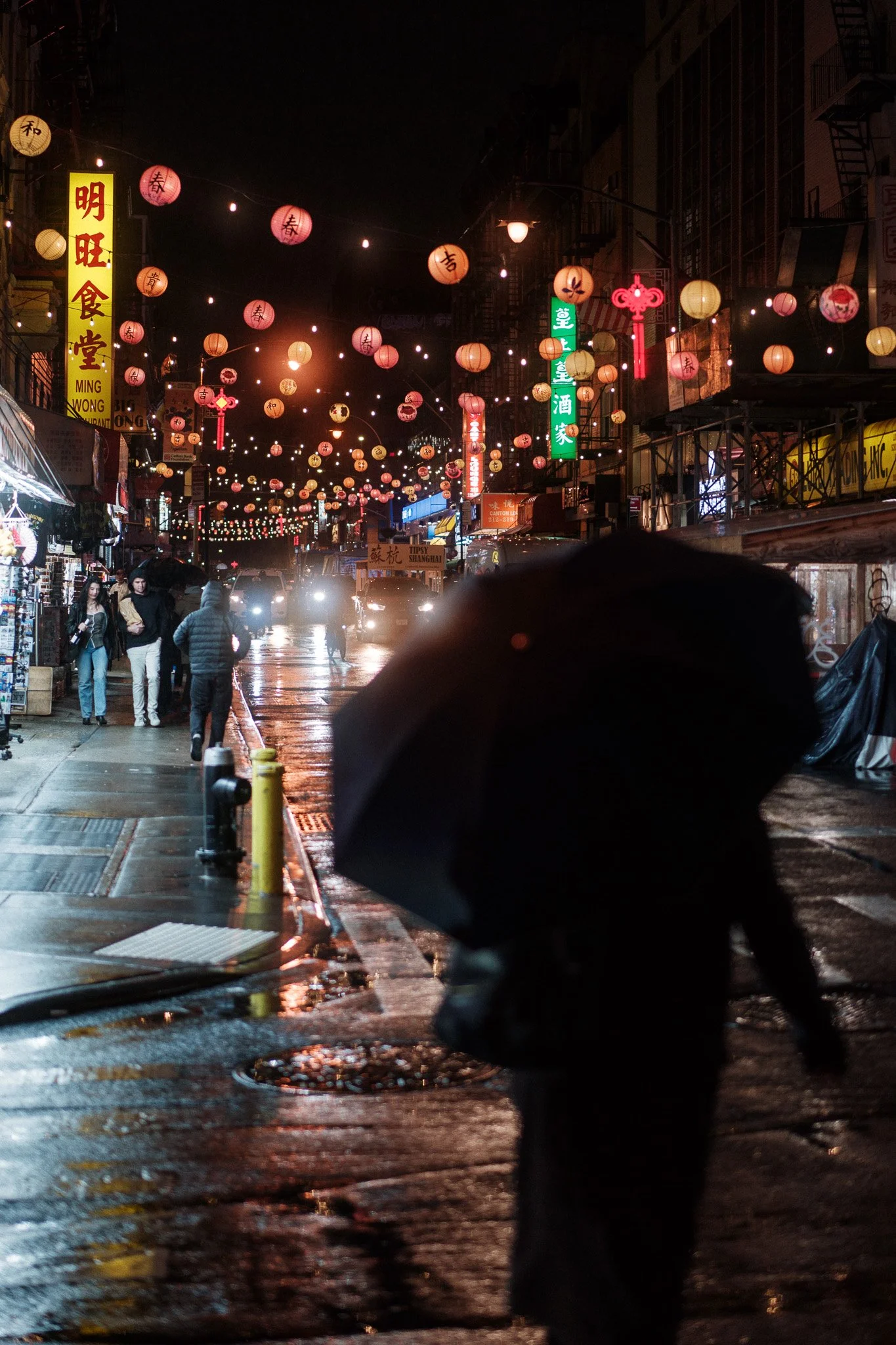
Street photo of a pedestrian walking under lanterns in Manhattan’s Chinatown
The third photograph opens outward again. Lanterns stretch across a rain-slicked street, glowing against the dark. Pedestrians move through the frame—some sharp, some blurred—each briefly intersecting with the scene.
Chinatowns do not shut down cleanly. They simmer. Light reflects off wet pavement, traffic hums, conversations continue late into the night. For street photographers, this rhythm matters. It creates layers: motion, reflection, repetition, and pause.
This is not spectacle. It’s continuity.
Why Chinatowns Matter to Street Photography
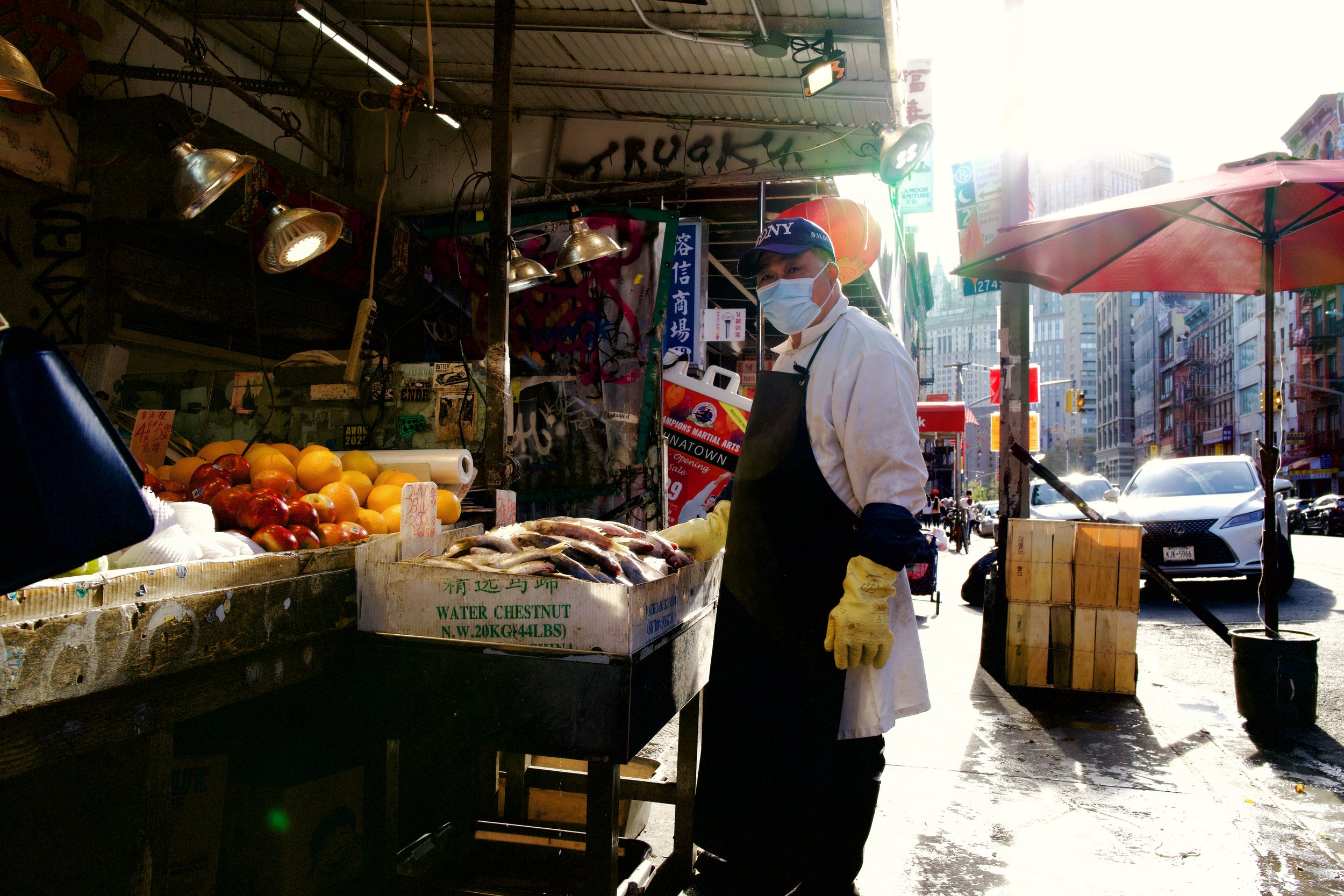
Street photo of a fish monger in Chinatown, Manhattan
Chinatowns resist simplification. They are dense with contradiction: tradition and improvisation, commerce and community, visibility and privacy. More life happens on the street than behind closed doors.
That’s why street photography thrives in Chinatowns. The camera doesn’t need to manufacture meaning. It only needs patience and attention. Meaning emerges through fragments—a glance, a reflection, a person resting on a step, a lantern-lit block after rain.
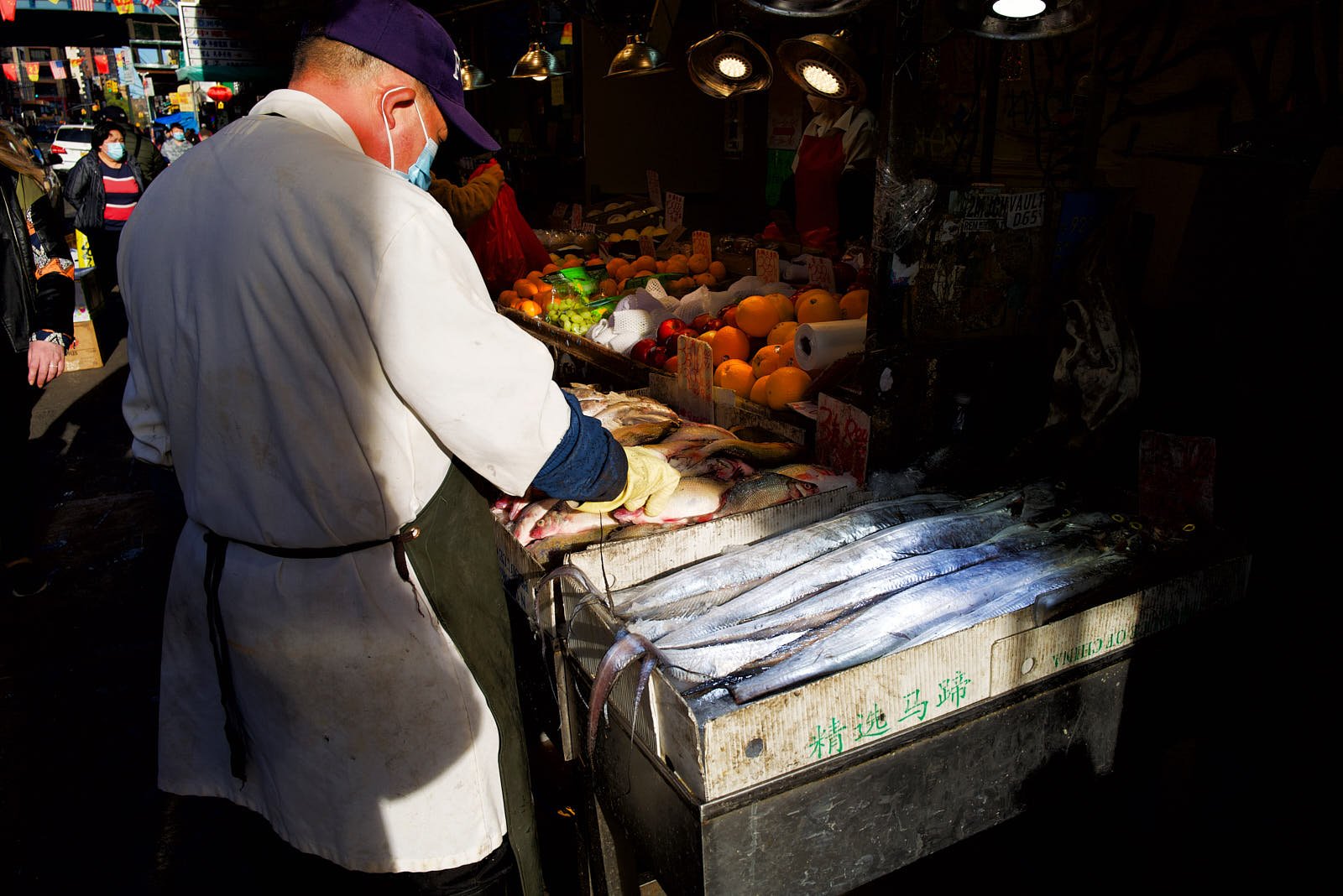
Street photo of light falling on a fish market in Manhattan’s Chinatown
An Ongoing Street Photography Project
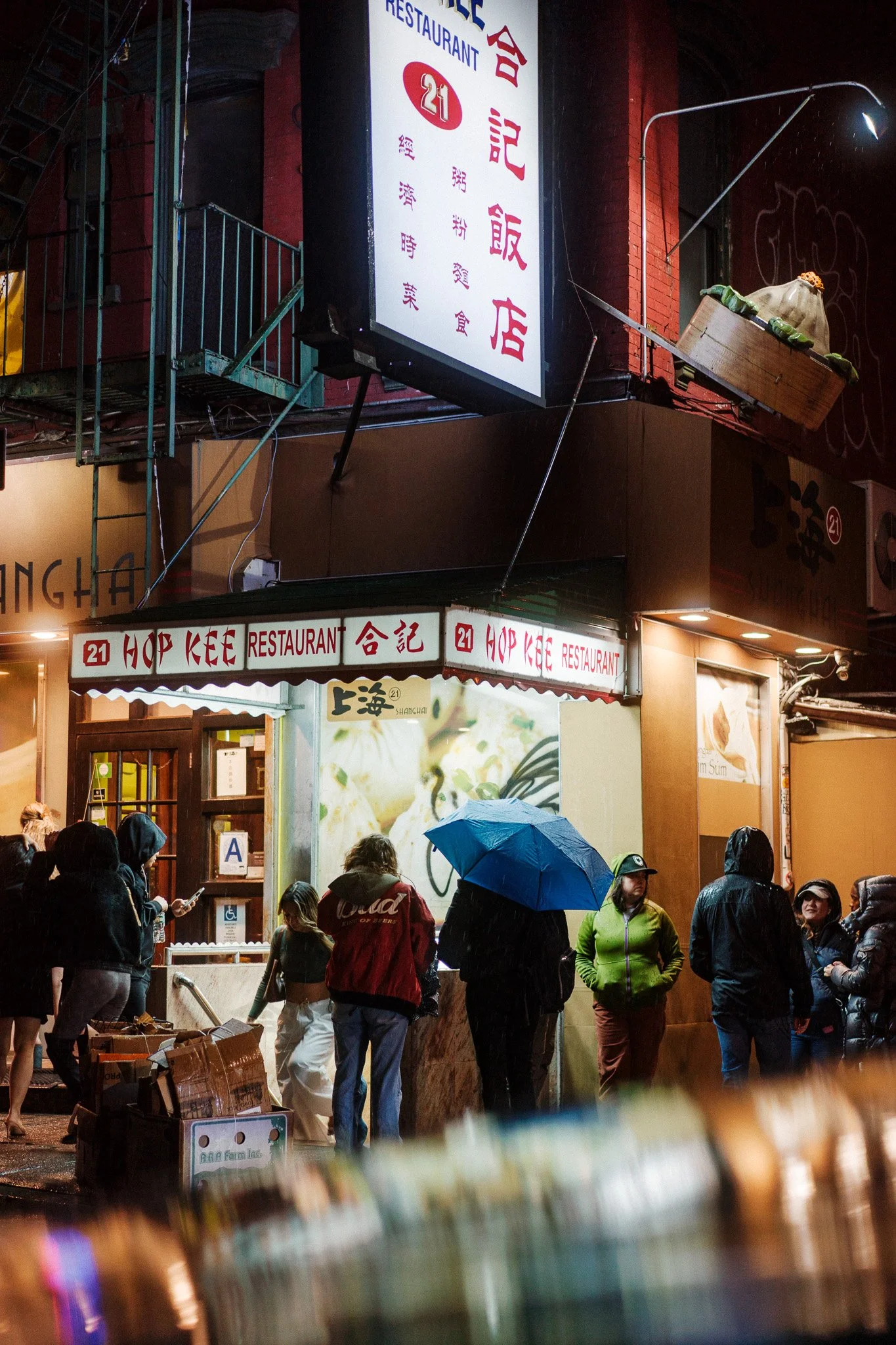
Street photo of a crowd at a Manhattan Chinatown restaurant
This project is my attempt to document what it feels like to walk these streets and sense that the city is still being lived in, in real time. Not romanticized. Not explained away. Observed.
Chinatown does not perform itself for the camera. It keeps going.
The job of the street photographer is simply to keep up.
If you need inspiration for a street photography project of your own, check out the ideas in this post.