Why Light Is Everything in Street Photography
Street photography is often described as being about people, timing, or chance. All of that is true—but none of it works without light. Light is the invisible structure holding every good street photograph together. It decides what we notice, what we miss, and what a moment ultimately means once it’s frozen into a frame.
In street photography, light is not something you control. You don’t place it, soften it, or move it. You encounter it. That constraint is precisely why it matters so much.
Light Shapes Meaning on the Street
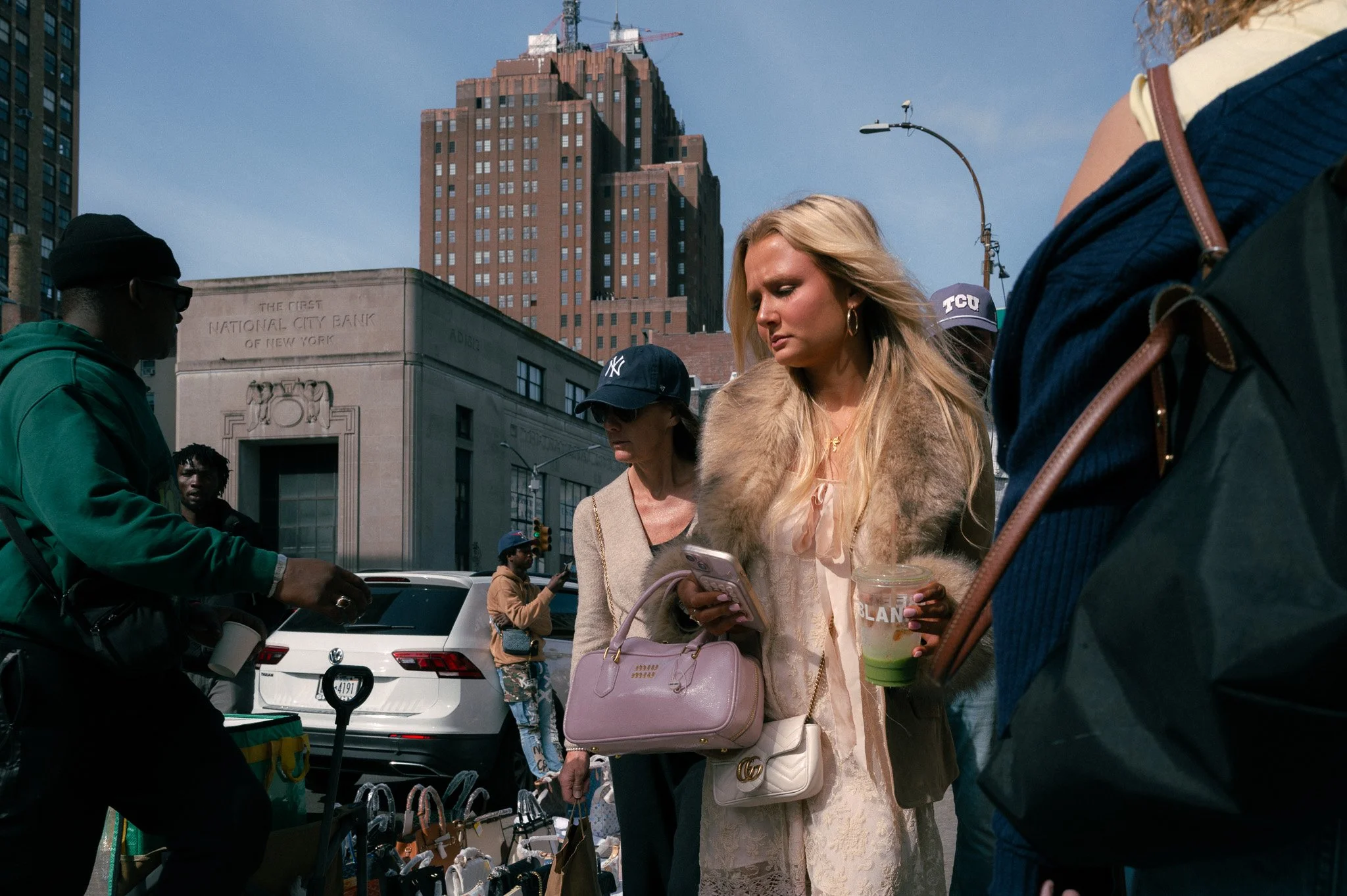
Street photo of a woman on a Tribeca street
Light tells the viewer where to look. A face emerging from shadow, a hand catching sunlight, a figure silhouetted against a bright storefront—these are not accidents. They are moments when light organizes chaos.
The street is visually loud. Signs, people, reflections, traffic, architecture all compete for attention. Good street photography uses light to impose order without staging. Light isolates subjects, simplifies scenes, and transforms ordinary gestures into something legible and emotionally resonant.
Without intentional awareness of light, street photographs often feel cluttered or flat, even when the moment itself was interesting.
Contrast and Shadow Create Drama
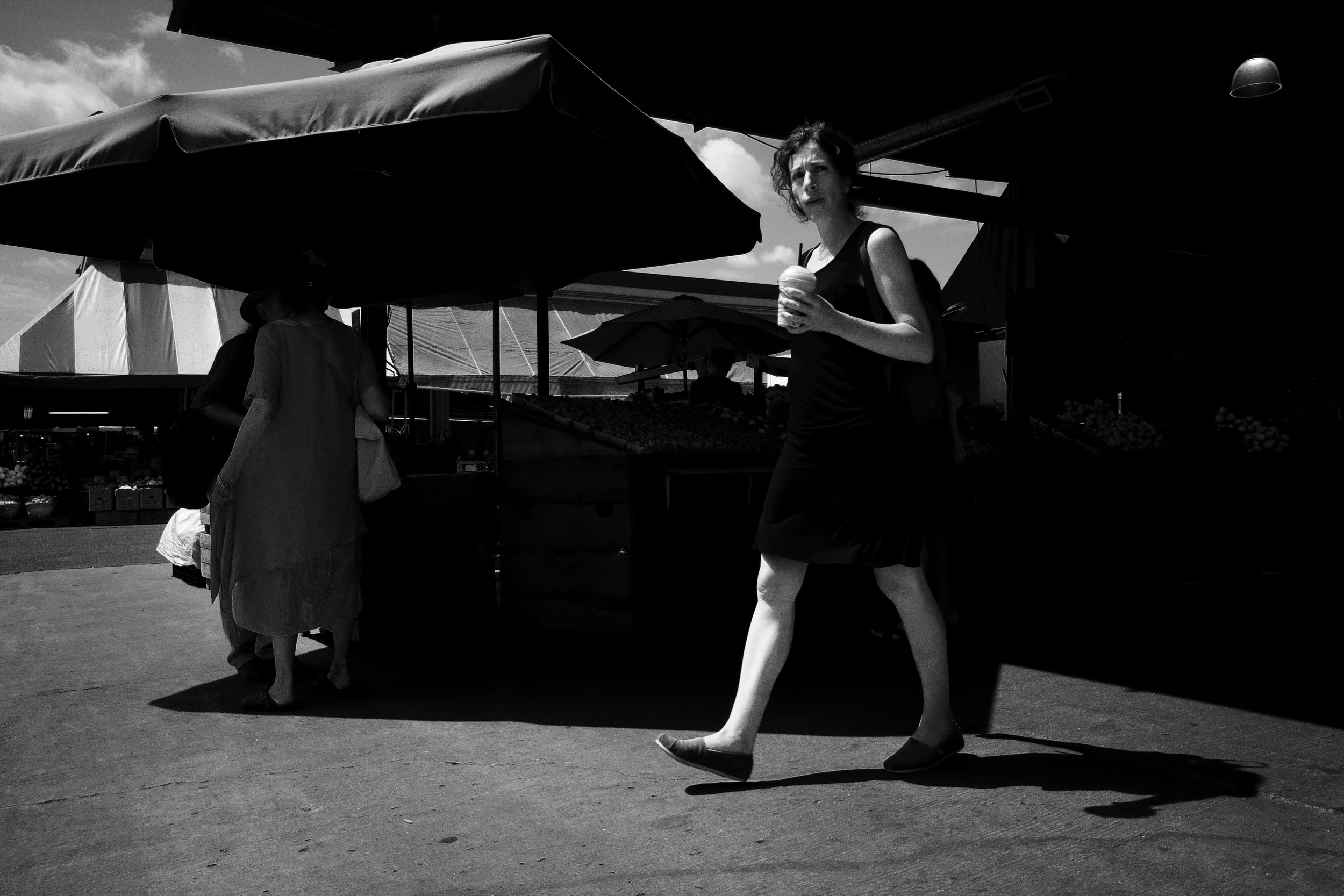
Street photo of a woman at a Montreal farmers’ market
Street photography thrives on contrast. Hard light carving deep shadows across sidewalks. Slivers of sun cutting between buildings. Pools of darkness interrupted by brief flashes of brightness.
Shadows are not empty space; they are active compositional tools. They hide information, create mystery, and heighten tension. A subject stepping from darkness into light feels like a reveal. A face half-lit invites curiosity.
This is why midday sun, often dismissed in other genres, can be powerful in street photography. Harsh light exaggerates contrast and turns the city into a grid of light and shadow waiting to be activated by human movement.
Light Reveals Gesture and Emotion

Street photo of a woman at a Washington DC protest
Expressions in street photography are often fleeting and subtle. Light amplifies them. Side light emphasizes texture and wrinkles. Backlight outlines posture and movement. Reflected light softens scenes that might otherwise feel harsh.
A gesture lit cleanly reads as intentional. The same gesture lost in flat light becomes visual noise. When street photographers talk about “seeing,” they are often really talking about seeing how light wraps around people as they move through space.
Time of Day Is a Creative Decision
In street photography, time of day is not a logistical detail—it’s a stylistic choice.
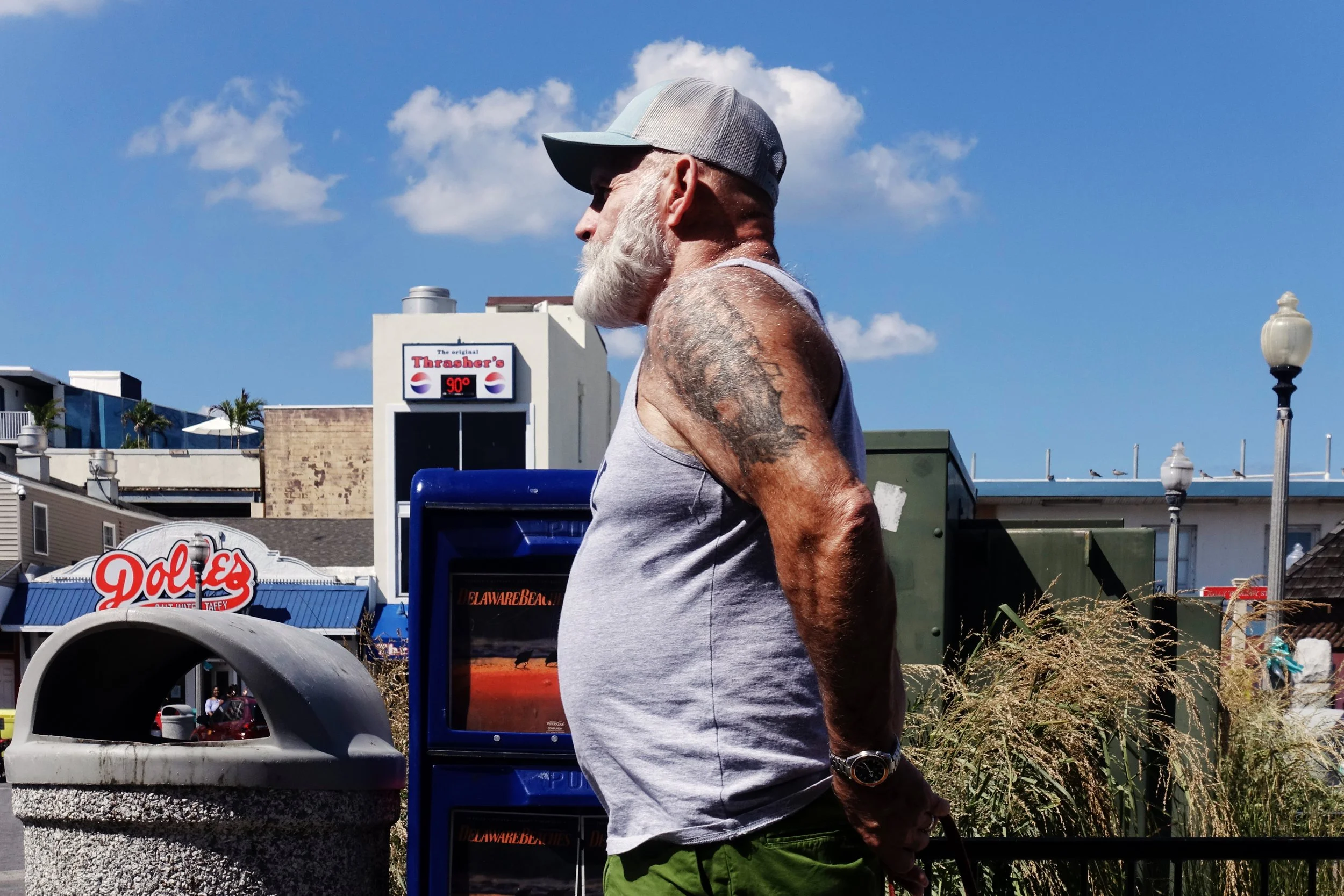
Street photo of a man near the Rehoboth Beach DE boardwalk
Morning light is directional and clean, separating subjects from their surroundings. Midday light is unforgiving but graphic. Late afternoon and golden hour introduce warmth and long shadows. Night replaces natural light with artificial sources—neon, streetlamps, storefronts—creating a completely different visual language.
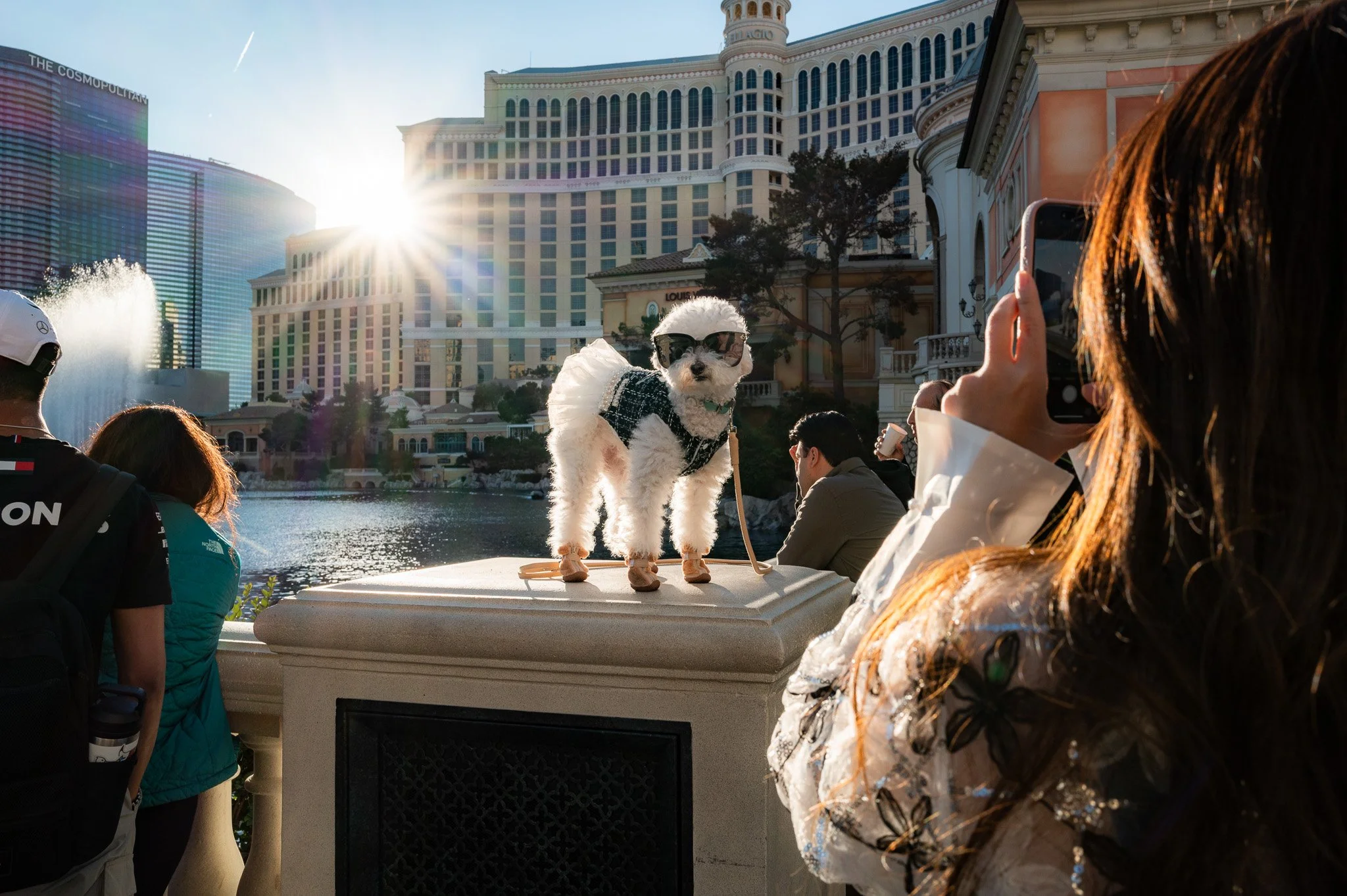
A woman photographs her dog on The Strip in Las Vegas
Each type of light changes how the street feels. The same corner photographed at noon and again after dark becomes two different worlds.
Artificial Light and the Modern Street
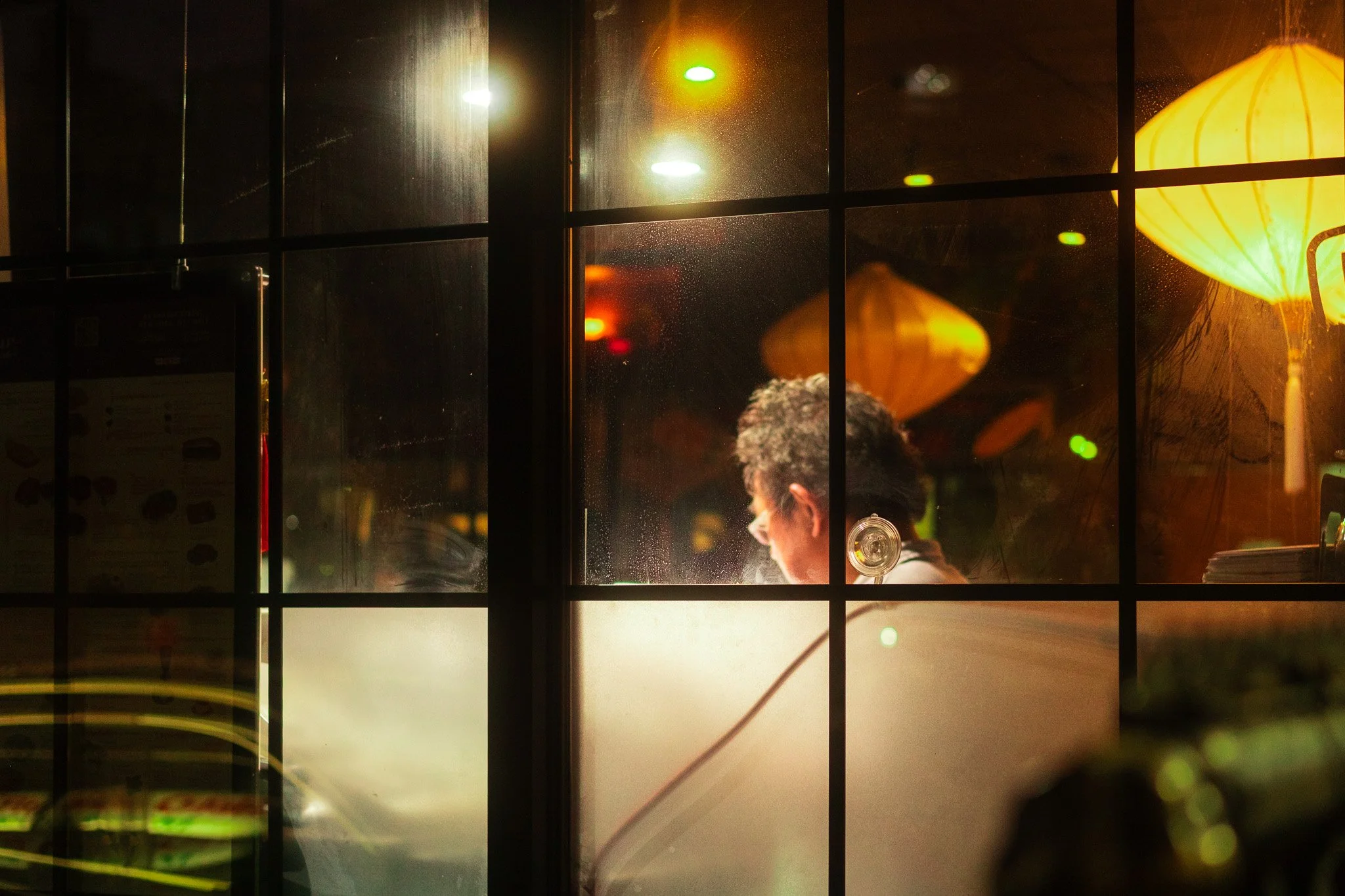
Street photo of a man working in a restaurant at night
Some of the most compelling street photography happens after sunset. Artificial light adds color, contrast, and unpredictability. Reflections in glass, headlights cutting through rain, fluorescent interiors spilling onto sidewalks—these are gifts unique to urban environments.
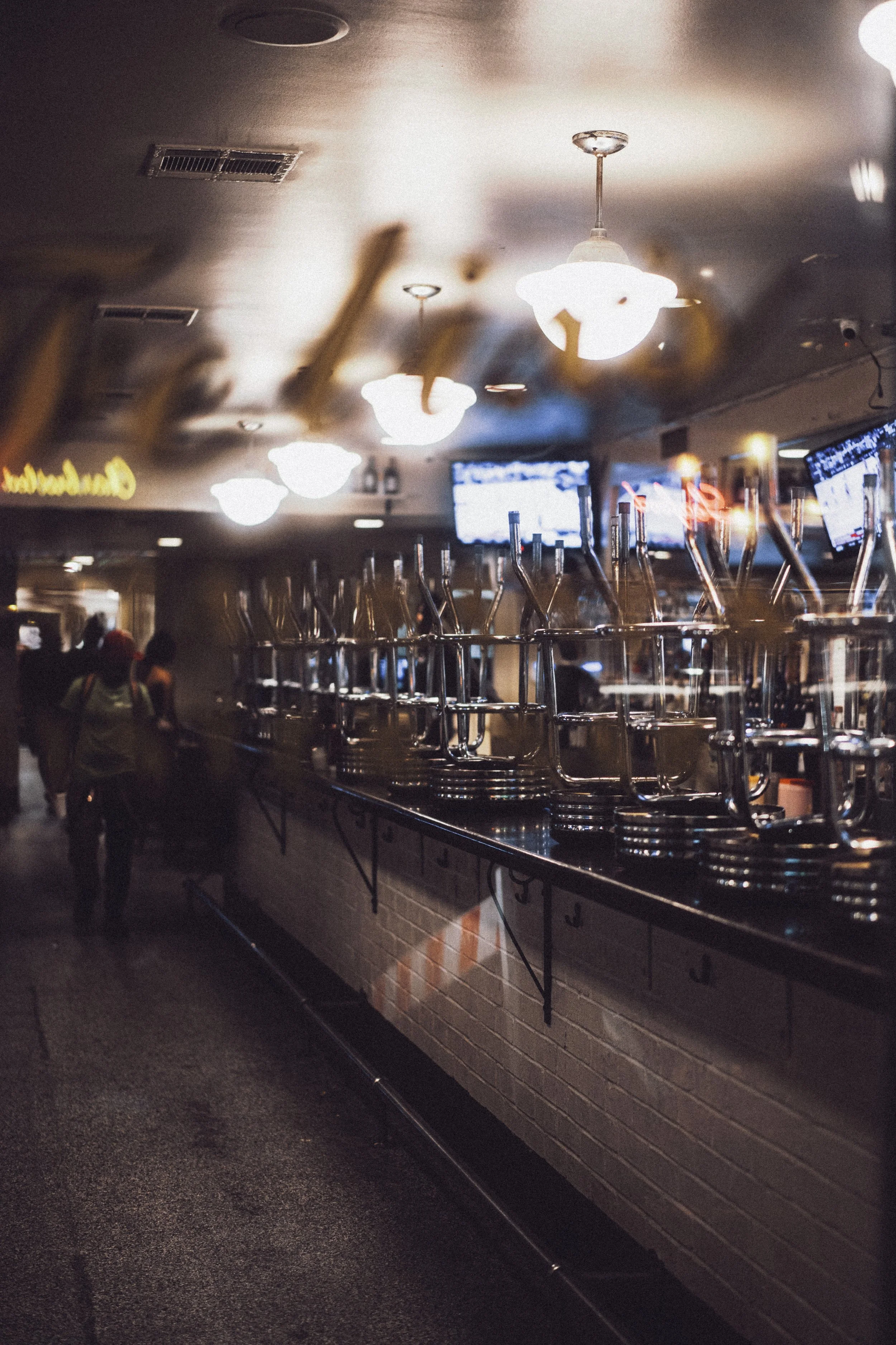
Street photo of a restaurant closing down for the night, New Orleans LA
Artificial light also creates layers. You can photograph through windows, reflections, and transparent surfaces, compressing multiple moments into a single frame. The result often feels more psychological than literal, which is one reason night street photography resonates so strongly.
Learning to See Light Before the Moment
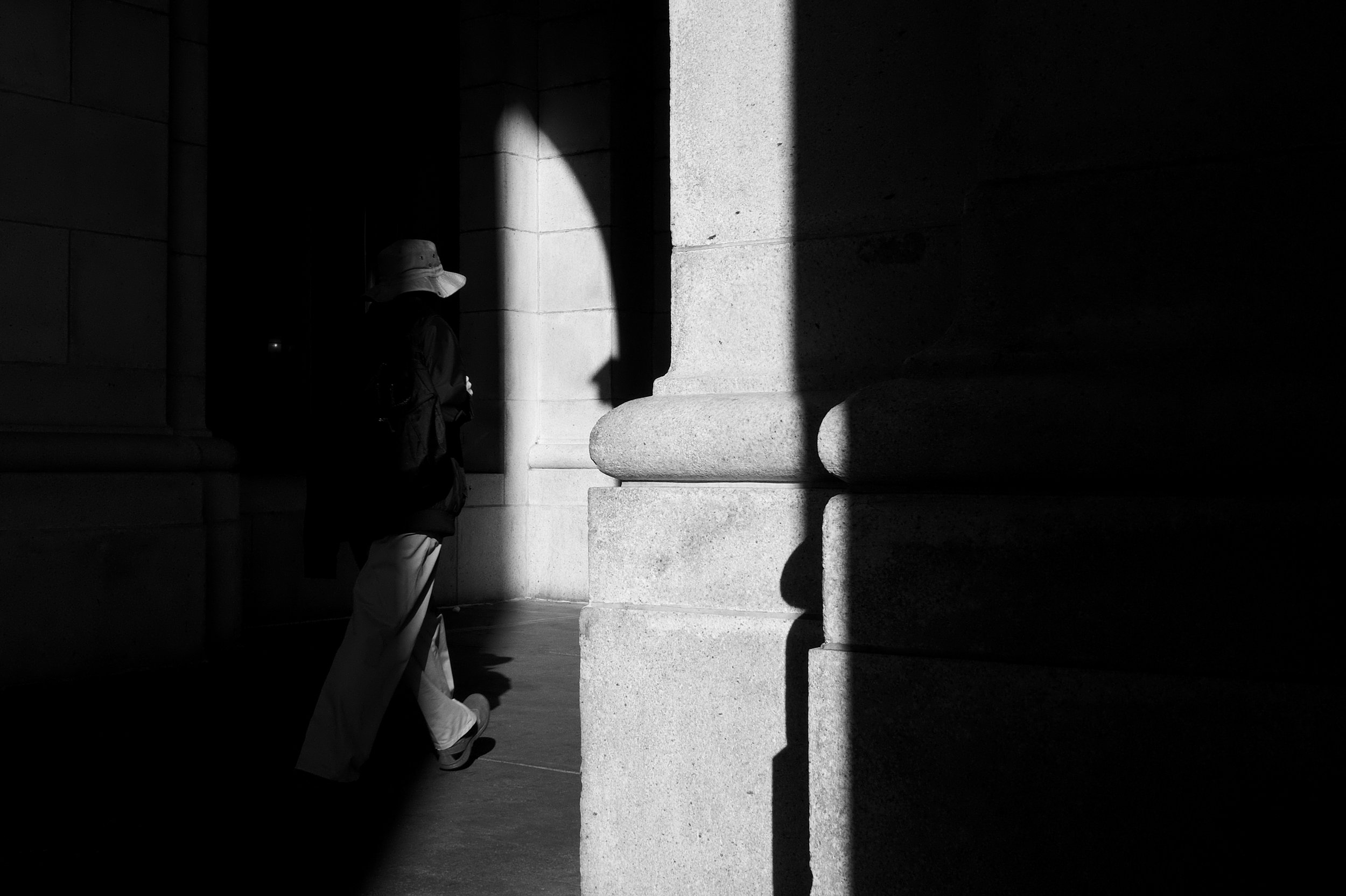
Street photo of a man in a hat walking into a pool of light
Beginners in street photography often chase moments first and light second. Experienced photographers reverse that order. They find the light, then wait for life to enter it.
This shift changes everything. Instead of reacting to chaos, you’re anticipating alignment—when gesture, subject, and light briefly agree. Those moments are rare, but they are also repeatable once you learn to recognize the conditions that create them.
Why Light Is the Silent Partner in Street Photography
Street photography is not just about what happens on the street. It’s about how light translates that reality into something readable, emotional, and lasting.
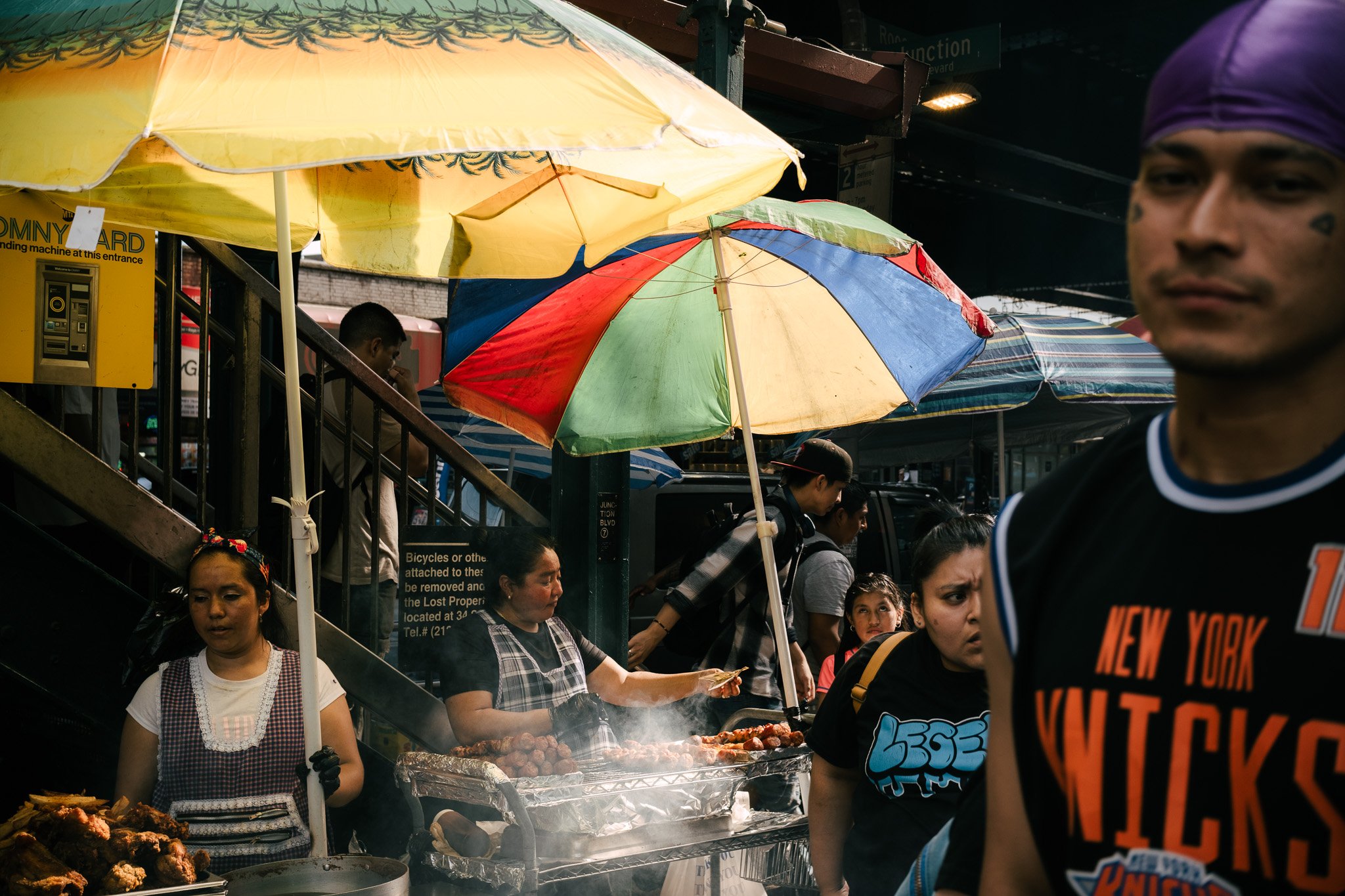
Light shines through the smoke of a street vendor in Jackson Heights, Queens
Light is the difference between documentation and interpretation. It turns the everyday into the cinematic without altering the truth of the scene. Mastering street photography is, in many ways, mastering the ability to notice light doing its quiet work while the city rushes past.
The street never stops moving. The light is always changing. The photographer’s task is to notice when both briefly align—and to be ready.
If you’re wondering what settings to use to make the best use of light, check out this blog post.