Deadpan Photography: What Street Photography Looks Like When You Stop Chasing the Moment
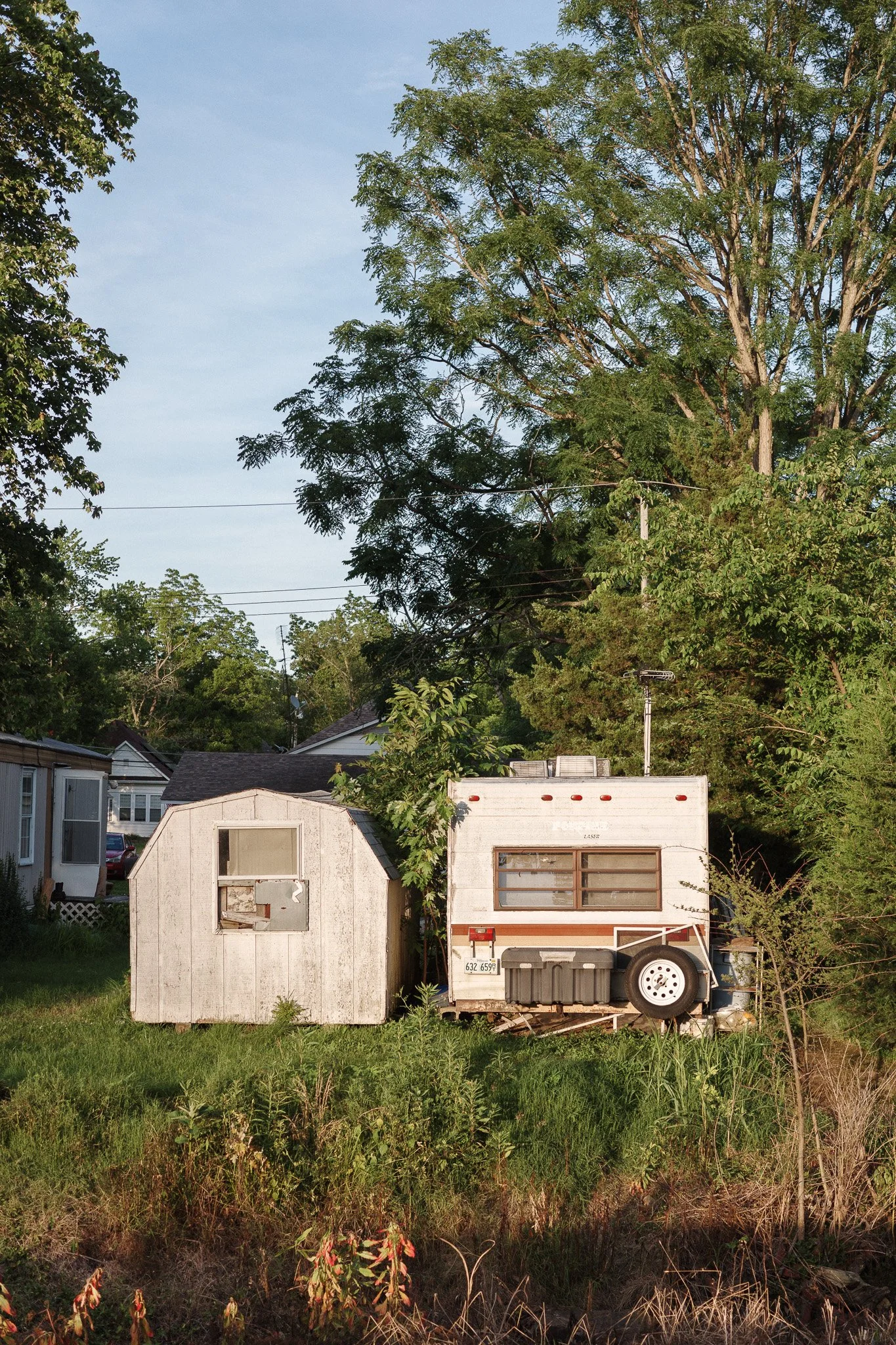
A Trailer and a Shed in Golden Hour Light, Eldorado, IL
I went back to Eldorado, Illinois — my hometown — with a camera, and almost immediately I noticed I wasn't shooting the way I normally do. There was no crowd to read, no gesture to anticipate, no decisive moment to wait out. Just a water department building with hand-painted letters going soft at the edges, a camper parked next to a shed like they'd been introduced and decided to stay, a cat sitting on a fence like she owned the property line. So I stopped trying to make street photographs out of it and let the place dictate a different approach: deadpan.
If you've spent time with my street photography work, you know the mode I usually work in — candid, reactive, built around timing and human presence. Deadpan is the opposite temperament, and I think that's exactly why it's worth learning.
What "Deadpan" Actually Means
The term comes out of a lineage that includes the New Topographics photographers, Stephen Shore, Robert Adams, the Bechers' industrial typologies — work defined by a flat, unemotional, almost administrative way of looking. No irony announced on the surface, no editorializing through blur or crop or decisive timing. You point the camera at something directly, you wait for even light, and you let the subject do the talking.
Deadpan images tend to be:
Frontal. The camera squares up to the subject rather than working an angle.
Static. No decisive moment to catch — the building isn't going anywhere, the sign isn't about to move.
Evenly lit. Flat, diffuse light (early morning, overcast) over dramatic shadow or backlight.
Uninflected. The photographer's presence is deliberately minimized. You're a recorder, not a performer.
Often typological. One motel sign becomes interesting; twelve motel signs become a document.
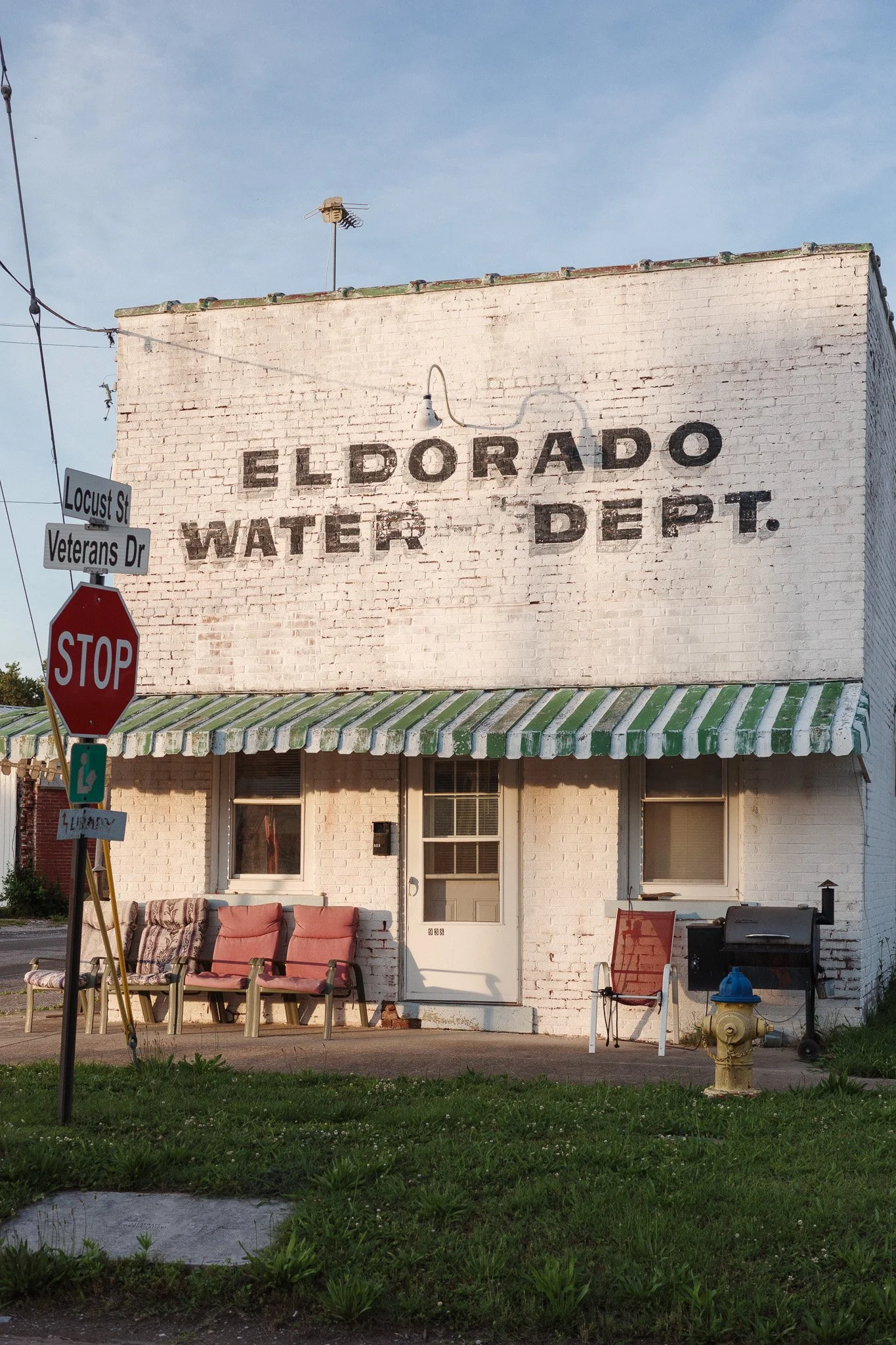
A Former Water Department Building in Eldorado, IL.
Look at the water department building shot from this trip — the wall reads "ELDORADO WATER DEPT." in hand-painted letters, patio furniture lined up out front like a waiting room, a stop sign anchoring the corner. Nothing is happening. That's the point. The photograph isn't waiting for a person to walk into frame; it's recording a fact about a place.
How This Differs From Street Photography
My street photography practice — the one I write about most on this blog — depends on contingency. A hand raised at the right instant, a stranger's expression, the accidental choreography of people who don't know they're being photographed. It's reactive by nature. You're a witness working in real time, and the best frames often come from staying open to what you didn't plan for.
Deadpan work removes that variable almost entirely. There's no peak action to time, because there's no action. The discipline shifts from anticipation to observation and patience with a static subject — finding the exact spot to stand, waiting for the light to go flat and even, deciding how much of the frame the subject should occupy. It's slower, more deliberate, closer to how a documentary photographer catalogs a place than how a street photographer works a crowd.
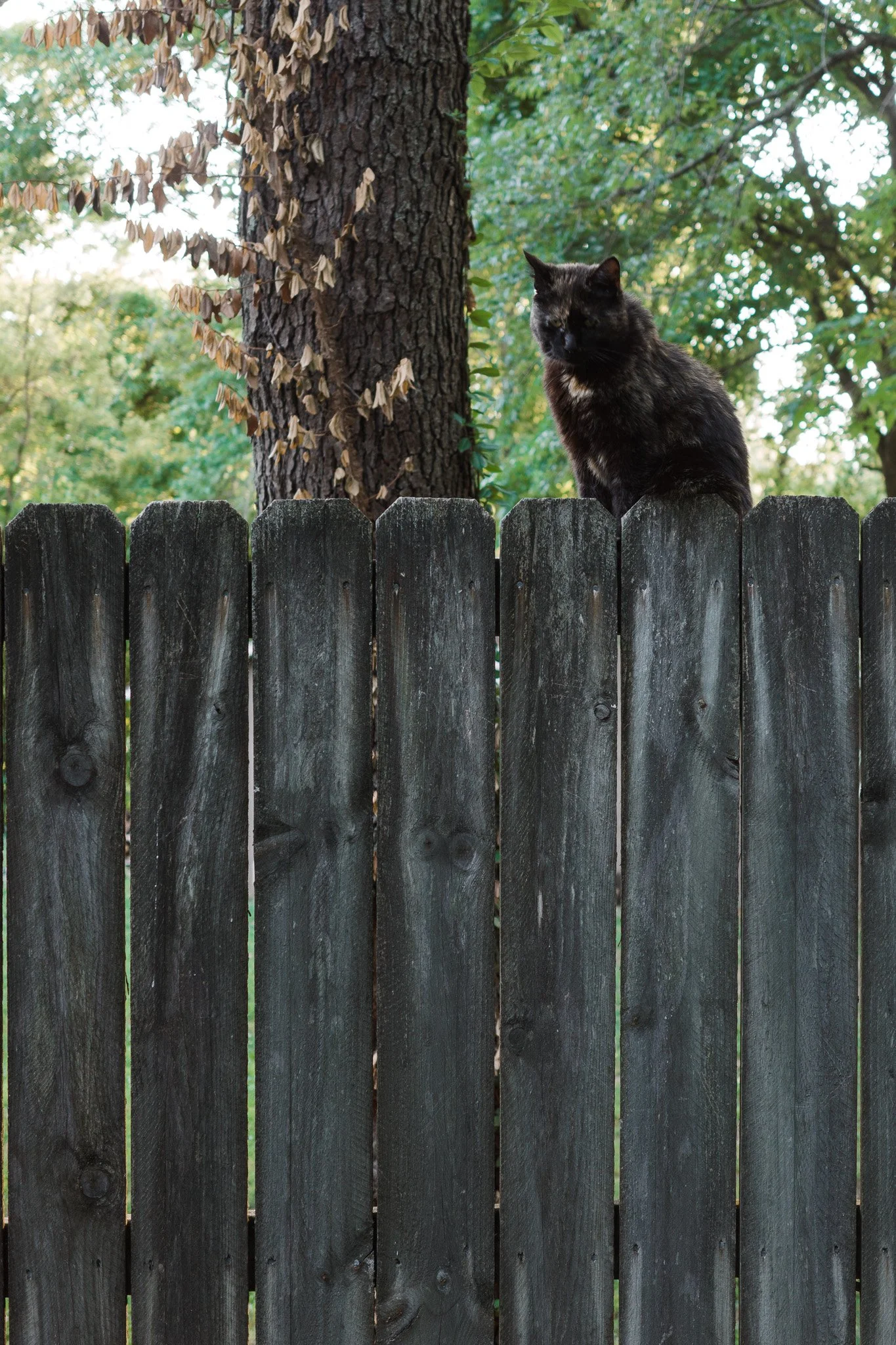
A Cat Sits on a Fence
The tortoiseshell cat perched on the fence line is the closest thing in this set to a "street" moment — a living subject, caught looking back at the camera. But even there, the frame is built the deadpan way: dead center, frontal, waiting for her to hold still rather than chasing a gesture. It's a hybrid frame, and it's a useful one for seeing where the two approaches actually meet.
Why It's a Good Change of Pace
Street photography asks you to stay switched on — scanning, predicting, moving. It's satisfying, but it's also a specific kind of exhausting. Deadpan photography asks something different of you: slow down, plant your feet, and really look at what's already sitting still in front of you. There's no failure mode of "I missed the moment," because there isn't one to miss.
It's also a genre that rewards places most street photographers overlook. A small town like Eldorado doesn't have the density of human activity that DC or New York offers for candid work — but it's full of the kind of plain, unglamorous architecture and objects that deadpan photography exists to notice. A shed and a camper trailer parked together at the edge of a lot. A crumbling stucco storefront with two mismatched awnings and a street number stenciled beside the door. A "Hometown Hero" banner honoring a local soldier, hung from a lamppost against a gutted building. None of that needs a crowd. It needs a person willing to stop and actually look.
How It Complements Street Photography
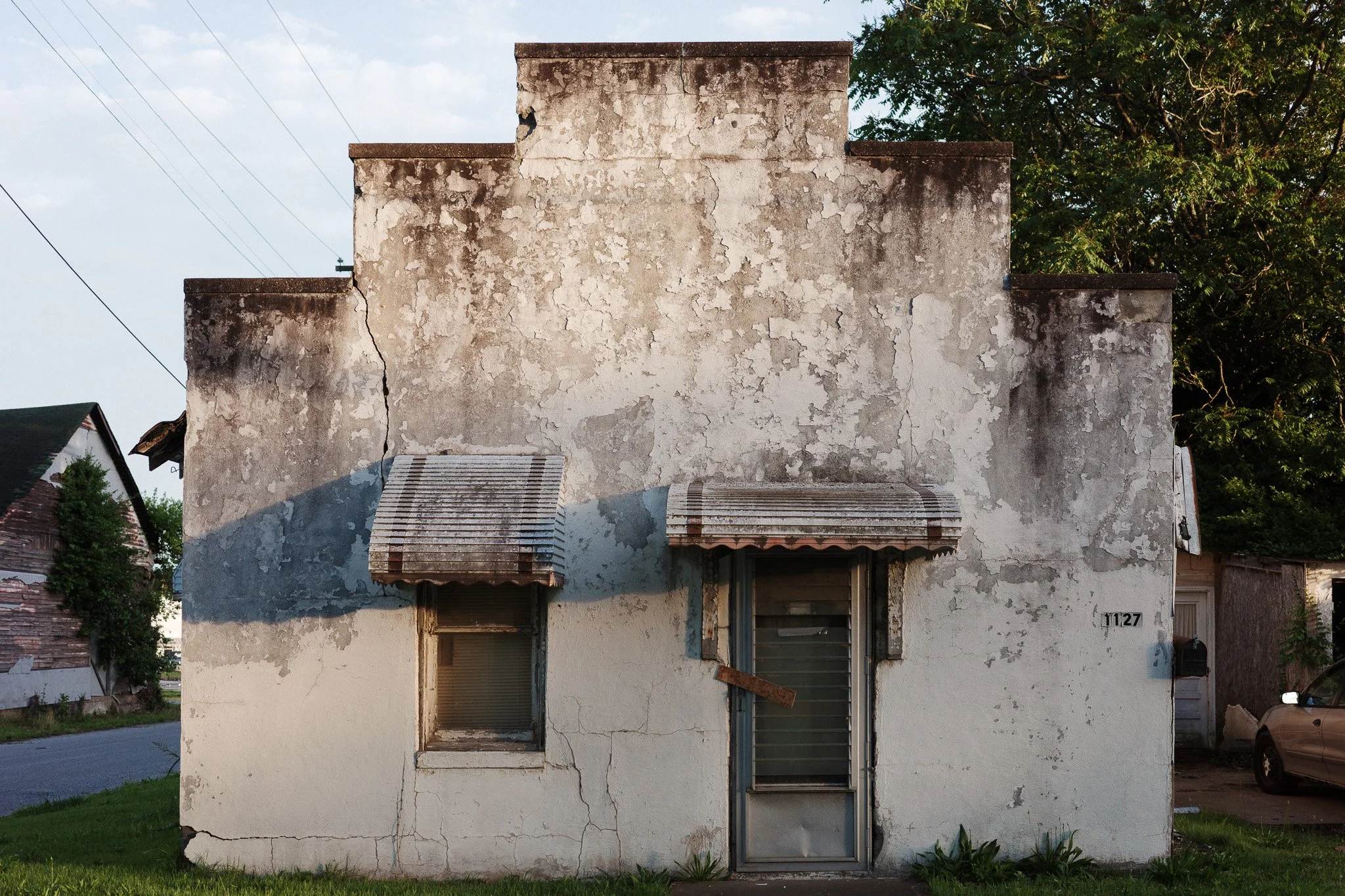
A Crumbling Building in Eldorado, IL
The two modes aren't competitors — they're different tools for different kinds of truth-telling, and they train different muscles:
Deadpan sharpens your compositional discipline. Without a decisive moment to bail you out, you have to get the geometry, light, and framing right on their own merits. That discipline carries back into your street work even when you're shooting fast.
Deadpan builds the "place" half of a documentary project. A street photography series thrives on human energy, but a few static, frontal images of the environment — storefronts, buildings, signage — ground the series and give the eye somewhere to rest. Think of it as establishing shots for a photo essay.
It's available when the street isn't. Small towns, quiet mornings, off-hours — deadpan photography doesn't need foot traffic to work, which makes it the natural fallback when the "street" itself goes quiet.
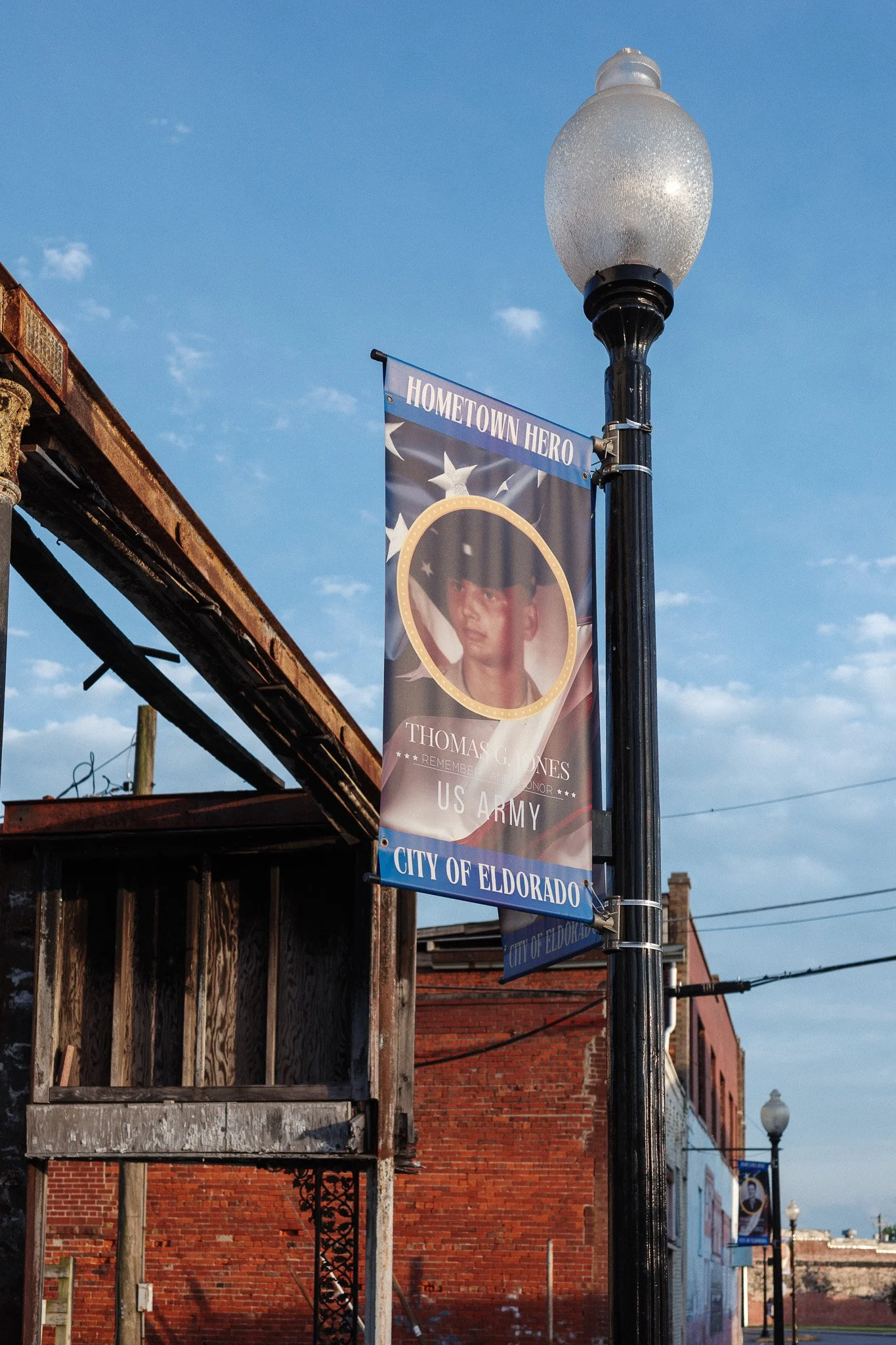
A Hometown Hero Banner in Eldorado, IL’s Downtown
Basics for Shooting Deadpan
If you want to try it:
Square up to your subject. Get the camera level and centered — no working angles for drama. Frontal and symmetrical is the default, not the exception.
Shoot in flat, even light. Early morning or overcast days remove harsh shadow and let texture and color do the work instead of contrast.
Fill the frame deliberately. Decide how much air you want around the subject and hold that decision — don't crop reactively the way you might on the street.
Slow down your process. Take the extra ten seconds to check your horizon line, your verticals, your framing. There's no moment to lose.
Think in pairs and series, not singles. One deadpan photograph is a curiosity. A small set — several storefronts, several trailers, several signs — starts to read as a document, which is where the genre gets its power.
Resist the urge to editorialize. Let the peeling paint or the hand-lettered sign carry the meaning. The photographer's job is to notice, not to comment.
I don't expect to abandon candid street work for this — the energy of a crowded sidewalk is still what pulls me out the door most days. But a trip home reminded me that not every place, and not every mood, calls for that energy. Sometimes the most honest thing you can do with a camera is stand still in front of something plain and let it be exactly what it is.