When Street Photography Goes Abstract

Lights Filtered through Condensation on a Window in New Orleans
I've spent most of this blog defending a fairly literal definition of street photography — candid, human, a stranger caught mid-gesture on a sidewalk. So it might seem like a detour to post a gallery where there's barely a recognizable person in the frame. A fogged window. A dripping umbrella. A torn poster reduced to color and tear. A reflection where two bodies seem to dissolve into each other. But I'd argue this is still street photography — it's just street photography with the subject stripped out and the feeling left behind.
Abstraction Is Still Observation
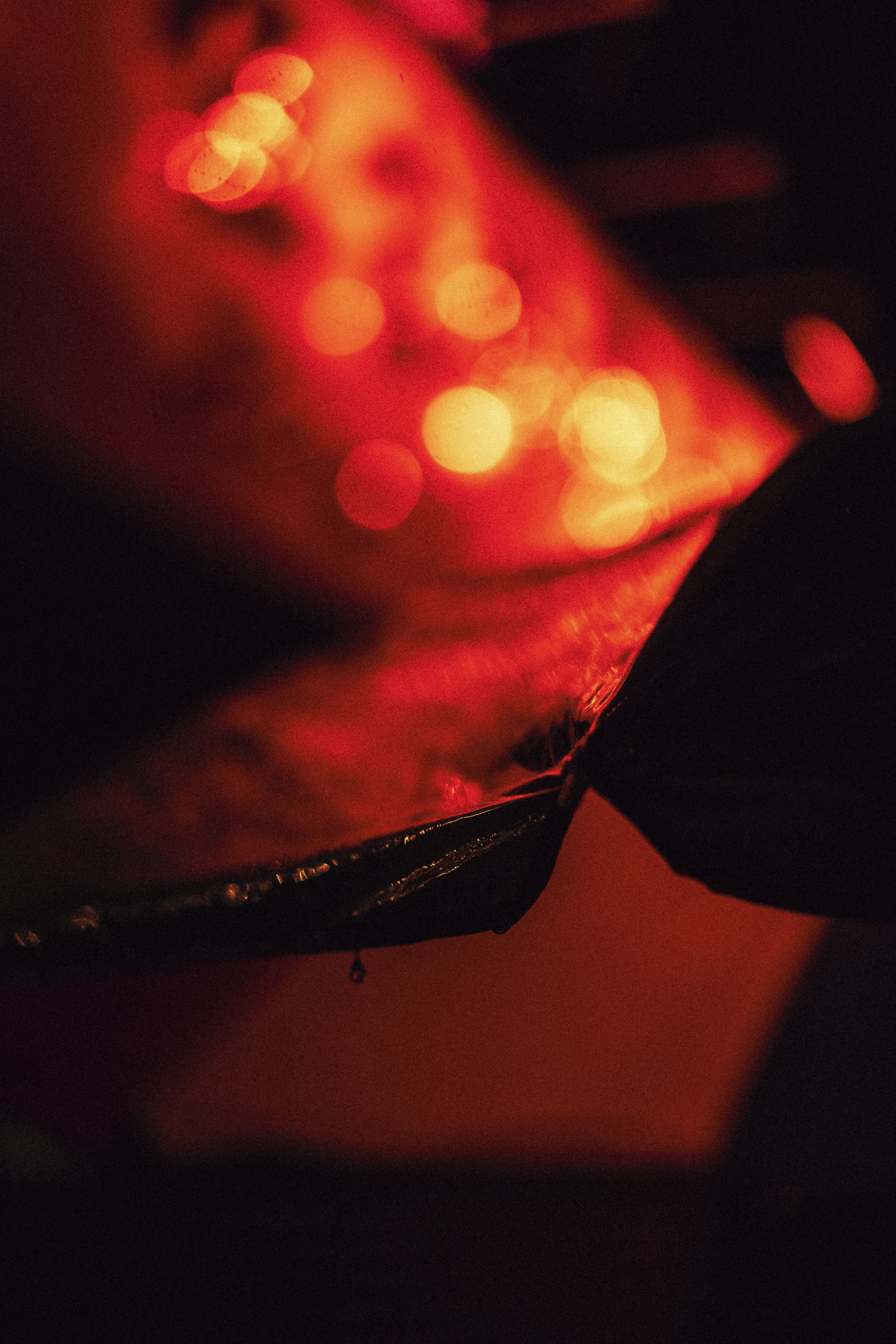
A Wet Umbrella and Out of Focus Lights in Chinatown, Manhattan
The core discipline of street photography isn't "photograph strangers." It's paying attention. It's noticing what's actually in front of you instead of what you expected to see. Most of the time that attention lands on a person — a gesture, an expression, a collision of bodies in public space. But sometimes it lands on the surface of things: condensation beading on a bus window, the way string lights bleed through grime on glass, the accidental collage of a poster peeling in layers off a wall.
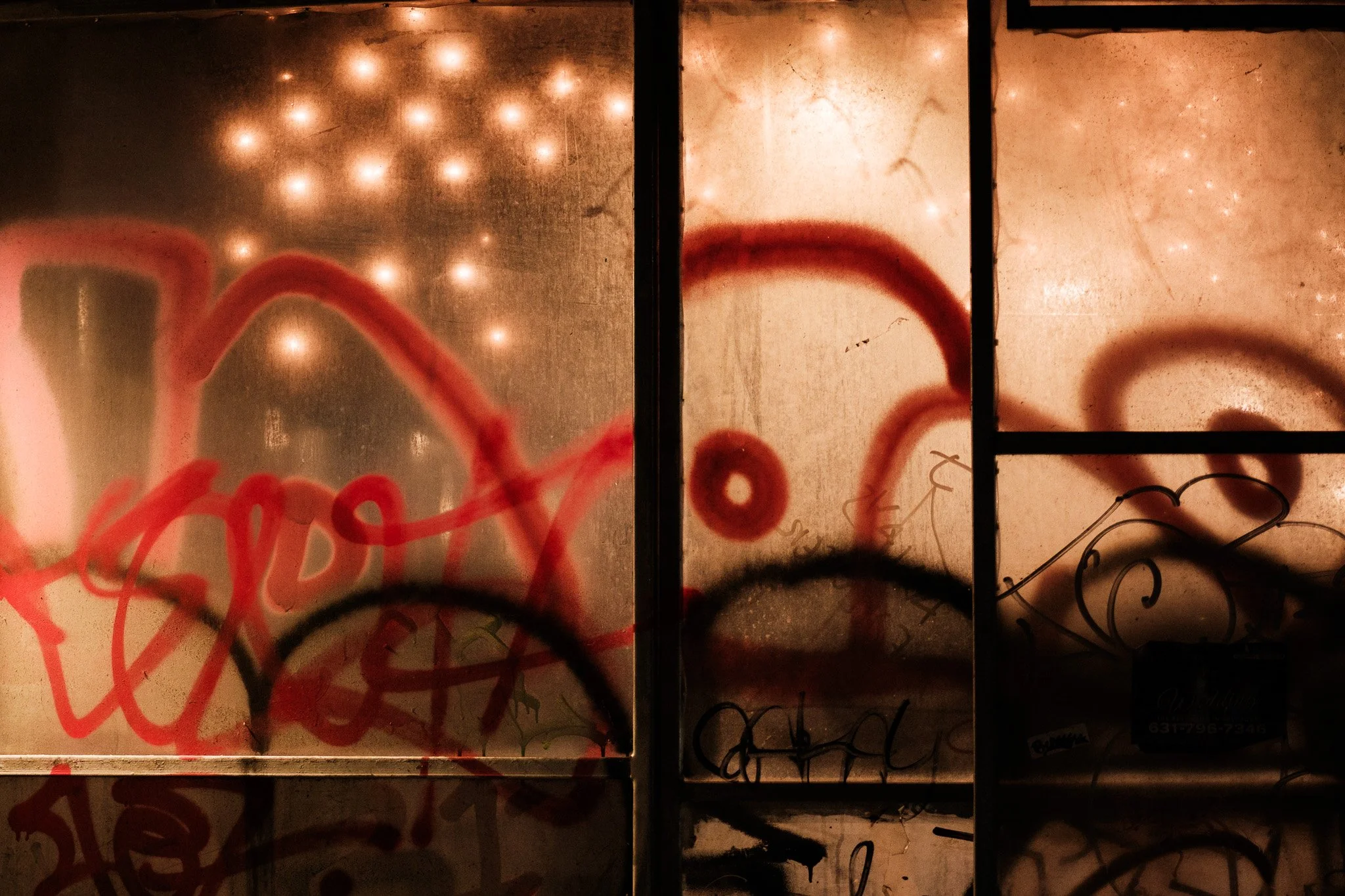
A Frosted Window Obscures Graffiti and Light Bulbs
That's still the same muscle I use walking around DC with a stripped-back set of camera settings or working a scene during a night shoot downtown. I'm not composing so much as I'm reacting — noticing color, noticing texture, noticing the accidental geometry a city throws at you if you're looking closely enough.
Where the Abstract Frames in This Set Came From
A few of these images come out of the same body of transit and night work I've been doing lately — the color-soaked condensation and bokeh shots were shot the same way I approach a Staten Island Ferry crossing: camera up, paying attention to the light rather than a specific person, letting the glass and the weather do half the composing for me. Reflected light through a wet or fogged surface turns a mundane commute into a field of color you'd never notice with your eyes alone.
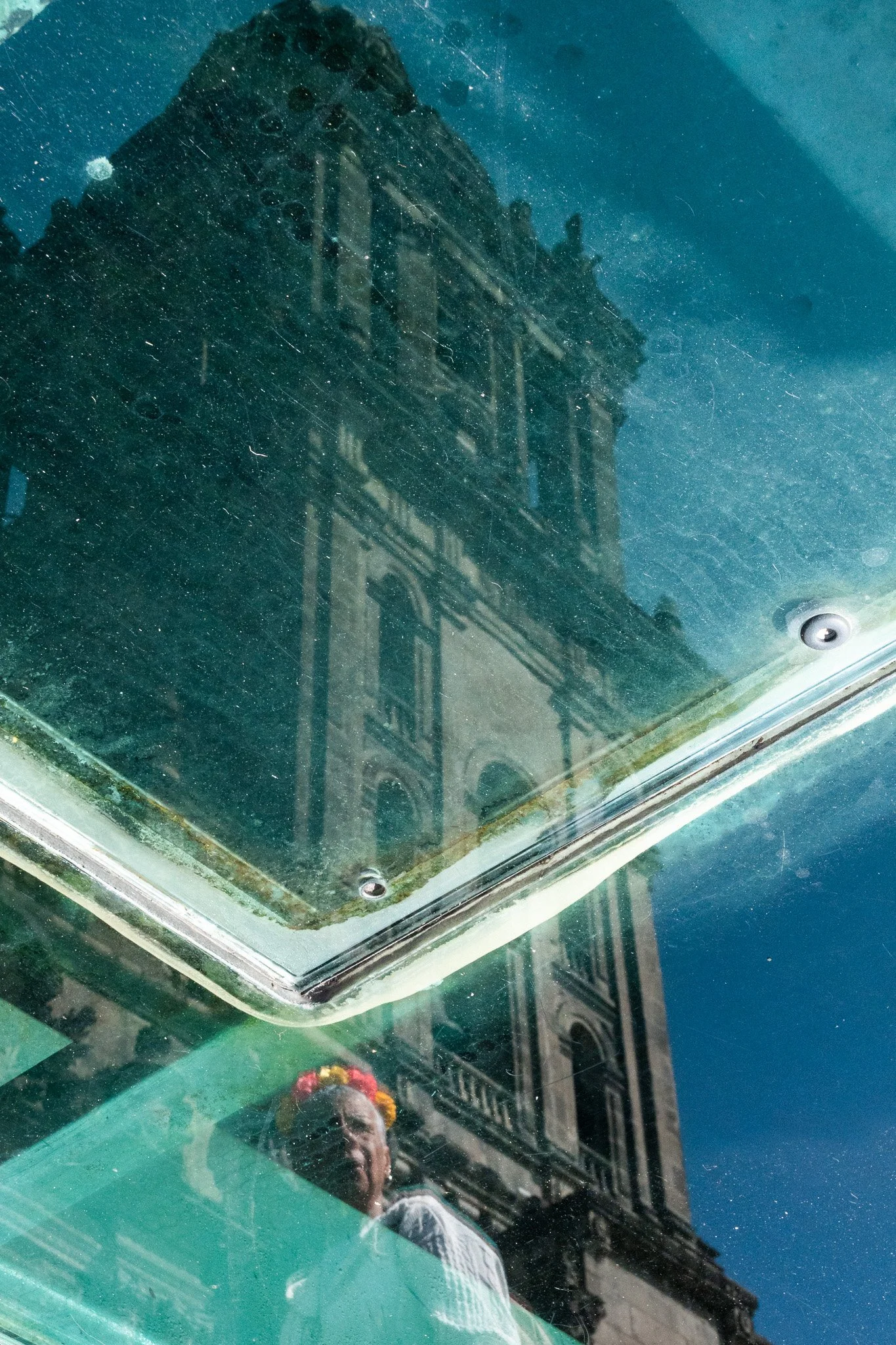
A Woman and Church Tower Reflected in a Window
The reflection shot of a church tower and a woman's flowered headscarf bending across a chrome railing was shot in Mexico City — a place that turns out to be full of this kind of doubled geometry, colonial facades warping across glass tabletops and car windows in a way that flattens architecture and street life into the same plane. And the layered image of two figures overlapping — floral shirt, tactical bag, bare arms — is a half reflected in the dark screen of a smartphone held just under the camera lens: instead of one decisive moment, you get the same moments split apart in the same frame, which feels more honest to how a crowded, chaotic city makes me feel.
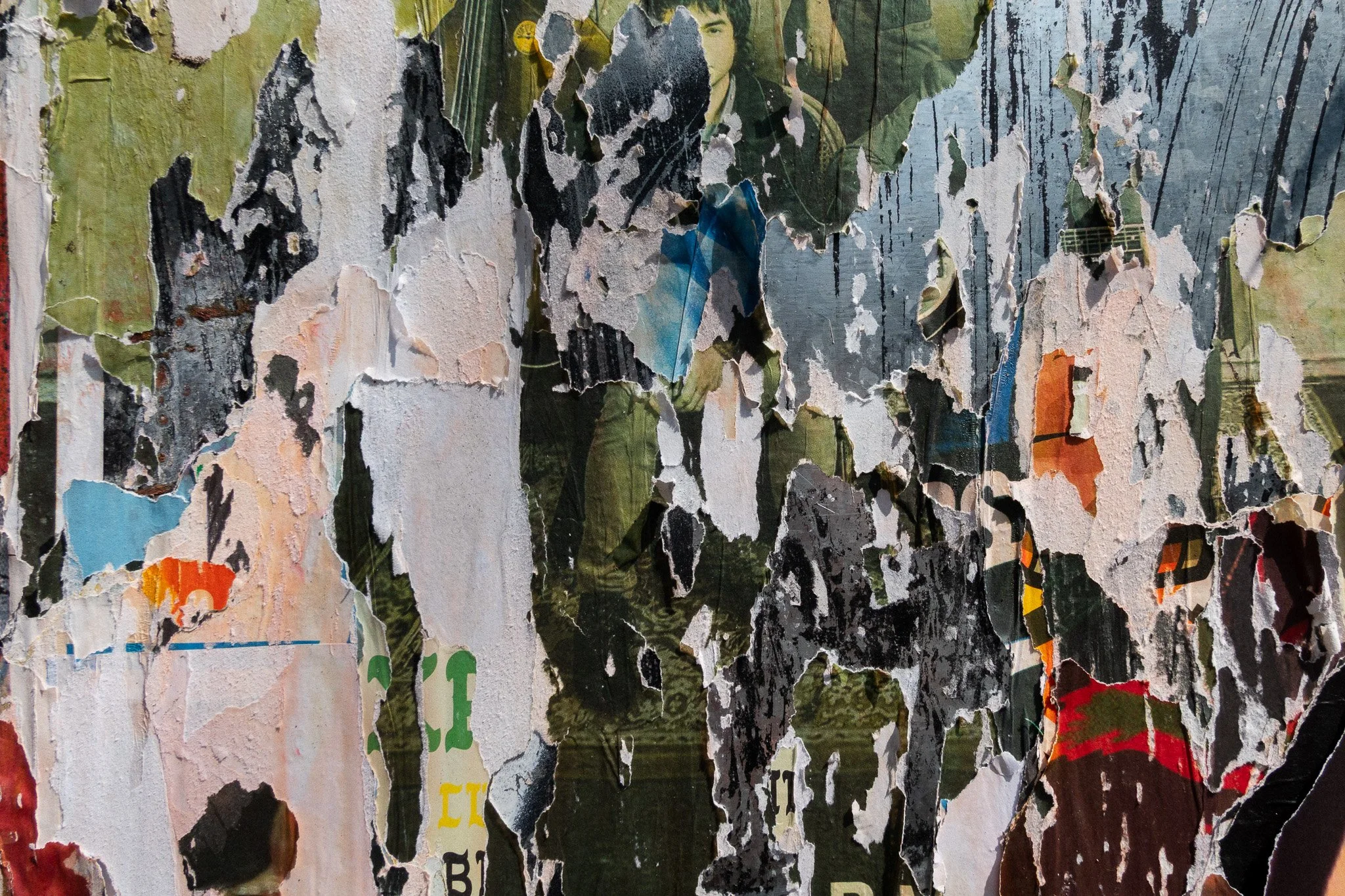
A Torn Poster on a Wall in Mexico City
The torn poster texture was shot in that same Mexico City trip — layers of bill-posted paper on a wall, peeled back by weather and time until it reads more like an abstract painting than an advertisement. The graffiti-and-string-lights frame is more classic urban-decay abstraction closer to home, the kind of thing that shows up if you slow down at the Washington Monument or wander a back alley instead of the main thoroughfare. Walls hold history in layers. A torn poster is basically a time-lapse of a city's advertising and vandalism, all visible at once if you get close enough.
Why Bother With Abstract Street Photography At All
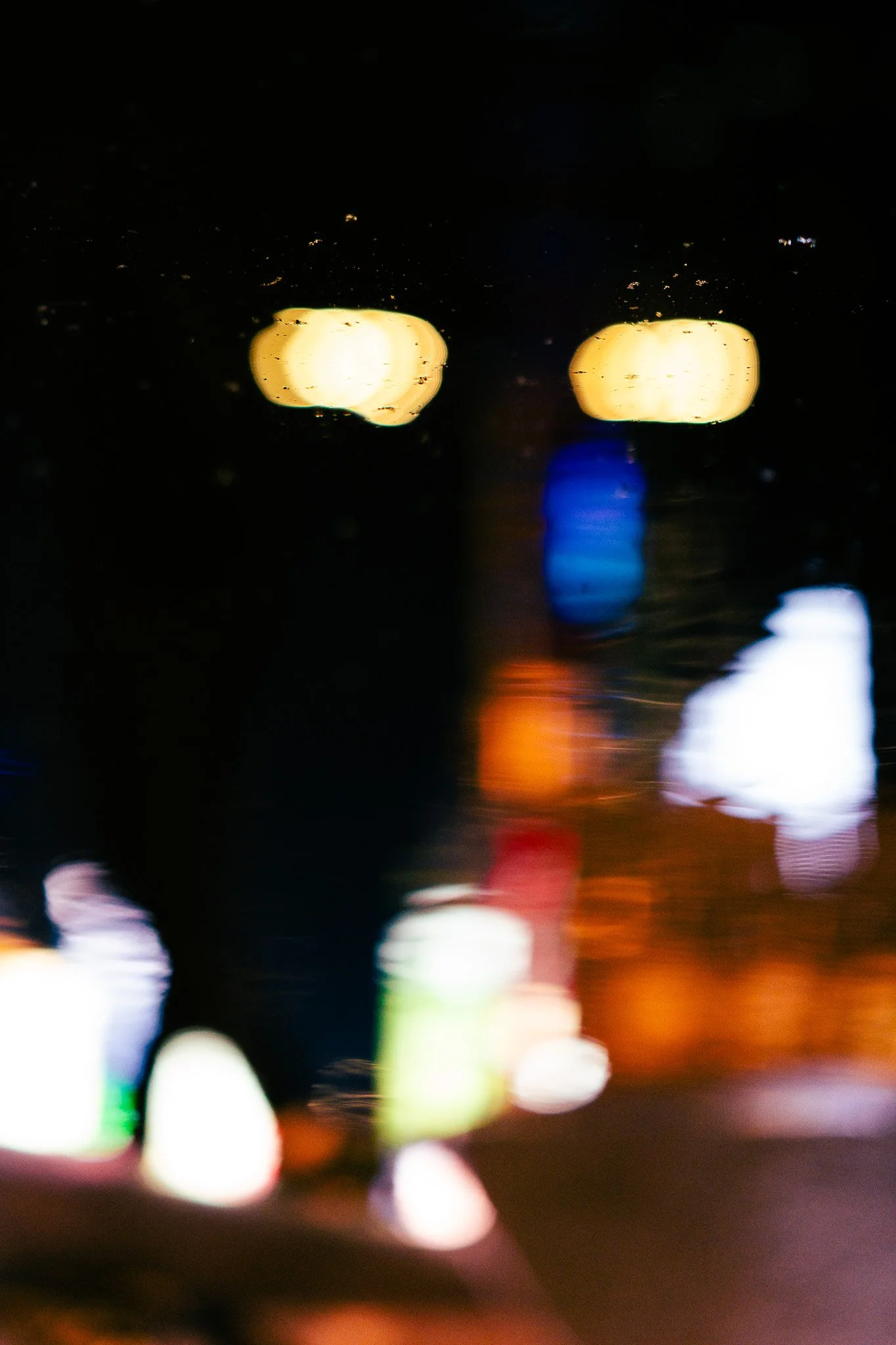
Times Square Lights Reflected in a Puddle
Because not every day gives you a decisive moment. Some days you're out for reps, not bangers, and the light or the crowd or your own energy just isn't producing a great candid frame. Abstraction is what happens when you keep shooting anyway — when you let the camera register mood and color and texture instead of forcing a narrative that isn't there.
It's also a useful corrective for anyone starting out. One of the four things I wish I knew earlier about this genre is that gear and technical mastery matter far less than creative voice — and nothing builds creative voice faster than forcing yourself to make an interesting photograph out of a fogged-up window with nothing "happening" in it. If you can find a frame in that, you can find a frame anywhere.

A Man Half Reflected in a Smartphone Screen
I don't think abstract work should replace the candid, human side of this practice — the whole reason I do street photography is the people. But treating abstraction as a legitimate branch of the same tree, rather than a separate hobby, has made me a more patient and observant shooter on the days when the street isn't handing me anything obvious.