How to Capture Candid Moments on the DC Metro: A Photo Guide Inspired by Three Scenes
If you’re exploring DC Metro Photography, few places offer richer everyday storytelling than Washington’s underground transit system. Its unique blend of architecture, quiet emotional moments, and rapid movement creates a perfect environment for candid street photography Washington DC. The following guide uses three real Metro moments—like the ones shown in the photos you shared—to illustrate how to recognize and capture compelling scenes.
Each example highlights not only technique but also the artistry of documenting public life respectfully and creatively.
1. Overhead Perspectives: Capturing Life Through the Train Window
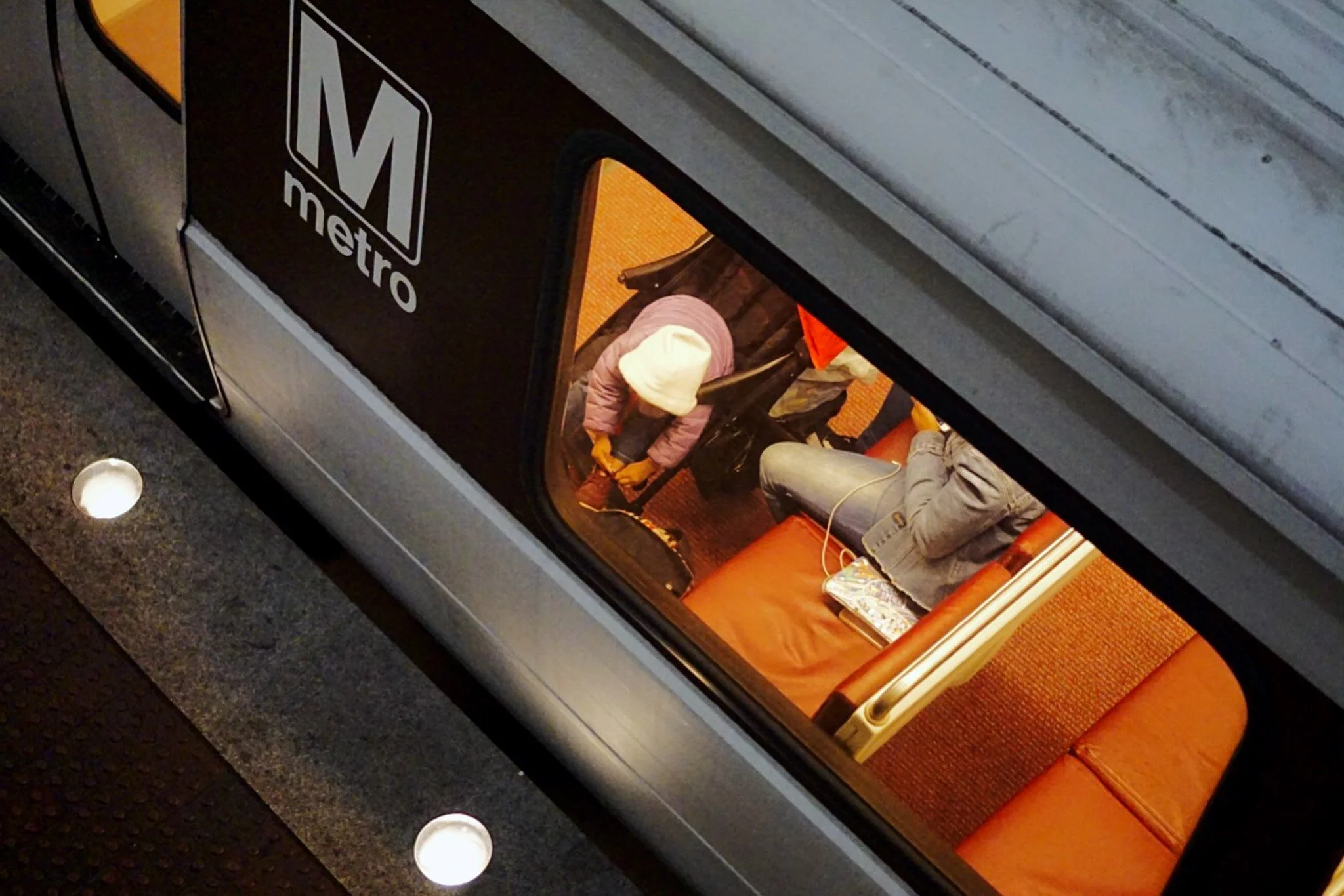
Life seen through a Metro window—small stories in motion.
One of the most striking advantages of DC Metro Photography is the ability to shoot from elevated walkways overlooking the platforms. The first image—shot from above, looking into a railcar window—demonstrates how much storytelling can happen in a single frame.
Inside the train, the warm interior lighting contrasts beautifully with the cool tones of the platform. A child leaning forward toward a bag and an adult seated nearby create a natural moment of quiet interaction. This is a perfect example of how subtle, everyday gestures can feel intimate when photographed thoughtfully.
Techniques Highlighted
Look for vantage points: Many stations offer mezzanines or staircases overlooking the tracks. The height adds mood and separation while keeping you out of the scene.
Use window frames as natural borders: The Metro train’s window becomes a built-in composition tool.
Contrast warm and cool tones: Metro interiors often glow with orange or yellow, while platforms lean toward gray and steel—use this to create depth.
Suggested Opportunities
Riders waiting or preparing belongings
Reflections on train windows
People framed inside seats, aisles, and doors
2. Everyday Stories in Tight Spaces: Documenting Human Connections
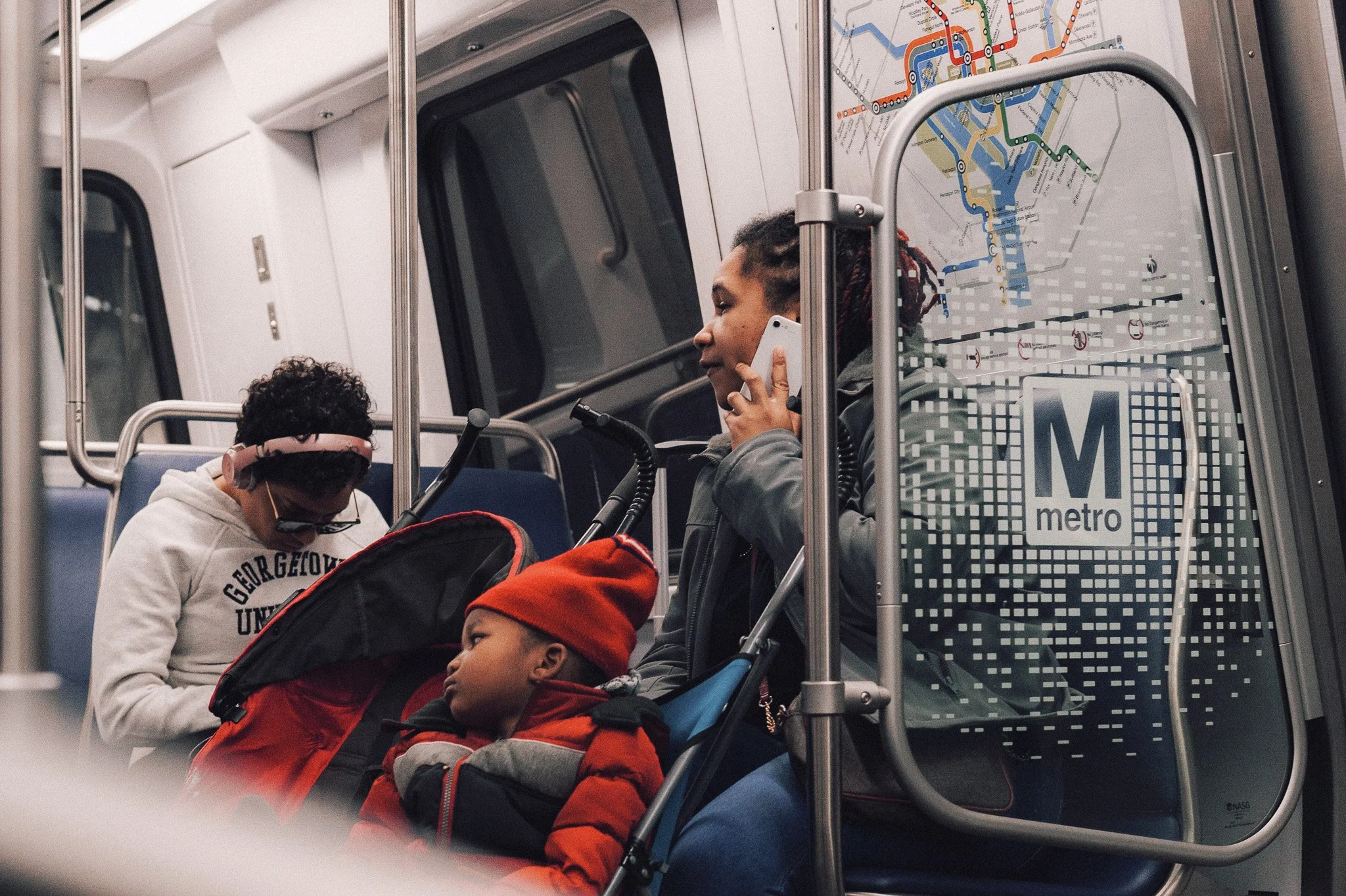
Metro stories unfold one seat at a time.
The second image captures a thoughtful, everyday moment: a group of riders—an adult on a phone, a child in a red jacket, and another rider engrossed in their own device—sharing a quiet commute. This kind of scene is the backbone of candid street photography Washington DC.
The Metro’s interior becomes part of the mood: signage, the system map, and the iconic “M” logo work as visual anchors. The arrangement of the riders tells a layered story about routine, travel, and urban life without needing faces or expressions to be clearly visible.
Techniques Highlighted
Look for small emotional cues: A child’s posture, a person’s focus on their phone, or a relaxed body position can convey narrative.
Shoot through objects: Seat backs, stroller handles, and poles add layers and depth.
Use Metro branding intentionally: Logos, maps, and stickers immediately identify the setting while adding graphic elements—a subtle nod to DC public art photography, since these design elements are a core part of the Metro’s visual identity.
Suggested Opportunities
Groups traveling together
People absorbed in conversation or music
Contrasts in posture, clothing, and gesture
3. Silhouettes on the Escalators: The Metro’s Most Dramatic Light
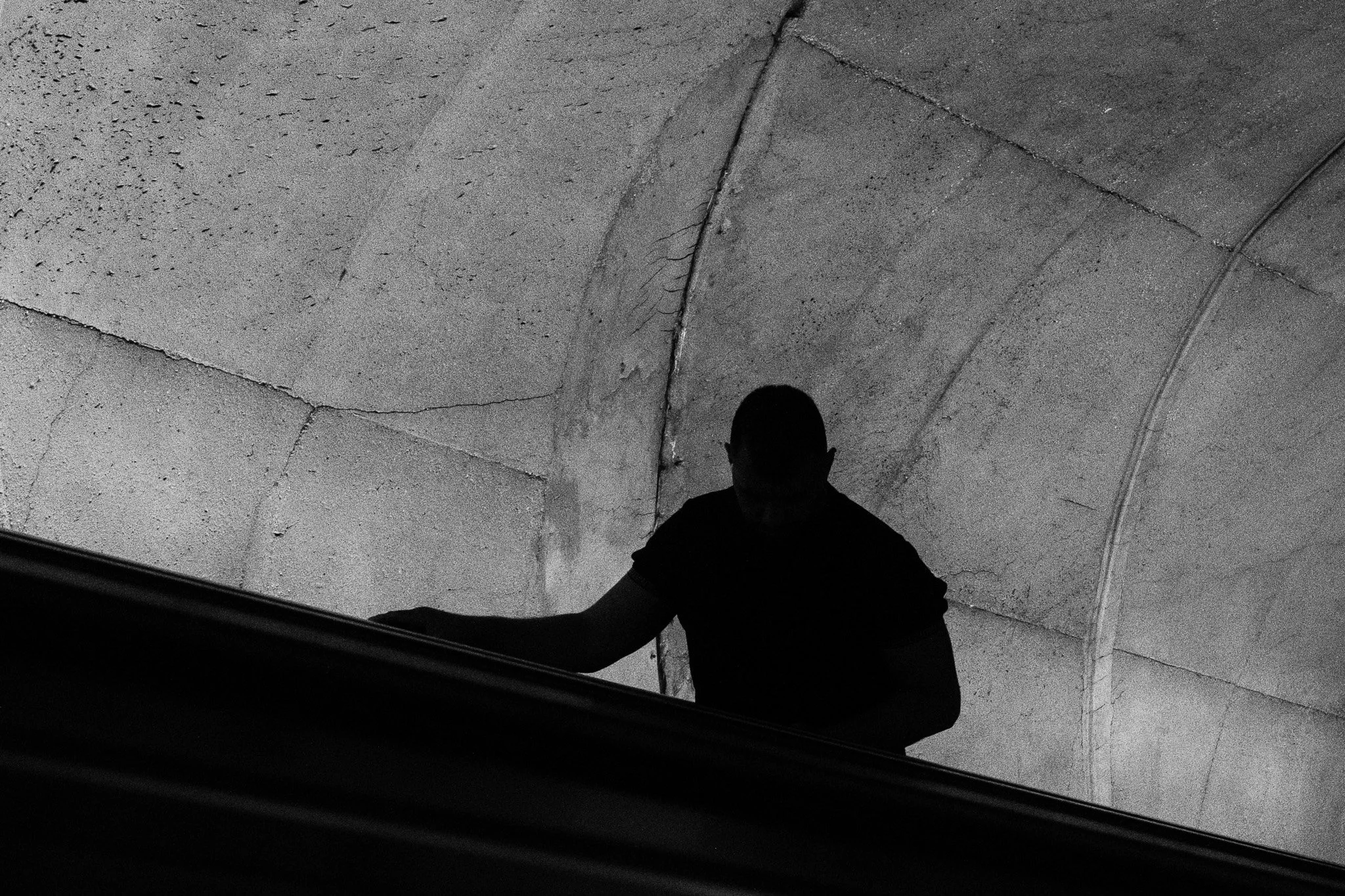
Carved from light and concrete.
The third image—showing a person in near-silhouette on the escalator against the concrete vaulted background—captures one of the most powerful motifs in DC Metro Photography.
Many stations (Metro Center, Dupont Circle, L’Enfant Plaza) feature tall escalators that channel light in dramatic ways. When riders ascend or descend, their silhouettes cut sharply against the raw concrete, producing an iconic Metro look.
Techniques Highlighted
Embrace harsh contrast: Backlighting naturally creates silhouettes—don’t fight the shadows; use them.
Wait for a clean subject: A single figure on the escalator can be visually stronger than a full crowd.
Use the architecture as texture: The Metro’s Brutalist vaults aren’t just backgrounds—they add emotion, weight, and context, making the image feel unmistakably Washingtonian.
Suggested Opportunities
Escalator ascents with bold shadows
Single riders highlighted by overhead lights
Repeating geometric patterns of ridged concrete or metal
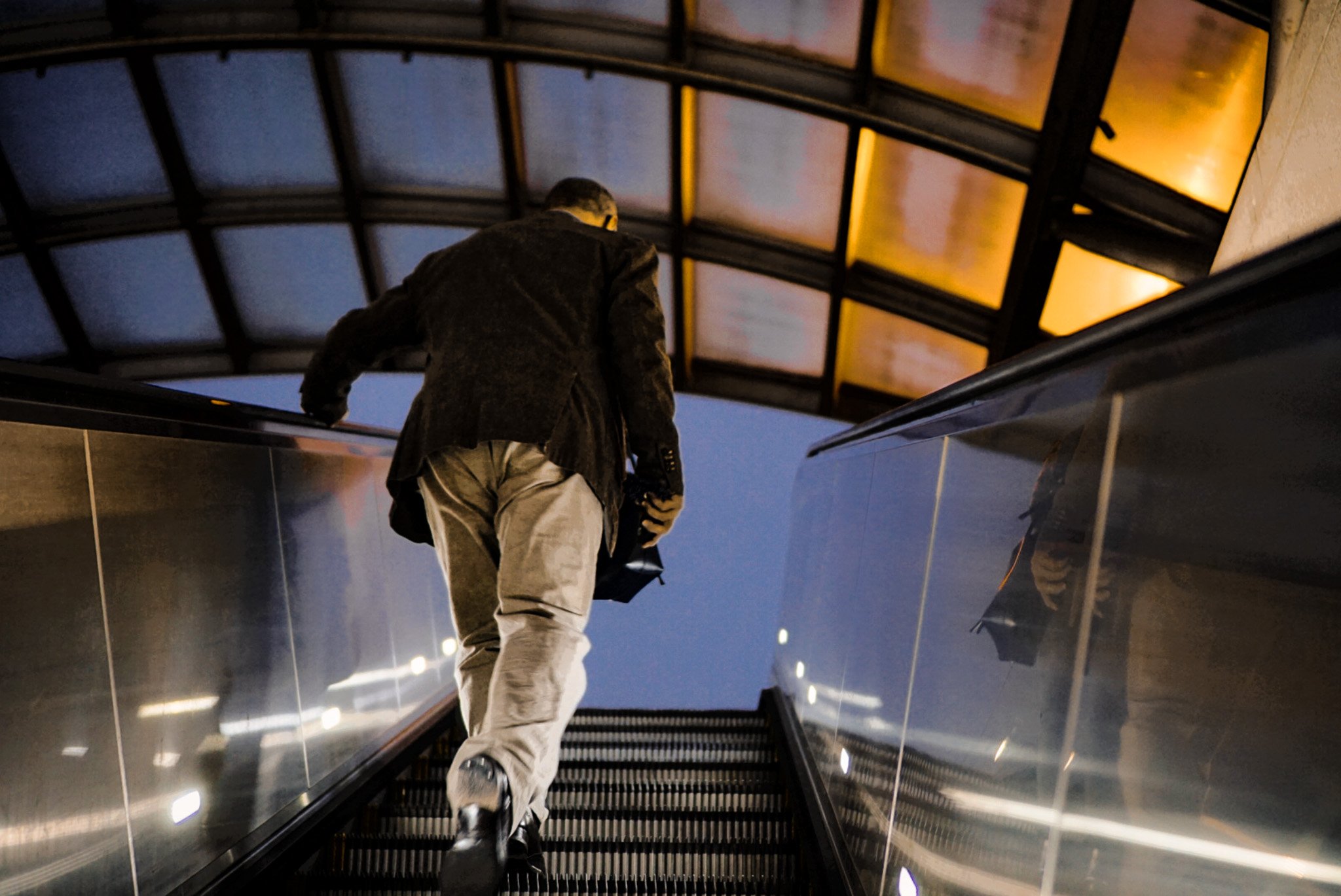
A man climbs a Metro escalator.
General Tips for Candid Street Photography on the DC Metro
To build on the approach in your three images:
1. Be Patient and Observant
Sometimes the best scenes reveal themselves slowly—a gesture, a pause, an unexpected ray of light.
2. Let the Story Come to You
Metro cars and platforms are already full of narrative potential. Rather than chasing moments, choose a spot and wait.
3. Respect Personal Space
You captured these moments unobtrusively—an ideal approach for ethical candid work.
4. Use Low Light Creatively
The Metro’s dim atmosphere can enhance mood. Higher ISO, fast lenses, and intentional grain can elevate the storytelling.
Final Thoughts
These three images showcase why the Metro is such fertile ground for DC Metro Photography: the architecture, the people, the movement, and the quiet stories all come together underground. By using overhead views, intimate interior scenes, and dramatic escalator silhouettes, you’re tapping into the full spectrum of candid street photography Washington DC.
Whether you're inspired by everyday family moments, architectural drama, or narrative details inside the railcars, the Metro offers endless opportunities—including rich moments that echo the mood and style of your photos.
If you want to learn more techniques like this, check out the benefits of taking a street photography workshop.