The Ultimate Beginner’s Guide to Street Photography
Street photography is the art of observing everyday life and turning fleeting moments into lasting images. Few cities are better suited for beginners than Washington, DC. It is walkable, visually diverse, historically layered, and constantly in motion. From the formality of federal buildings to the casual rhythm of neighborhood streets, DC offers endless opportunities to practice seeing, anticipating, and reacting.
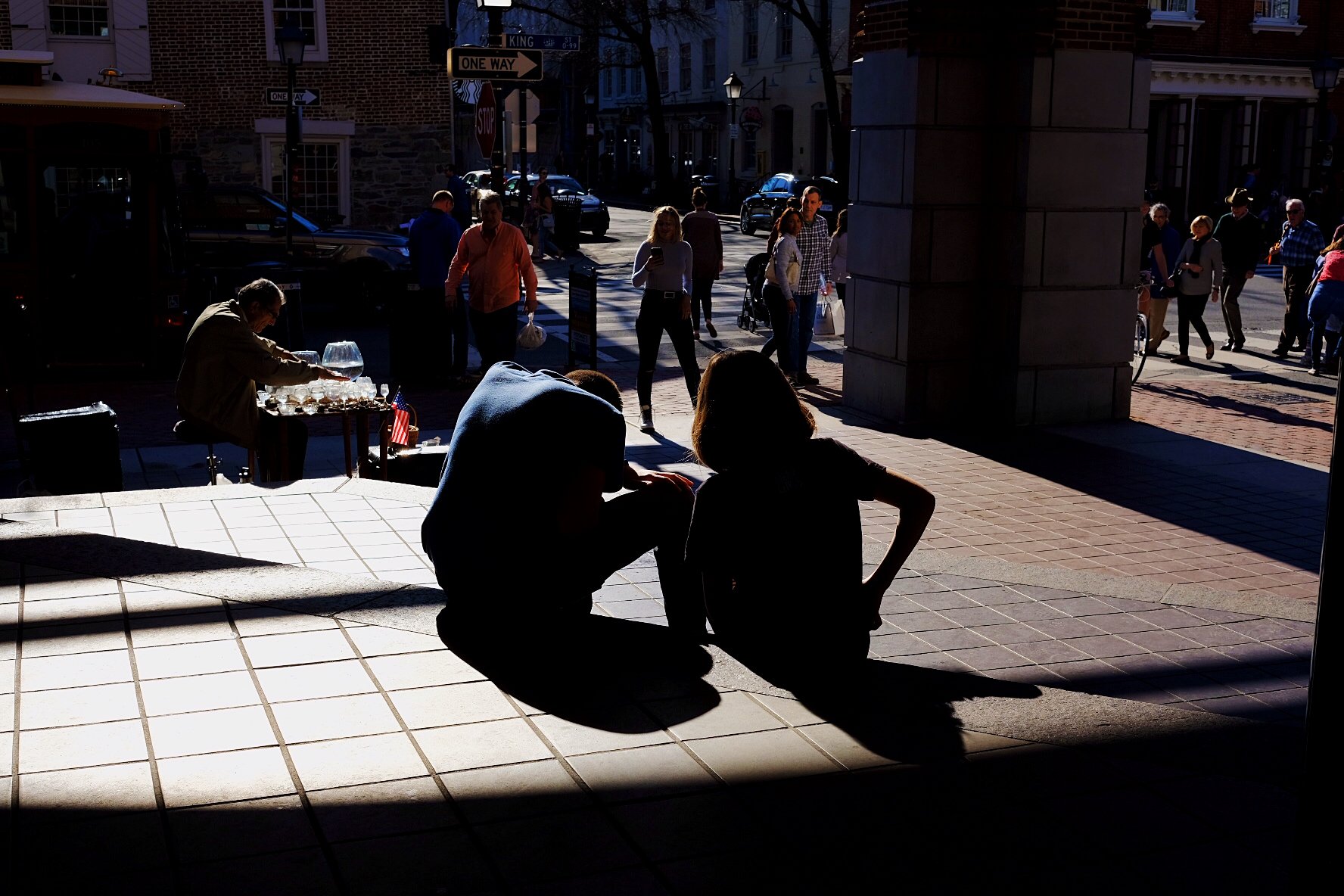
Street photograph of two people sit on steps silhouetted in the light.
This guide is designed to help beginners get started with street photography, with a specific focus on Washington, DC—where to go, what to look for, and how to photograph confidently and respectfully.
What Is Street Photography?
Street photography focuses on candid moments in public spaces. It is less about landmarks and more about people, gestures, light, and timing. A successful street photograph often reveals something subtle: an expression, a contradiction, a moment of humor, or a quiet pause in a busy place.
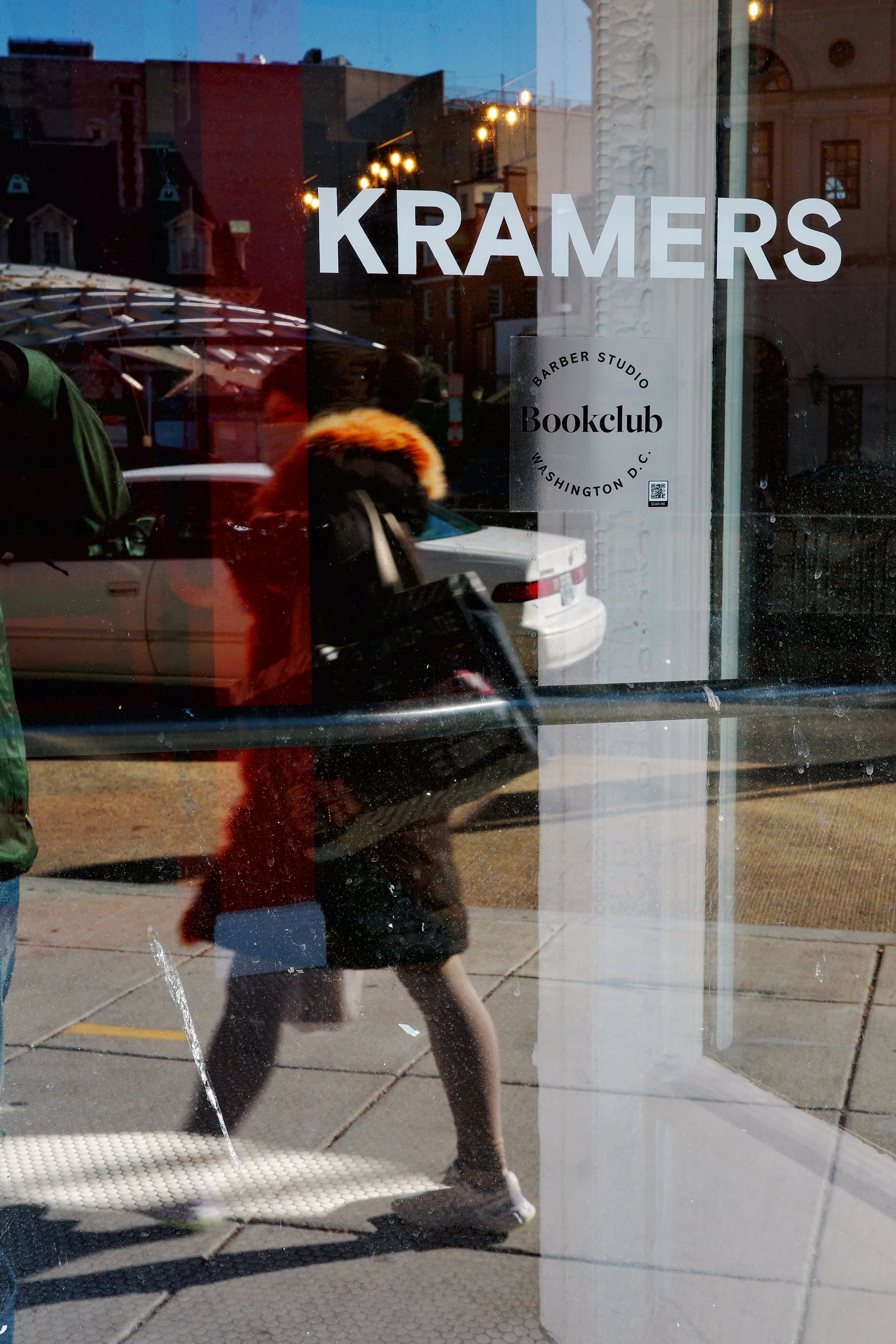
Street photograph of pedestrian reflected in the window of a local book store.
In Washington, DC, street photography often lives at the intersection of power and daily life. A suited staffer eating lunch on a park bench, tourists studying maps beside locals rushing to work, or a lone figure crossing a vast marble plaza can all tell stories unique to the city.
Why Washington, DC Is Ideal for Beginners
Washington, DC offers several advantages for those new to street photography:
Constant foot traffic from commuters, tourists, and residents
Distinct neighborhoods with different visual identities
Strong public transit that makes exploration easy
Wide sidewalks and open spaces that allow comfortable shooting distances
Free museums and public architecture that add visual context
Just as importantly, photography in public spaces is common in DC. Cameras are expected, which can make beginners feel less self-conscious.
Best Areas for Street Photography in DC
The National Mall
The Mall is more than monuments. Early mornings and late afternoons are ideal for capturing joggers, school groups, and solitary visitors framed against iconic backdrops. Focus on scale—small human moments against large symbolic spaces.
Downtown and Federal Triangle
This area offers strong contrasts: formal architecture paired with informal human behavior. Watch for reflections in glass buildings, repeating patterns, and moments of movement between crosswalks and metro entrances.
Neighborhoods like Capitol Hill, Shaw, and Adams Morgan
Residential and mixed-use neighborhoods are excellent for slower, more intimate street photography. Stoops, corner stores, cafes, and neighborhood parks offer everyday scenes with character.
Union Station
A classic location for beginners. The mix of travelers, commuters, and dramatic light creates natural storytelling opportunities. Look for waiting, reuniting, and passing moments.
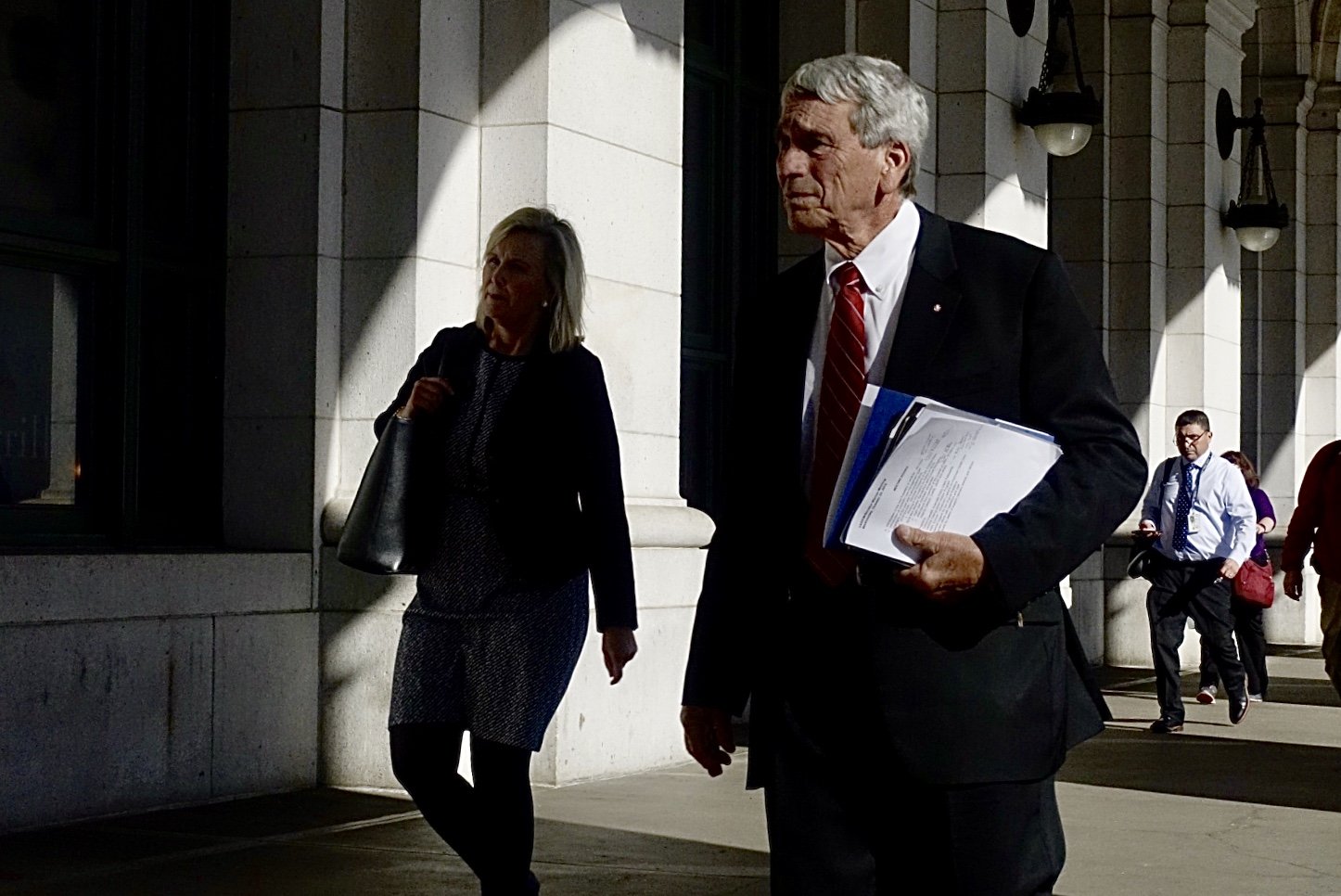
Street photograph of a man in a suit walking through arches of Union Station.
DC Metro Stations
Metro stations are visually striking and full of rhythm. Long escalators, directional signage, and pools of artificial light create strong compositions. Always be mindful of transit rules and avoid obstructing foot traffic.
Gear Tips for Beginners
You do not need expensive equipment to start street photography.
A small, unobtrusive camera helps you blend in. A mirrorless camera or compact DSLR is ideal, but even a smartphone can work if you focus on timing and composition.
A prime lens between 35mm and 50mm (full-frame equivalent) is a common choice. It closely matches human perspective and encourages you to move your feet rather than zoom.
Set your camera to aperture priority or manual mode, keep your ISO flexible, and aim for a shutter speed fast enough to freeze motion, especially in busy areas like downtown or metro platforms.
Check out my standard camera settings for street photography here.
How to Shoot Confidently in Public
Confidence matters more than stealth. Move with purpose, avoid sudden movements, and do not linger nervously after taking a photo. Most people will not notice, and those who do are often curious rather than upset.
In the United States, photographing people in public spaces is generally legal. That said, ethics matter. Avoid photographing people in vulnerable situations or moments of distress. If someone notices and seems uncomfortable, a smile or a brief explanation often goes a long way.
What to Look For
As a beginner, train your eye to notice:
Light and shadow, especially around buildings and underpasses
Gestures and expressions that suggest emotion or story
Juxtaposition, such as tourists beside protest signs or historic buildings beside modern life
Repetition and patterns in architecture, clothing, or movement
Decisive moments, when elements align briefly and then disappear
Washington, DC is full of symbolic imagery. Use that symbolism sparingly and let human moments remain the focus.
Practice and Patience
Street photography rewards consistency. Walk the same route multiple times and notice how light, people, and energy change throughout the day. Some days you will come home with nothing. Other days one frame will make the entire walk worthwhile.
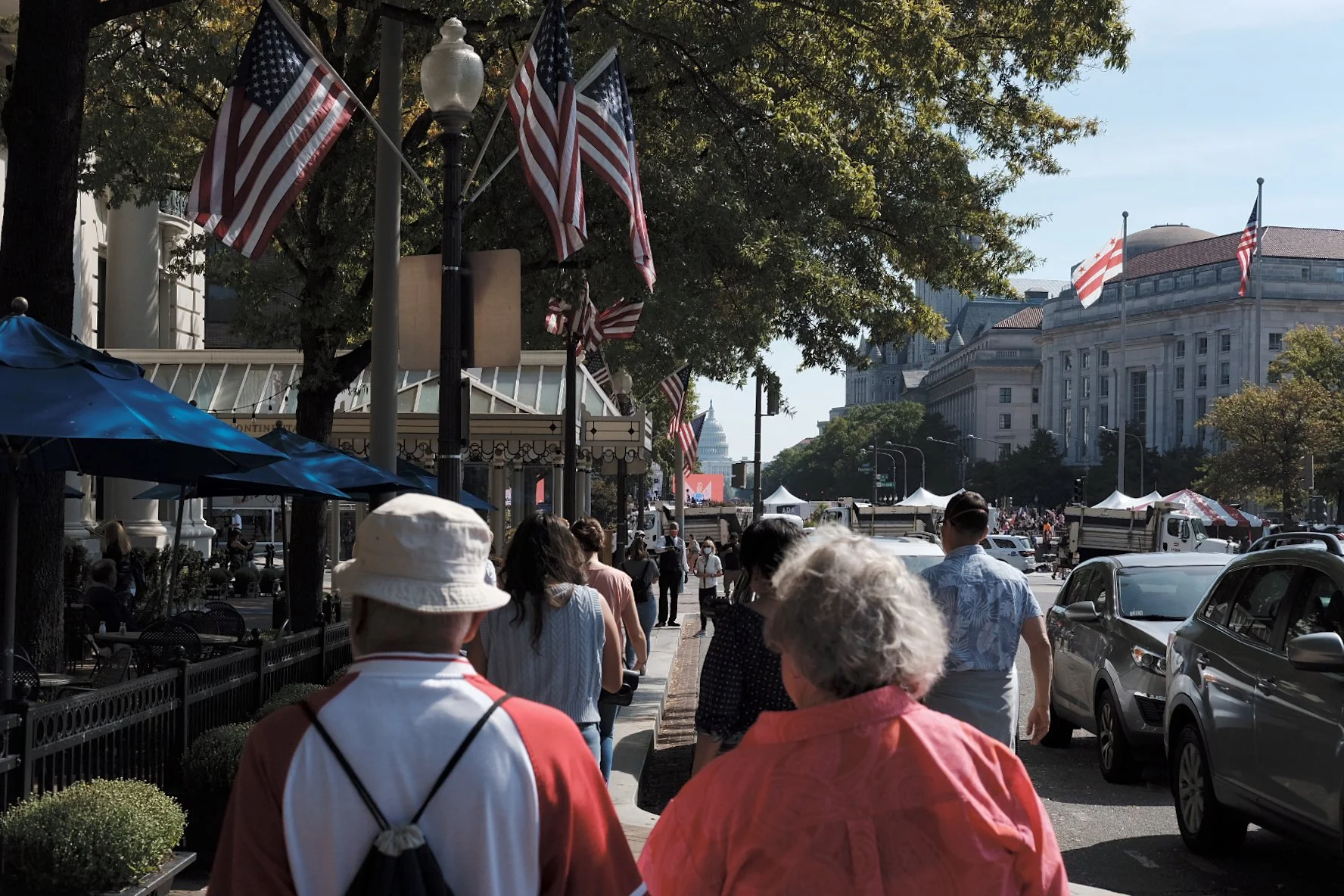
Street photograph of sightseers walking down Pennsylvania Avenue.
The goal is not perfection but awareness. Each outing sharpens your instincts and teaches you how to anticipate moments before they happen.
Final Thoughts
Street photography in Washington, DC is about more than documenting a city. It is about observing how people move through spaces shaped by history, power, and routine. For beginners, DC offers a forgiving and endlessly interesting environment to learn the craft.
Bring a camera, slow down, pay attention, and let the city reveal itself one moment at a time.