Street Photography at NYC’s Lunar New Year Parade
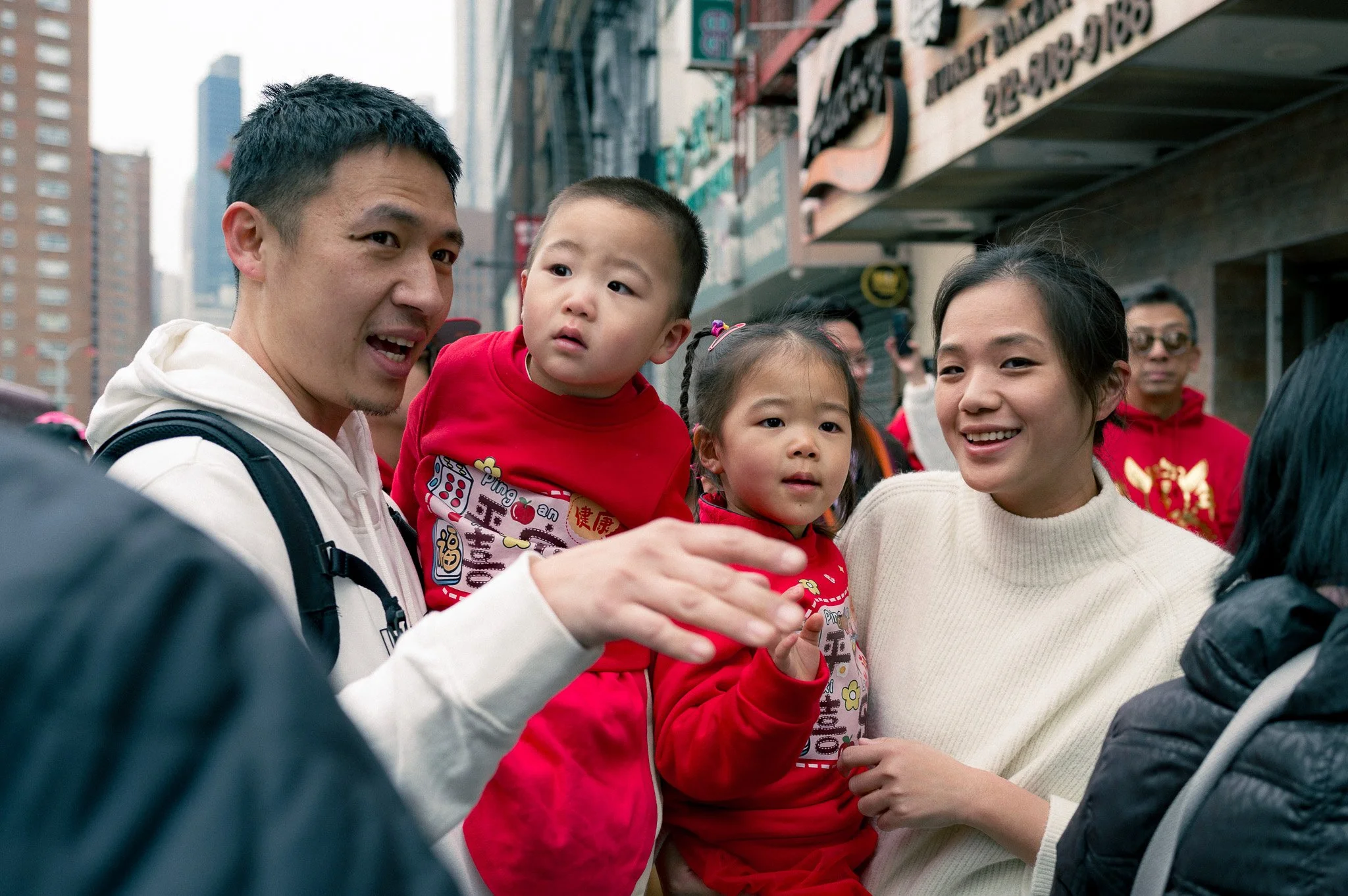
A family at Manhattan’s Lunar New Year Festival
Two years ago I was fortunate to have the opportunity to photograph Manhattan’s Lunar New Year parade. This post is long overdue, but as I prepare to return and photograph the year of the Fire Horse next month, I am looking back on that weekend. This is a part of my long running interest in documenting Chinatowns. New York’s Lunar New Year parade is not a tidy spectacle. It’s loud, compressed, ceremonial, chaotic, and deeply human—which makes it an ideal laboratory for street photography. These images circle the same truth from different angles: culture in motion, identity layered, and the photographer wedged right in the middle of it all.
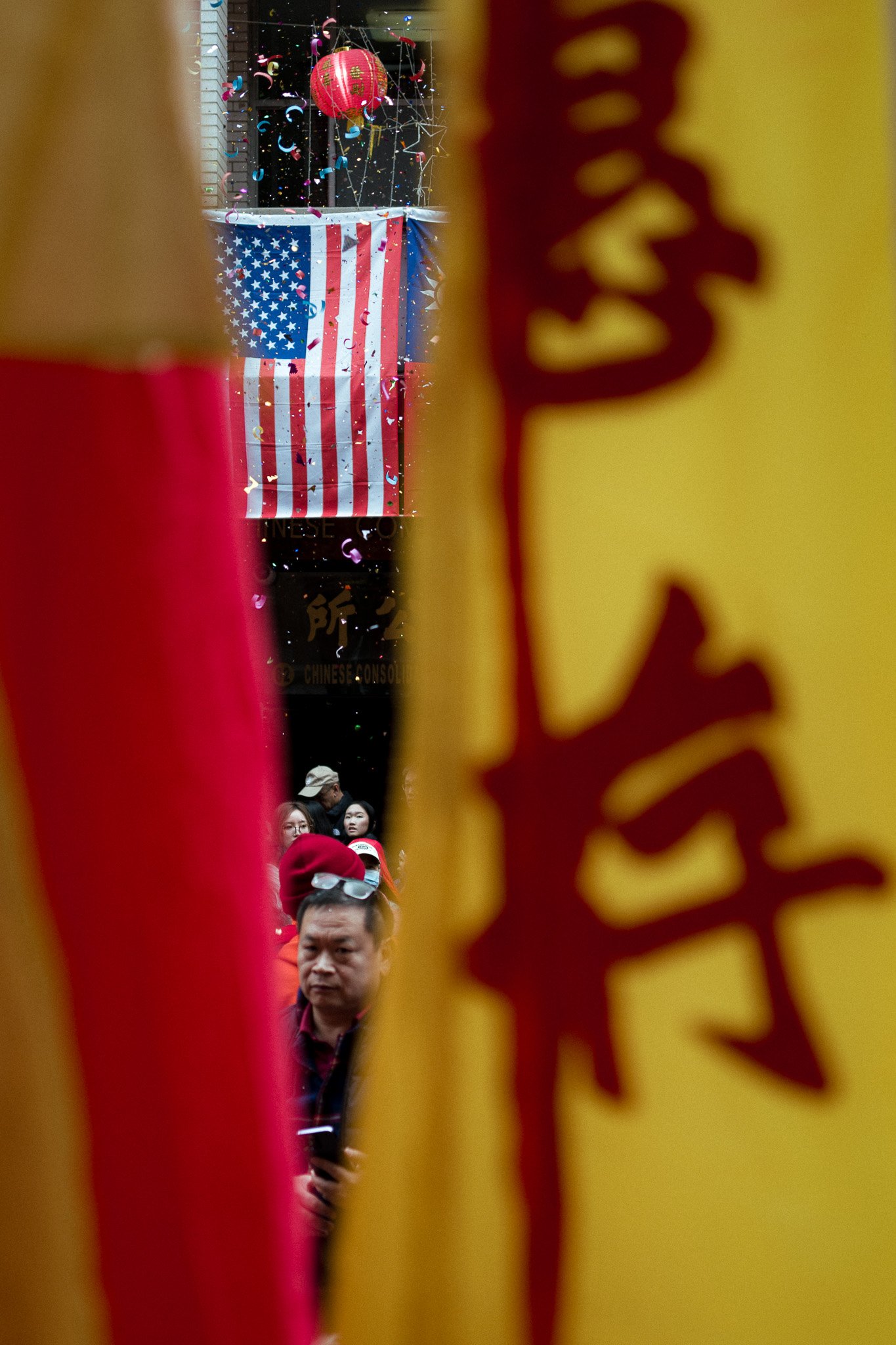
Lunar New Year, NYC.
The first photograph works like a visual riddle. You don’t enter the scene directly; you peer into it. Red and gold banners dominate the foreground, their fabric soft and out of focus, slicing the frame into vertical slivers. Through that narrow corridor, an American flag hangs above the street, confetti drifting like visual static. Below it, faces emerge—watchful, distracted, absorbed. The image is doing something street photography does best: forcing the viewer to look through culture rather than at it. The symbolism isn’t shouted; it’s framed. Immigration, identity, celebration, contradiction—all coexisting in one compressed moment. The photograph succeeds because it resists neat conclusions. It lets the street speak in fragments.
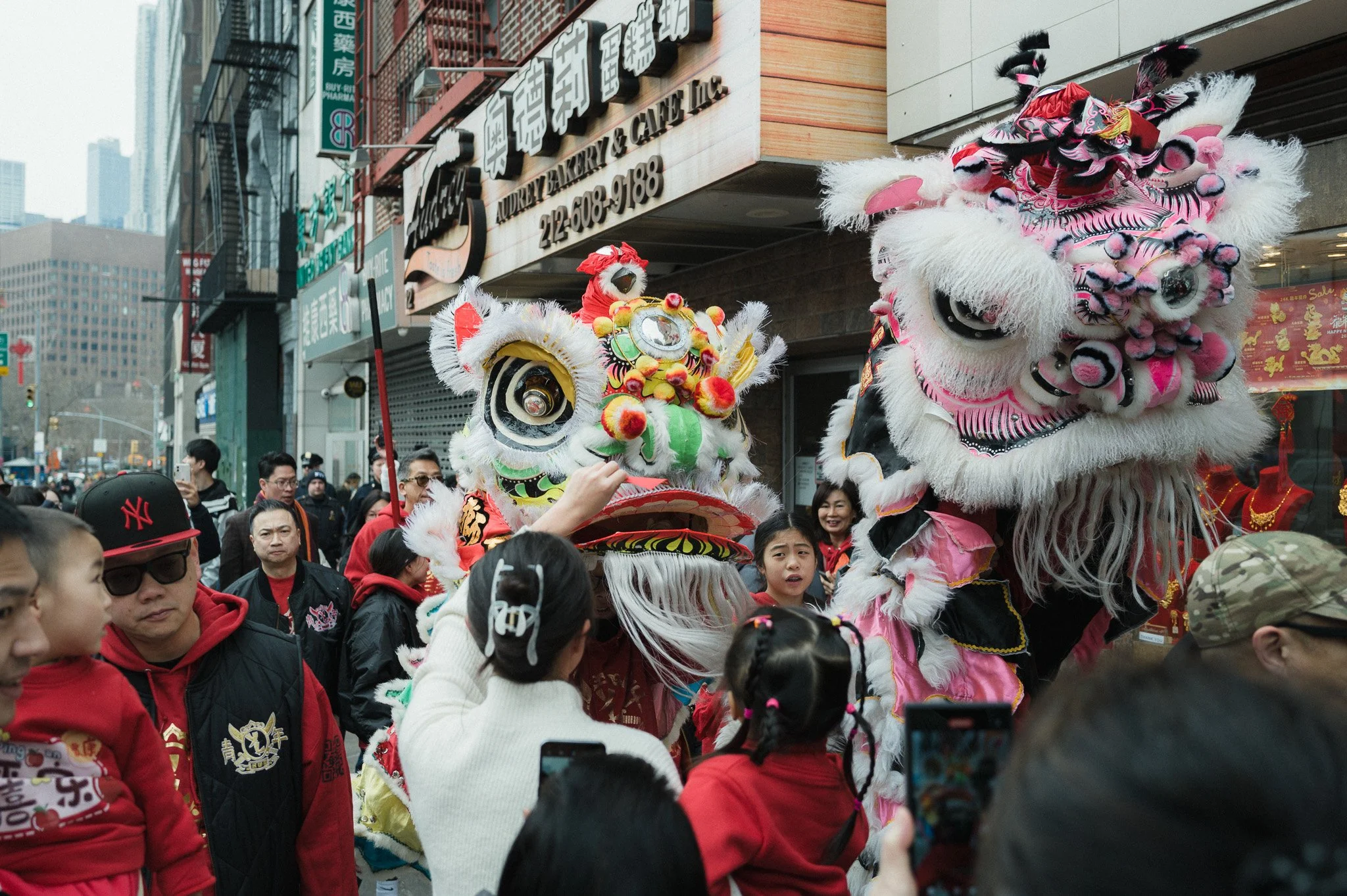
Lion Dancers at Lunar New Year, NYC.
The second image abandons subtlety and dives straight into contact. A pair of lion dancers fill the frame, their costumes impossibly textured—fur, sequins, painted eyes—alive in a way that feels almost confrontational. Children reach up. Phones rise instinctively. Adults hover between nostalgia and vigilance. This is a photograph about proximity. There is no safe observational distance here. Street photography thrives on this kind of friction: the moment when personal space dissolves and the camera becomes part of the crowd’s nervous system. Nothing is staged, yet everything feels choreographed by chance. The lions are tradition incarnate, but the surrounding sea of smartphones quietly reminds us that ritual now lives inside glass rectangles as much as memory.
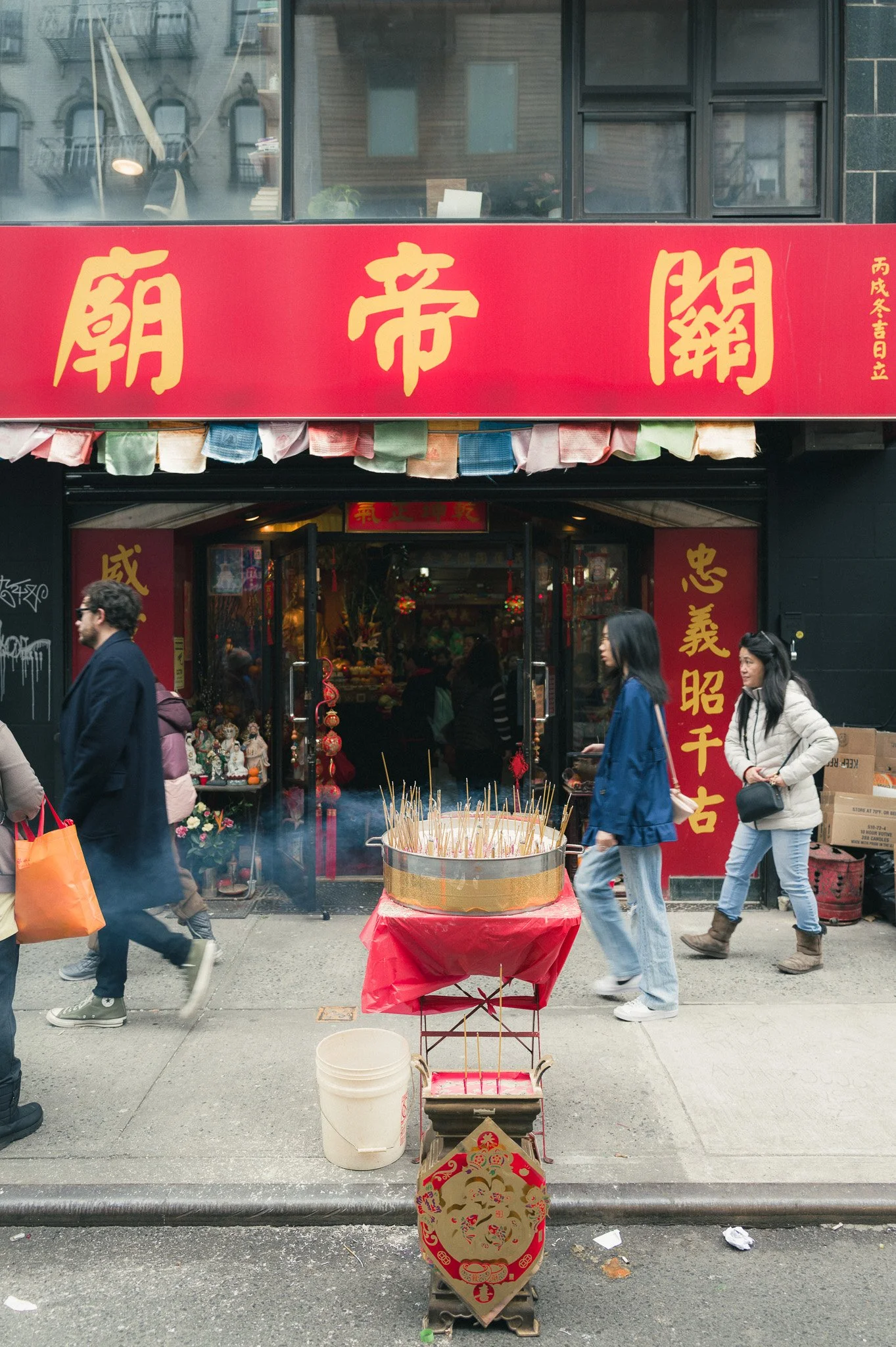
An incense burner at Lunar New Year, NYC.
The third photograph pulls back, exhales, and observes time passing. An incense burner sits centered on the sidewalk, smoke drifting upward as pedestrians blur past in opposite directions. Behind it, a temple storefront glows red and gold, its characters bold and declarative. This image is calmer, but no less alive. It’s a meditation on duration. The incense burns slowly while the city rushes on, indifferent but accommodating. Street photography often fetishizes the decisive moment, but this frame argues for something subtler: continuity. The street doesn’t climax; it persists. Faith, commerce, movement, and distraction share the same concrete.
Taken together, these photographs describe why Lunar New Year in New York is such fertile ground for street photography. It’s not just color or spectacle—though there’s plenty of both. It’s the density of meaning. Every frame contains overlapping systems: old and new, sacred and casual, public and intimate. The challenge isn’t finding subjects. The challenge is choosing where to stand and what to exclude. The street rewards patience and punishes certainty.
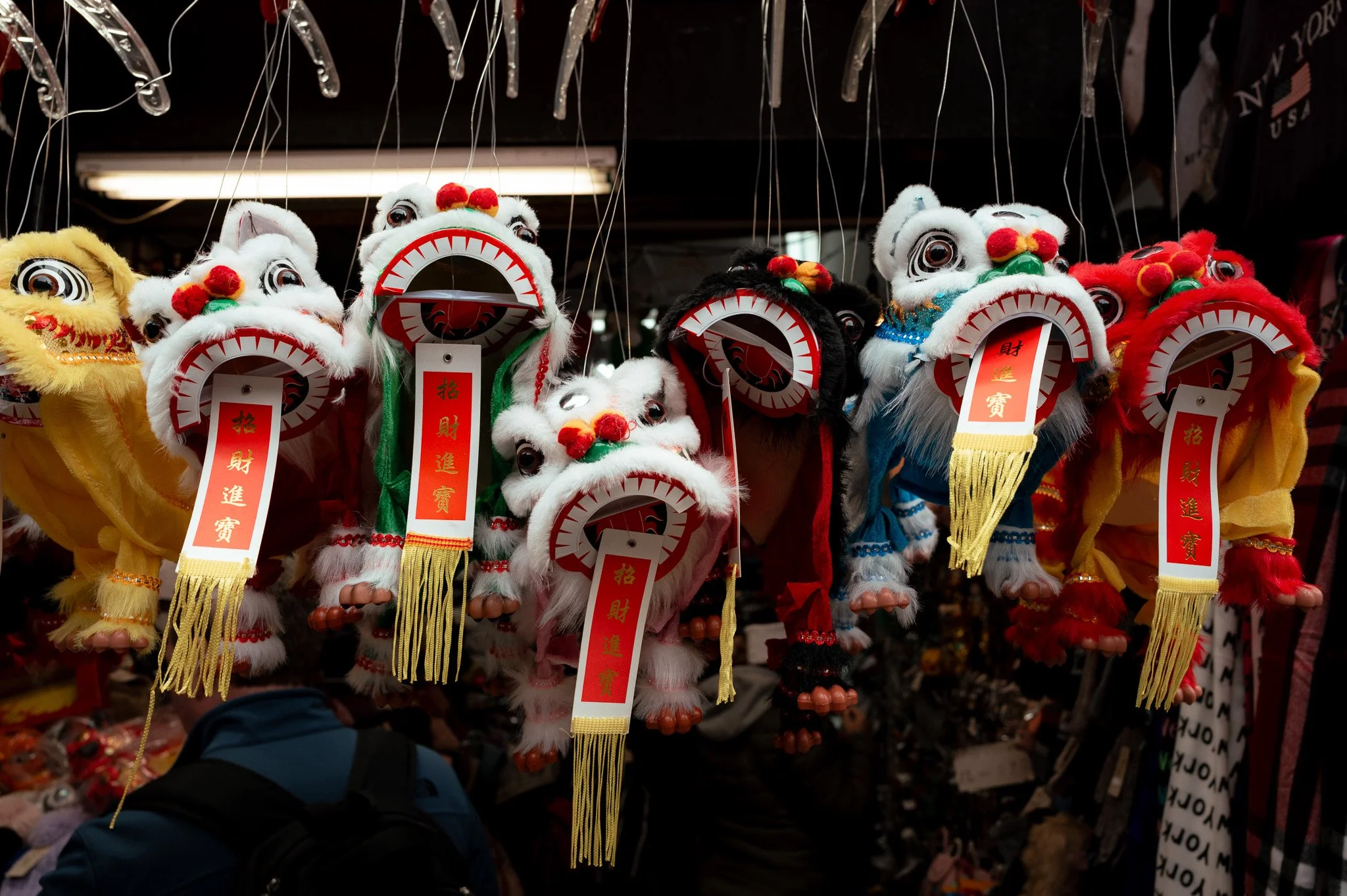
Lunar New Year Lions
Street photography at the Lunar New Year parade isn’t about capturing celebration alone. It’s about noticing how culture survives contact with modern life—how it adapts, compresses, and keeps moving forward. The camera doesn’t explain any of this. It just stands still long enough for the truth to walk past.