Documenting Dissent: Washington DC Street Photography at Pershing Park
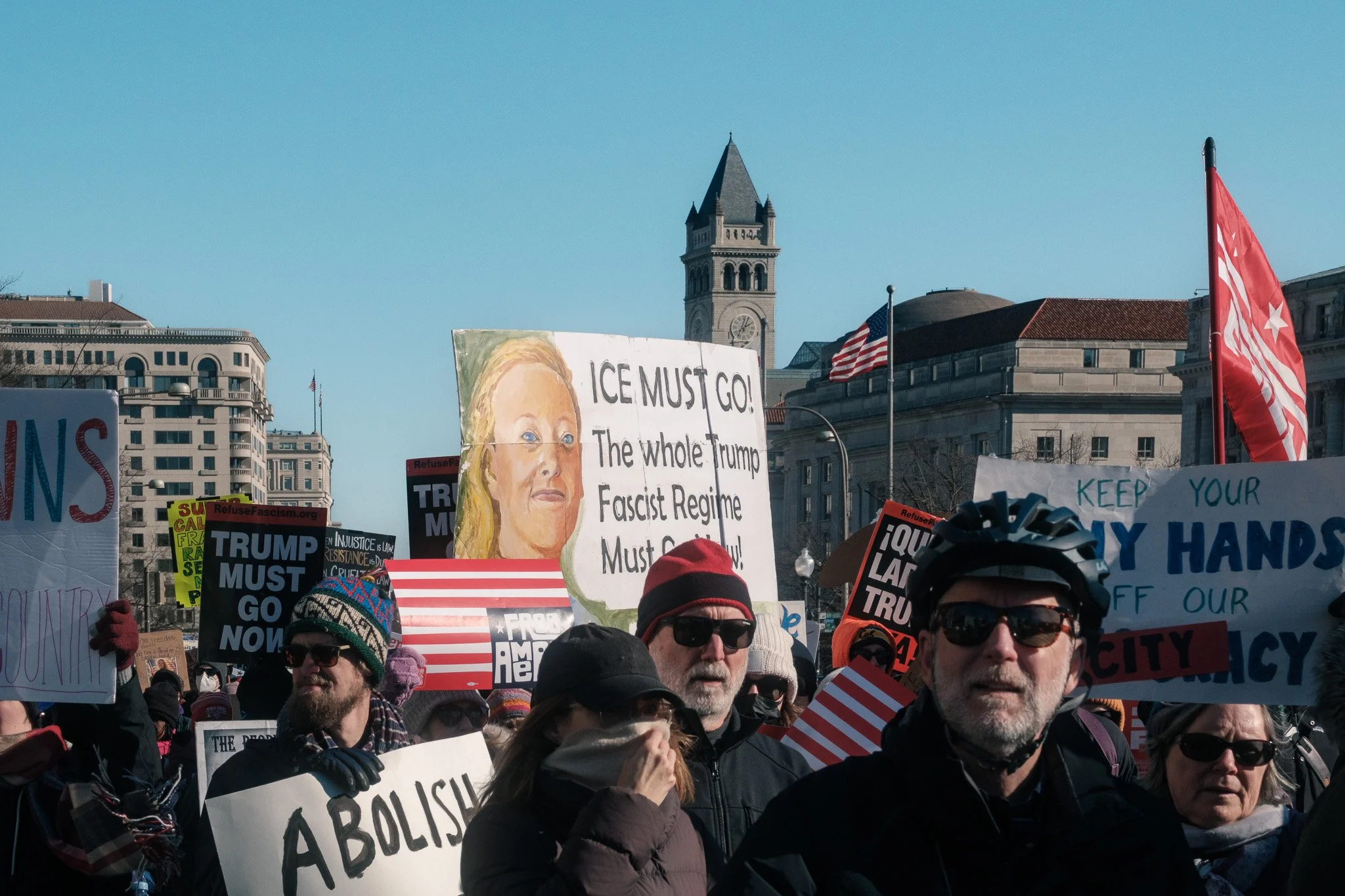
Protestors at Pershing Park 1/20/2026
On January 20, 2026, Pershing Park filled with voices, signs, flags, and the familiar geometry of protest. The date marked one year since Donald Trump’s second inauguration, and for many people gathered in downtown Washington, DC, it was less an anniversary than a reckoning. I was there as part of my ongoing project documenting protest, free speech, and public dissent through Washington DC street photography.
Street photography thrives where public life is most exposed. Protests compress emotion, ideology, symbolism, and spectacle into a single space. For a photographer, they are not about slogans alone, but about how individuals inhabit history in real time.
Pershing Park as a Stage for Protest
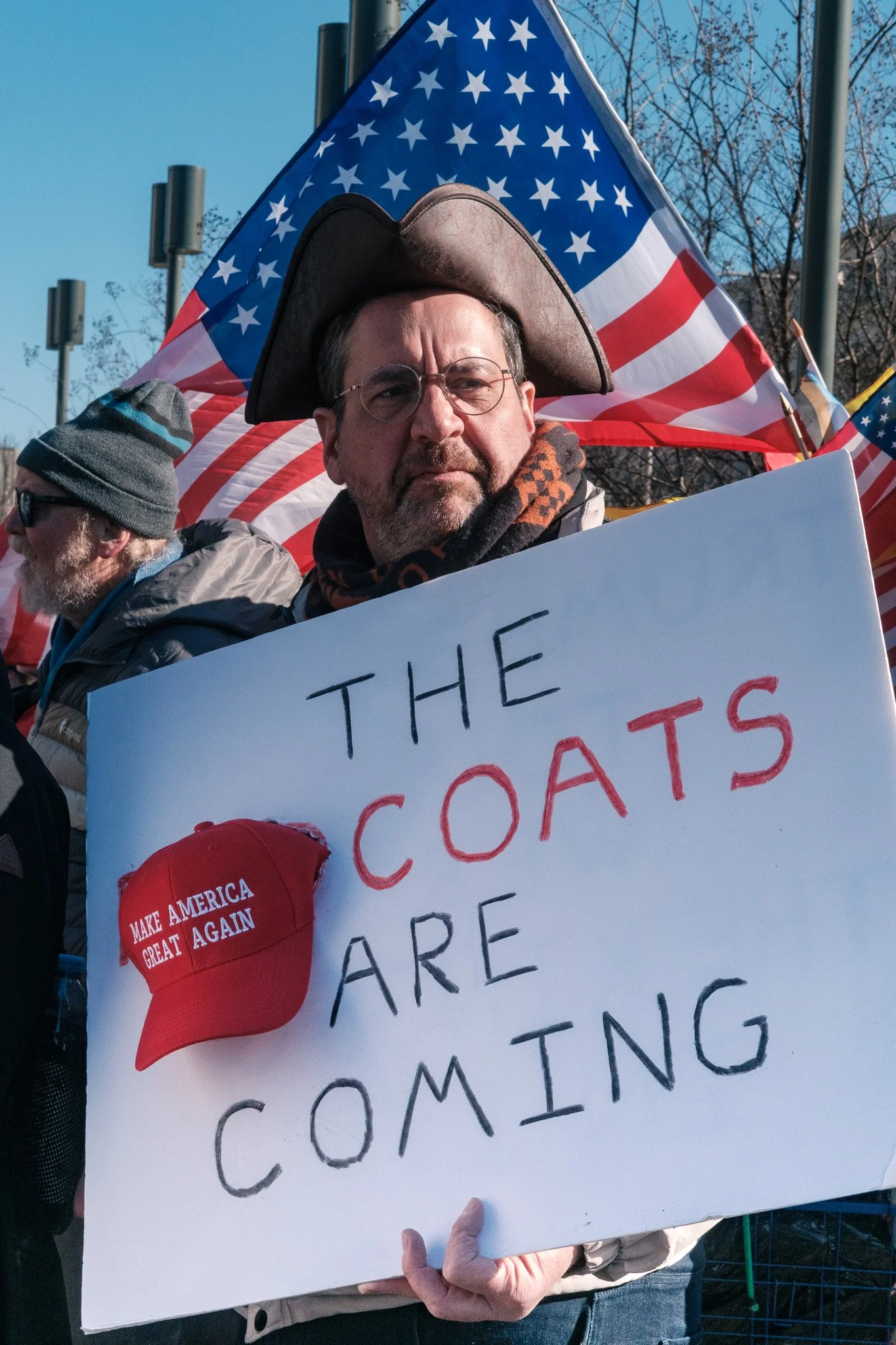
A protestor dressed as Paul Revere
Pershing Park is an interesting choice for protest photography. It sits just off Pennsylvania Avenue, close enough to the ceremonial core of Washington to feel the gravity of power, yet intimate enough to allow faces, gestures, and interactions to dominate the frame. The park becomes a temporary commons—a place where speech, disagreement, and assembly collide.
From a Washington DC street photography perspective, this matters. The location adds context without overwhelming the human story. Federal architecture looms nearby, but the protest itself becomes the subject: people standing shoulder to shoulder, holding signs at chest height, negotiating space, weather, and attention.
Symbols, Signs, and Visual Language
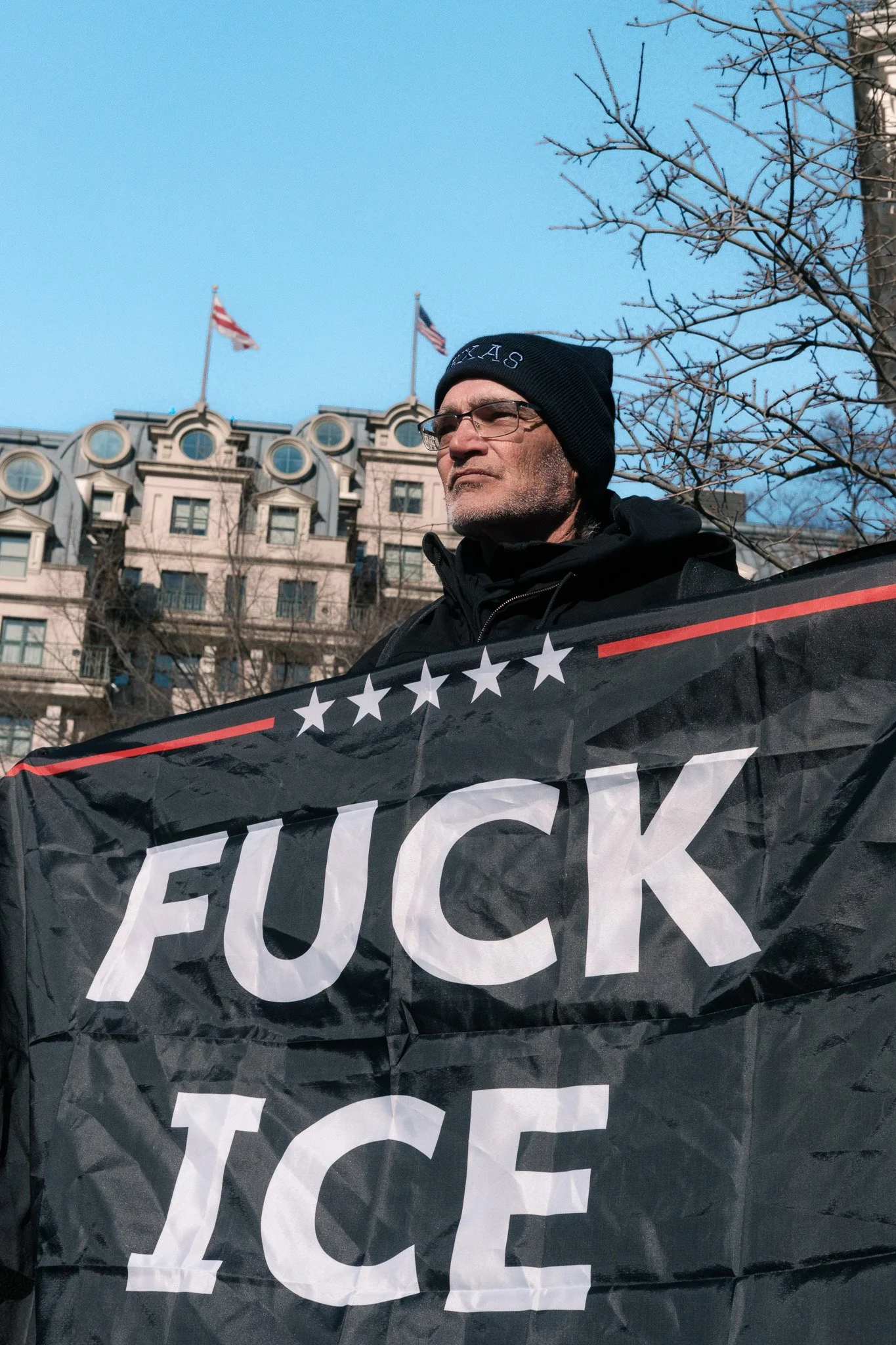
Displeasure at ICE
One of the defining features of protest street photography is its density of symbols. Flags, handmade signs, clothing, and expressions form a layered visual language. In one moment, a figure stands framed by an American flag, its stars and stripes echoing both patriotism and conflict. In another, a crowd advances beneath a skyline of signage—demands written in marker, paint, and urgency.
For street photographers, these layers are an invitation to slow down. Rather than chasing the loudest moment, I look for alignments: when a sign intersects with a face, when a gesture mirrors a message, when the background quietly reinforces the foreground. These are fleeting moments, but they carry the emotional weight of the event.
Faces in the Crowd
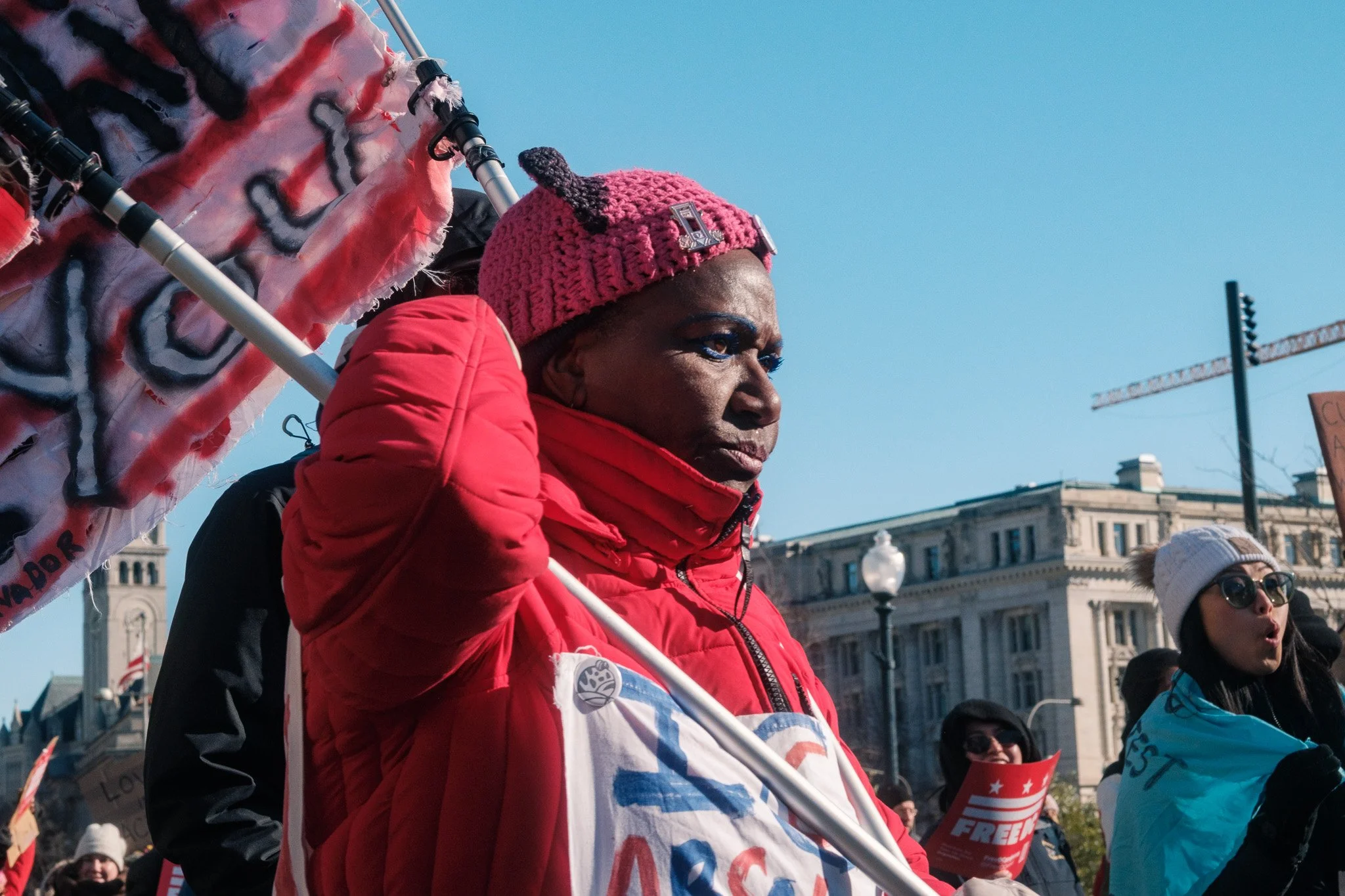
A woman leads a protest march
Protests are often photographed as masses, but street photography insists on the individual. At Pershing Park, faces told quieter stories than the chants. Some were resolute, others tired, others openly angry. A few seemed contemplative, as if still deciding how they felt about being there at all.
This is where Washington DC street photography intersects with social documentation. The camera becomes a witness rather than a megaphone. I avoid caricature and spectacle and instead focus on presence—people choosing to occupy public space and make their beliefs visible.
Free Speech in Public Space
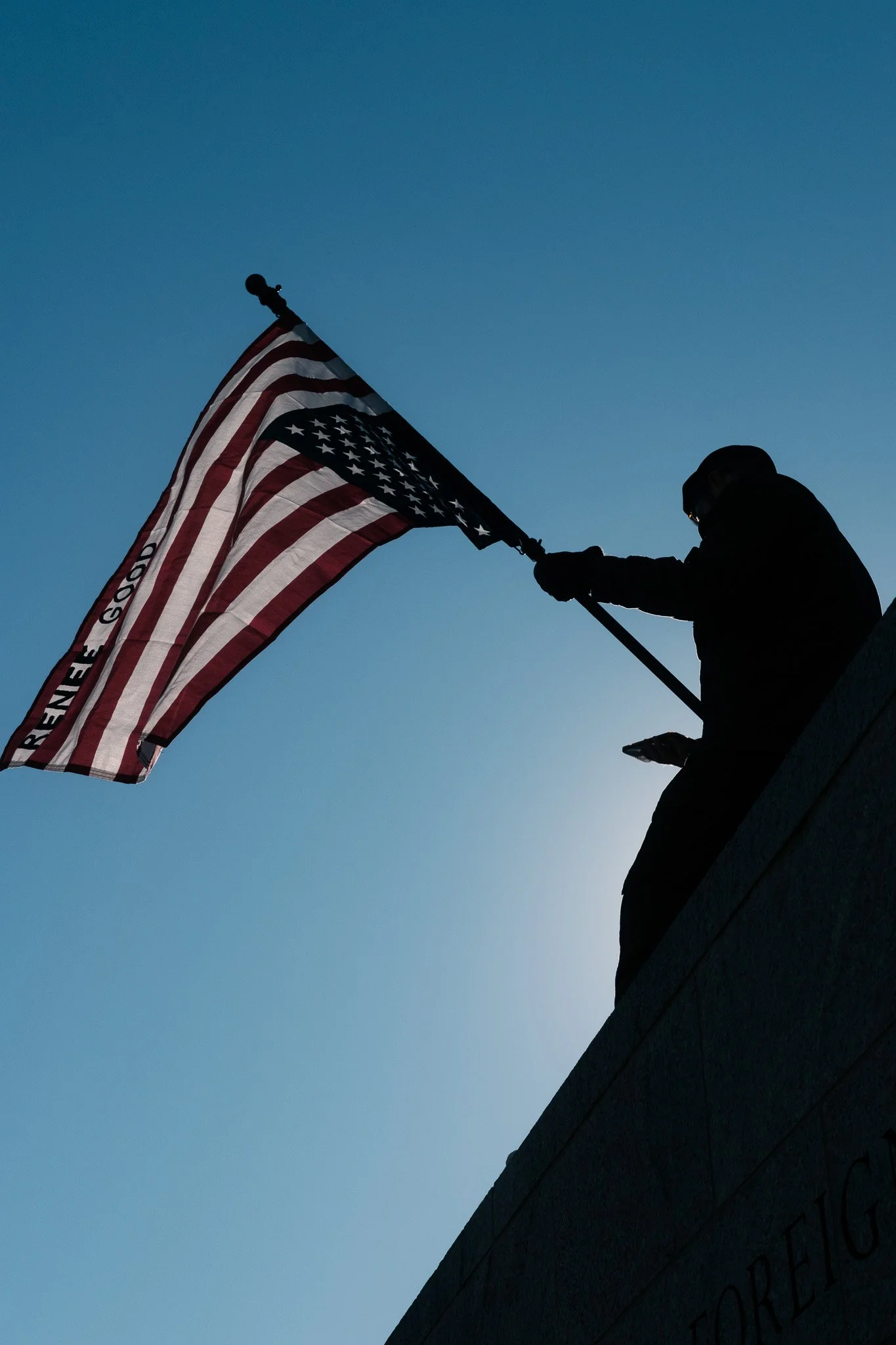
A soldier holds a distress flag with Renee Good’s name
This ongoing project is rooted in the idea that free speech is not abstract. It happens in parks, streets, and plazas. It happens in cold weather, under police supervision, amid noise and disagreement. Photographing protests is not about endorsing every message; it is about acknowledging that democratic expression leaves visual traces.
Street photography allows those traces to persist. Long after the crowd disperses, the images remain as records of who showed up, how they were seen, and what the moment felt like from inside it.
Continuing the Project
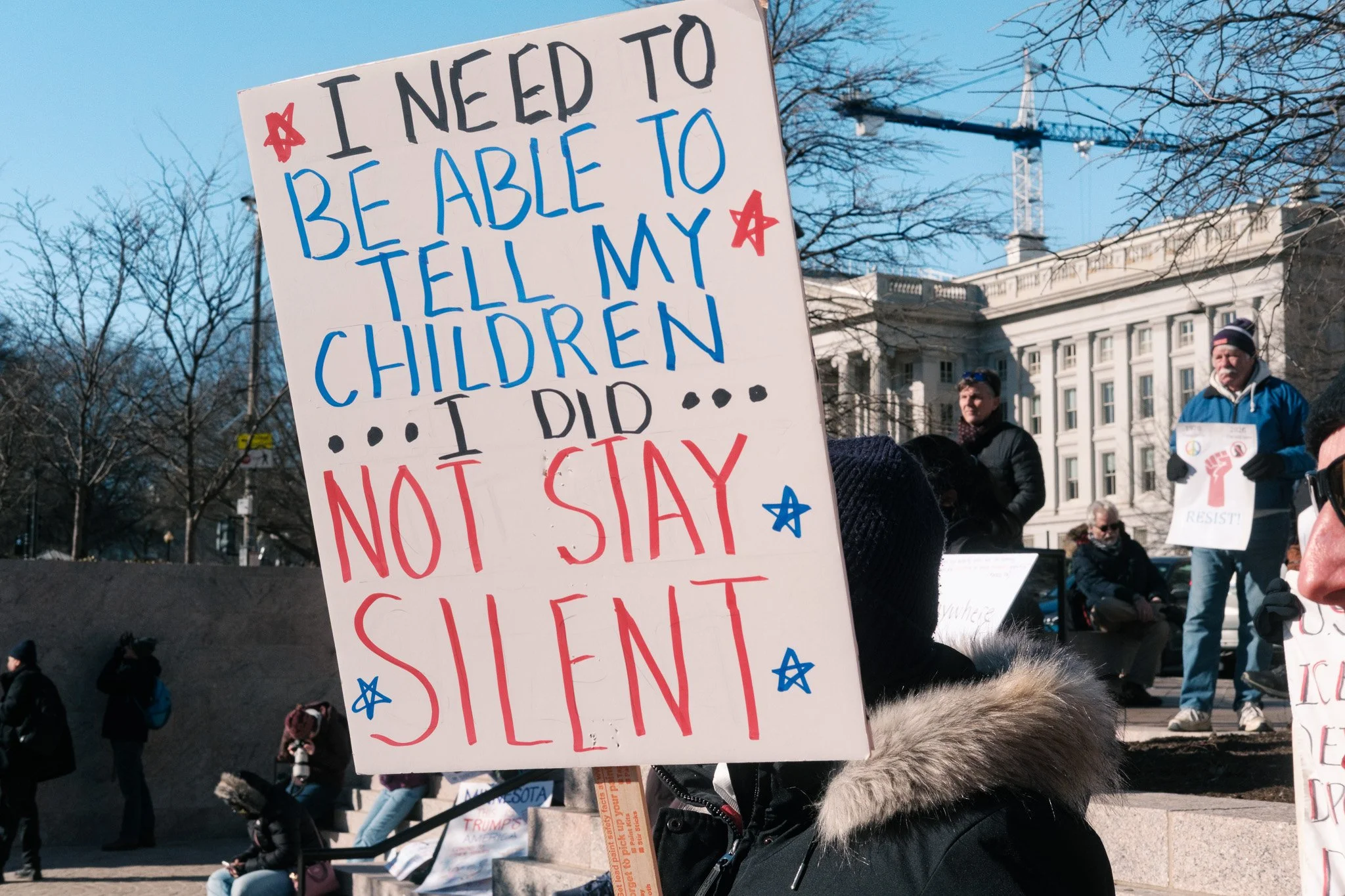
A protestor holding a sign
Covering the January 20, 2026 protest at Pershing Park felt like a continuation rather than a departure. Washington, DC is a city where power is permanent, but protest is cyclical. Each generation finds its own reasons to gather, and each gathering reshapes the visual archive of dissent.
For me, Washington DC street photography is about staying attentive to those cycles. Protests are not isolated events; they are chapters in a longer story about public space, authority, and the enduring human urge to be heard.
This project continues, one march, one sign, one fleeting expression at a time.