Washington DC Street Photography: Documenting the “No Kings” Rally
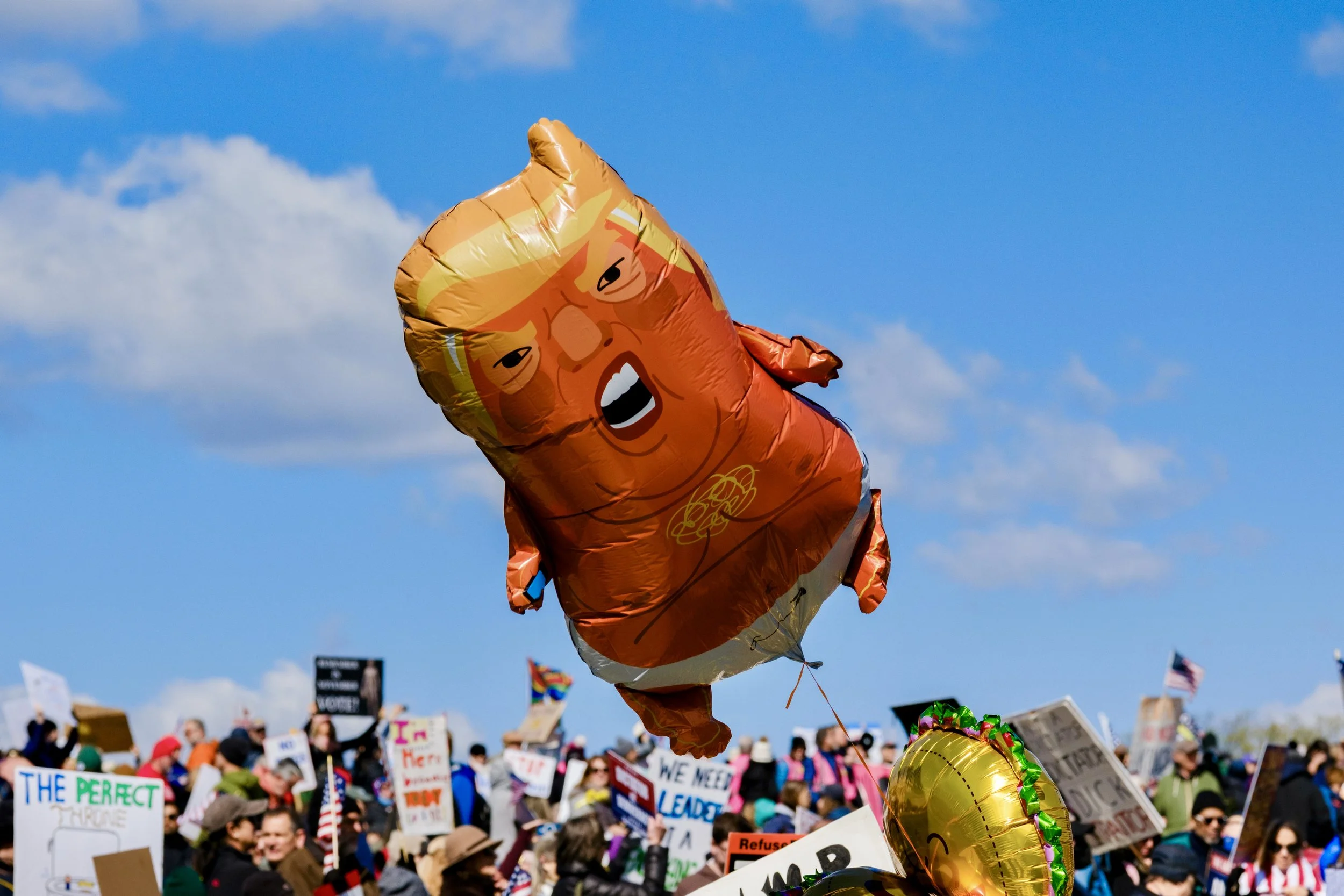
A Trump Balloon Floats Above the No Kings Rally
There are days when Washington DC street photography stops being about observation and becomes something closer to witnessing. Yesterday’s “No Kings” rally was one of those days—a convergence of protest, performance, symbolism, and raw civic energy that demanded to be documented with intention.
As a street photographer, moments like these challenge you to move beyond aesthetics and into storytelling. The images from this rally reflect not just a political moment, but the layered visual language that defines photographing Washington, DC.
A City Built for Visual Tension
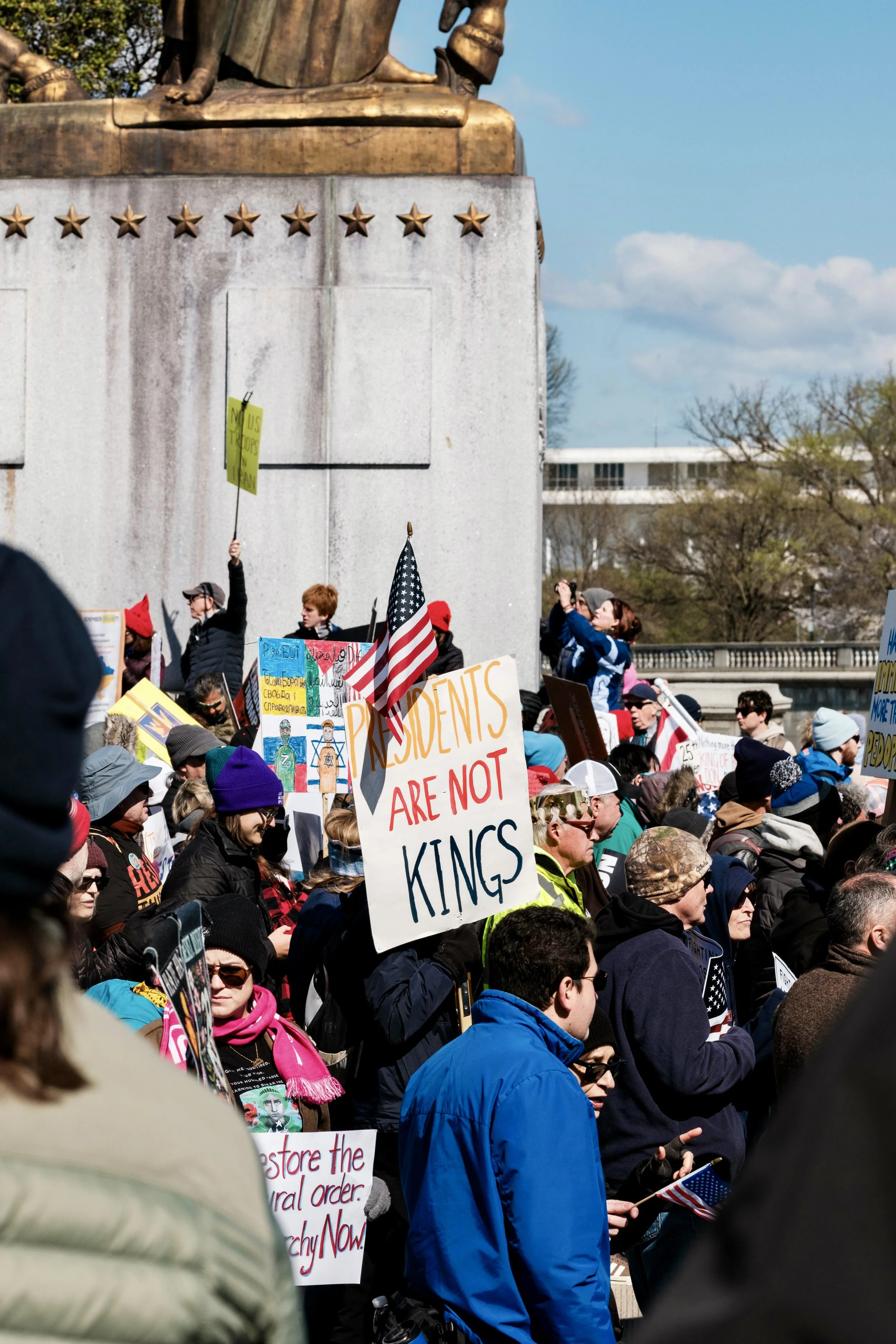
The No Kings Crowd Crosses the Arlington Memorial Bridge
Washington, DC offers a unique backdrop for street photography. Monumental architecture, symbolic spaces, and a constant undercurrent of political expression create a visual tension that’s hard to replicate elsewhere.
At the rally, that tension was everywhere:
A towering caricature balloon drifting above a sea of protest signs
Handwritten messages held high against neoclassical stone monuments
A mounted officer observing the crowd from a position that felt both historic and immediate
These contrasts are what make Washington DC street photography so compelling. You’re not just capturing people—you’re capturing the collision of power, protest, and place.
Photographing Protest: Layers of Meaning
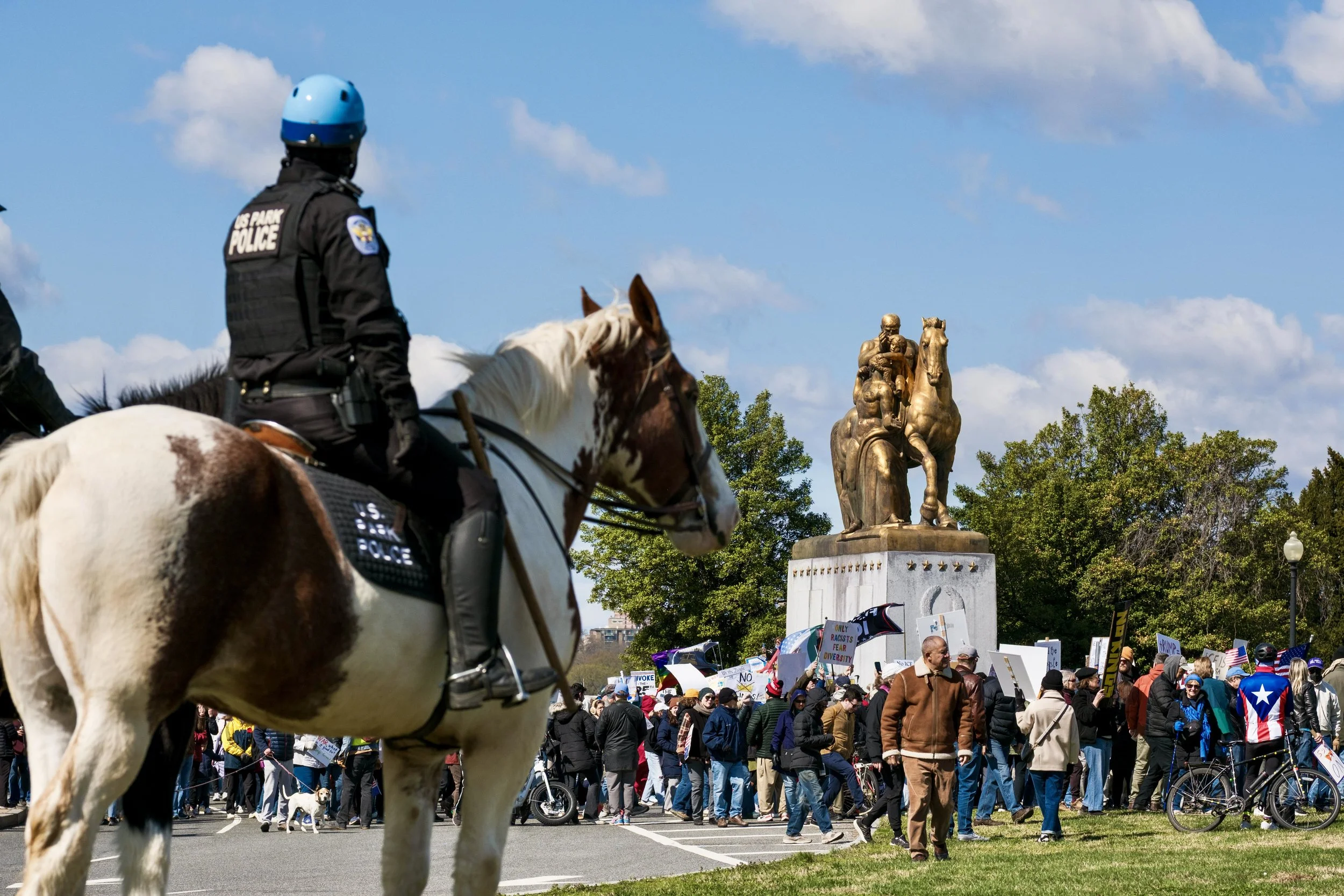
A Mounted Park Police Officer Watches the No Kings Protest
One of the defining characteristics of street photography in DC is density—of people, of messages, of symbols. At the rally, every frame contained multiple narratives:
A sign reading “Presidents Are Not Kings” held beneath a statue that evokes authority
American flags appearing in both patriotic and critical contexts
Costumes and satire (like the balloon) juxtaposed with serious, urgent messaging
In situations like this, composition becomes less about isolating a subject and more about embracing complexity. Wide frames allow the viewer to explore, while tighter shots can isolate emotional moments within the crowd.
If you’ve explored my earlier thoughts on layering and visual storytelling, you’ll see how those techniques come alive in an environment like this.
Timing, Movement, and Awareness
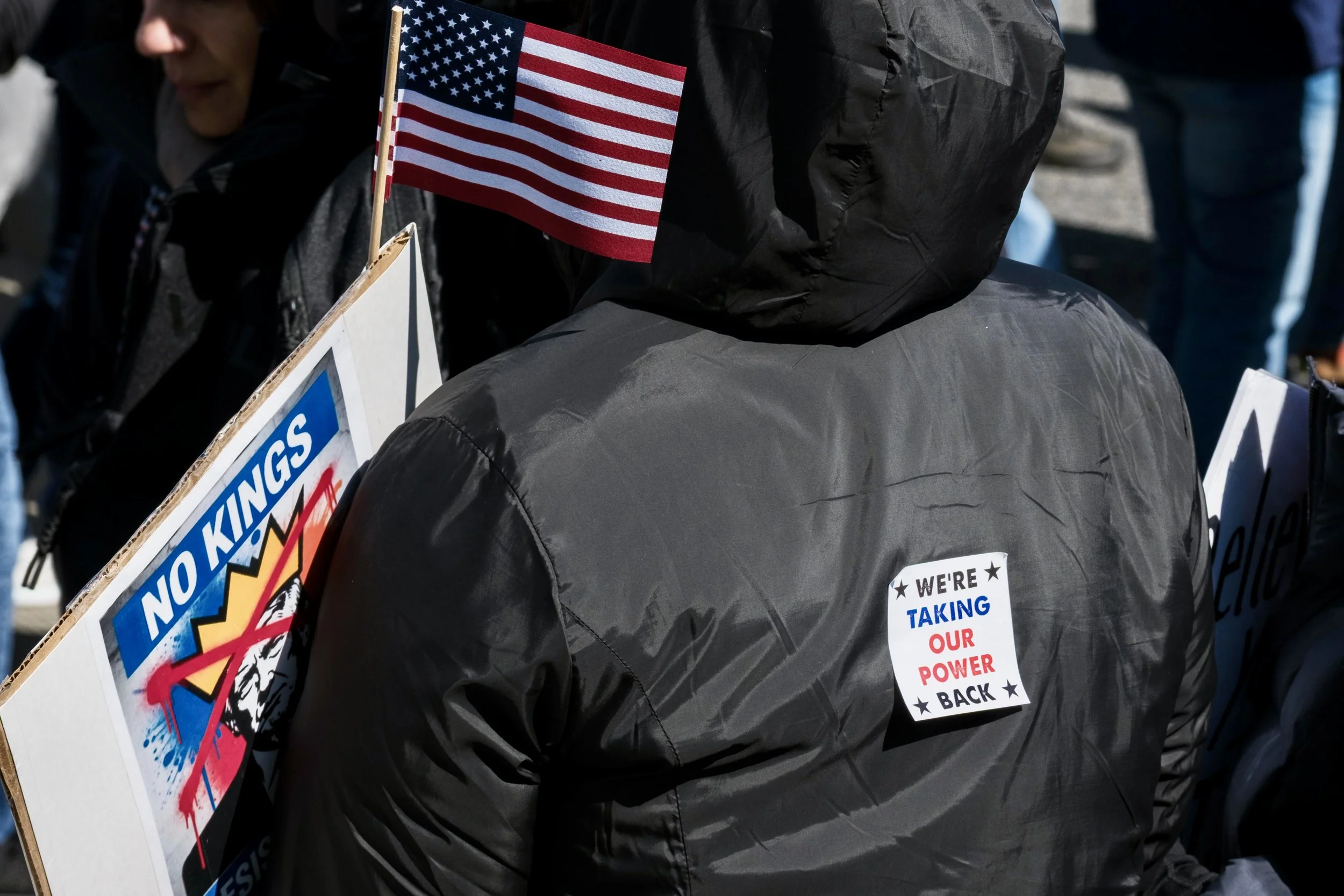
A No Kings Protestor Taking Power Back
Street photography at a rally is fast-paced and unpredictable. The key is anticipation.
Watch how signs move through the crowd
Pay attention to gestures—raised hands, turned heads, fleeting expressions
Use the environment (monuments, statues, police presence) as framing elements
In one frame, a mounted officer enters from the left while the crowd fills the background, anchored by a statue. The image works because it captures multiple layers of authority and response in a single moment.
This aligns closely with ideas I’ve discussed in previous posts about timing and decisive moments—especially in dynamic public spaces.
Color, Light, and Visual Impact
Unlike quieter street scenes, rallies are visually loud—and that’s a gift.
Bright signs and clothing create natural focal points
Balloons and props add unexpected color and shape
Midday light, often harsh, can actually enhance contrast and clarity
The bold orange of the balloon against a blue sky creates an almost surreal focal point—drawing the eye immediately before inviting deeper exploration of the crowd below.
Why This Matters
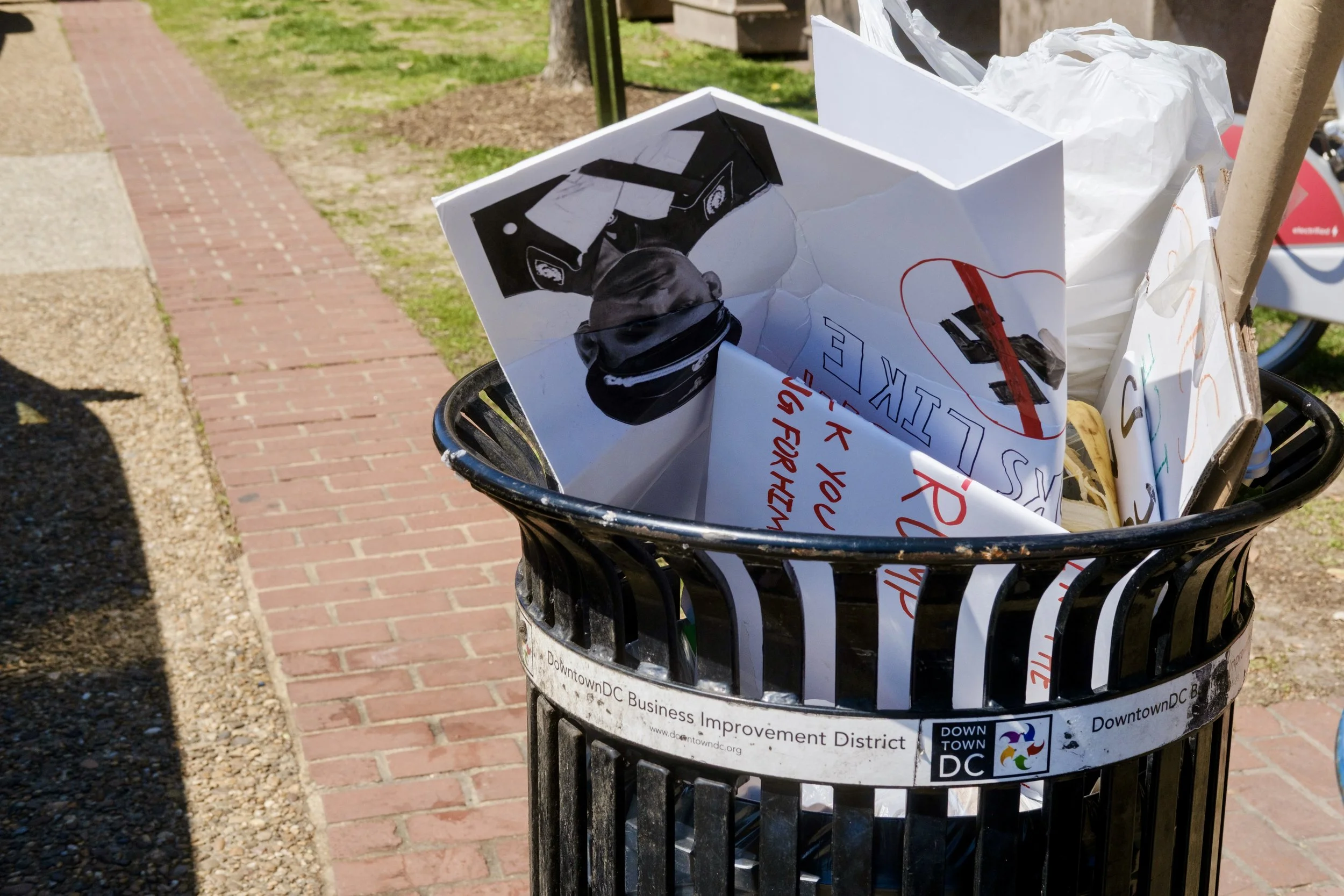
Fascist Symbols in A Garbage Can Near the National Mall
Street photography in Washington, DC is often tied to history as it unfolds. Events like the “No Kings” rally are reminders that the street is not just a stage—it’s a forum.
As photographers, we’re not just collecting images. We’re preserving moments that reflect the character of a place and time.
And in DC, those moments carry weight.
Final Thoughts
If you’re interested in Washington DC street photography, rallies and public gatherings offer an unparalleled opportunity to practice:
Layered composition
Real-time storytelling
Working with complex, fast-moving scenes
But more importantly, they remind you why street photography matters in the first place.
It’s not just about what you see—it’s about what’s happening.