Why Traveling With One Simple Camera Is a Smart Move for Street Photography
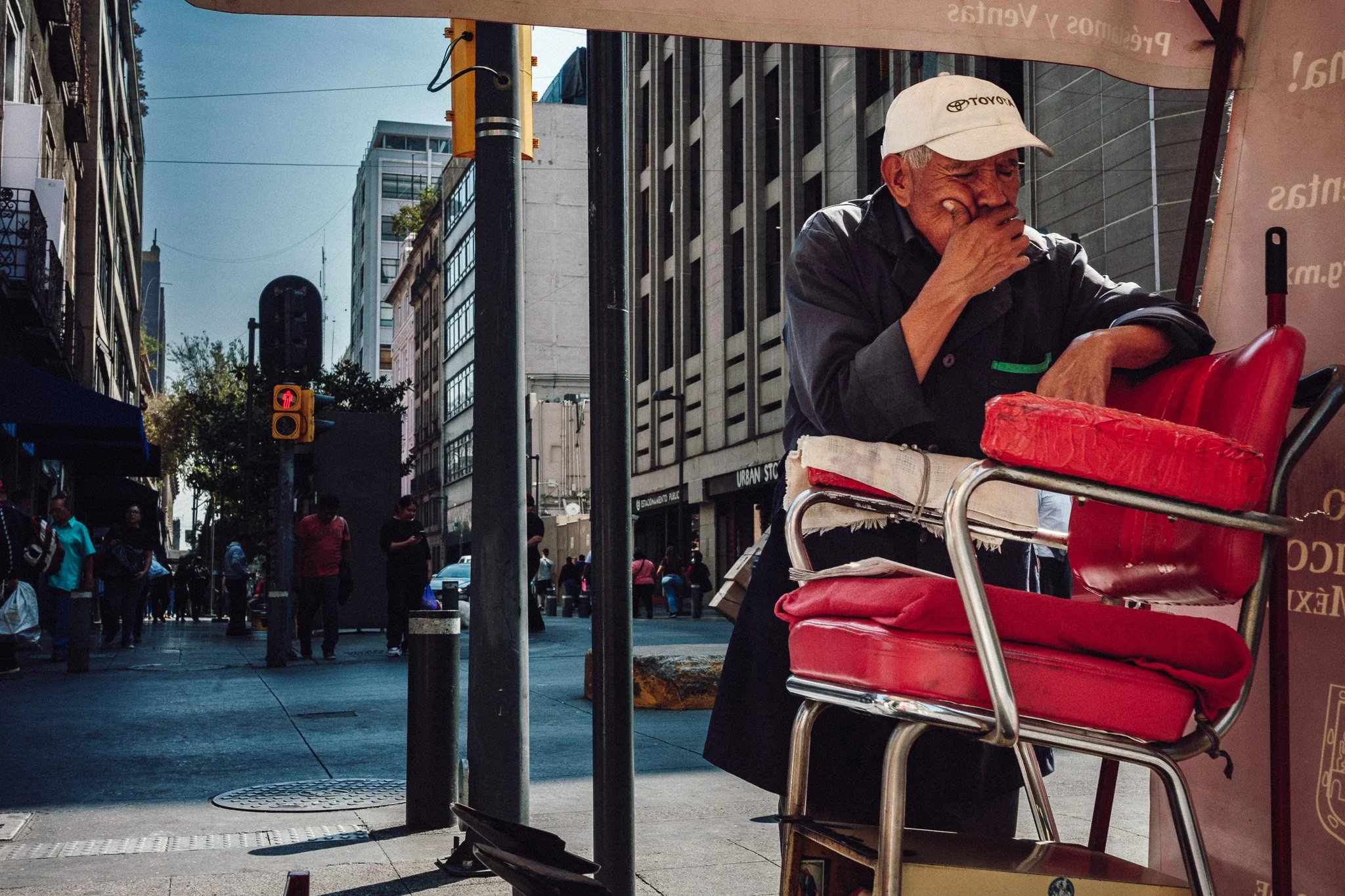
A shoe shiner in CDMX waits for his next customer
Street photography rewards attentiveness more than equipment. The street does not pause while you change lenses, adjust settings, or debate focal lengths. It keeps moving, indifferent to your indecision. That’s why traveling with one simple camera can be such a powerful choice—especially in a place as visually dense and unpredictable as Mexico City.
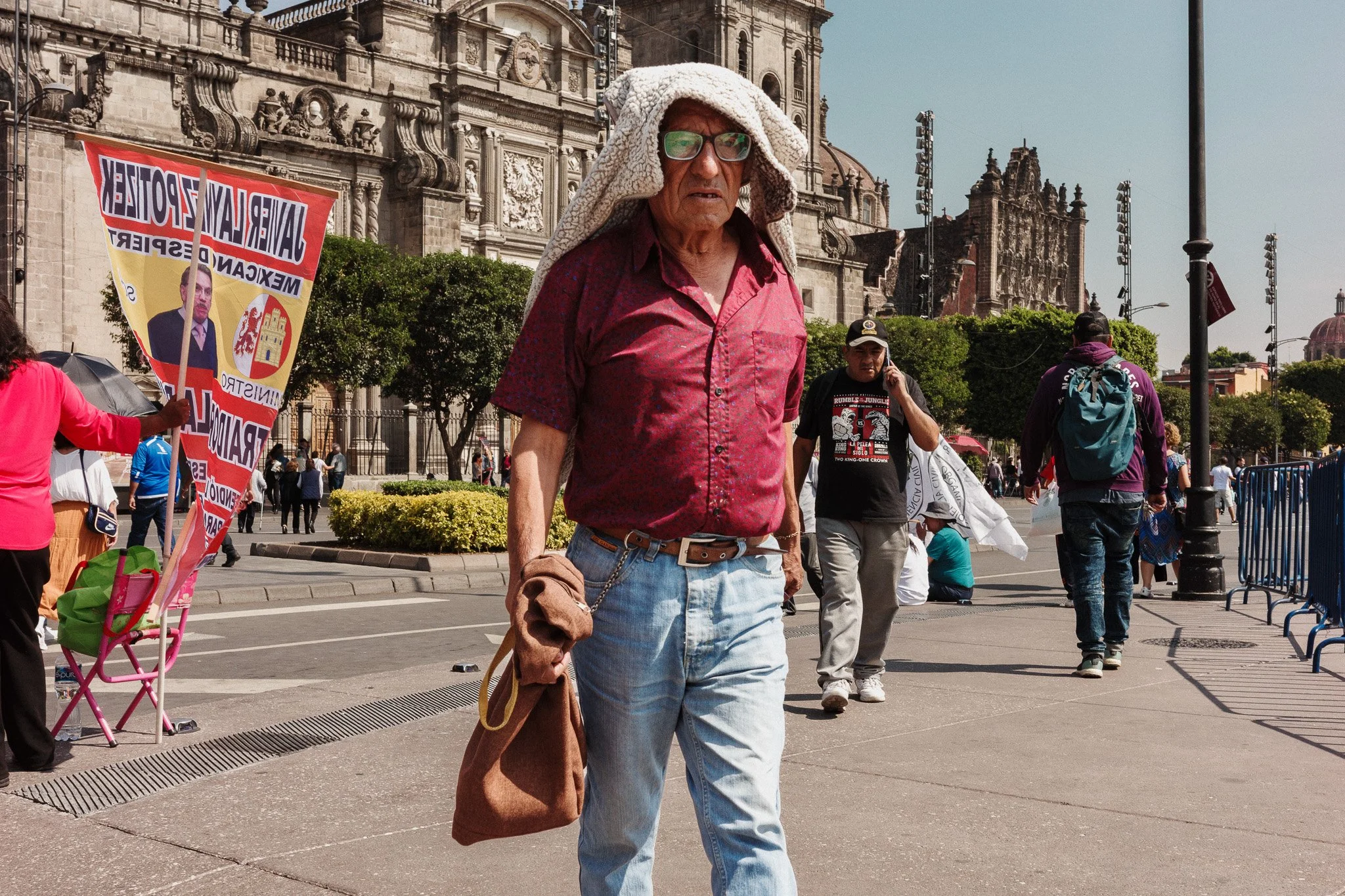
A man walks through the Mexico City Zocalo
On a trip to Mexico City, I brought only one camera: the Ricoh GR IIIx. No backups. No zooms. No second body “just in case.” Just a compact camera with a fixed lens and a design that disappears in your hand. These photographs came from that decision, and together they explain why limitation is often an advantage in street photography.
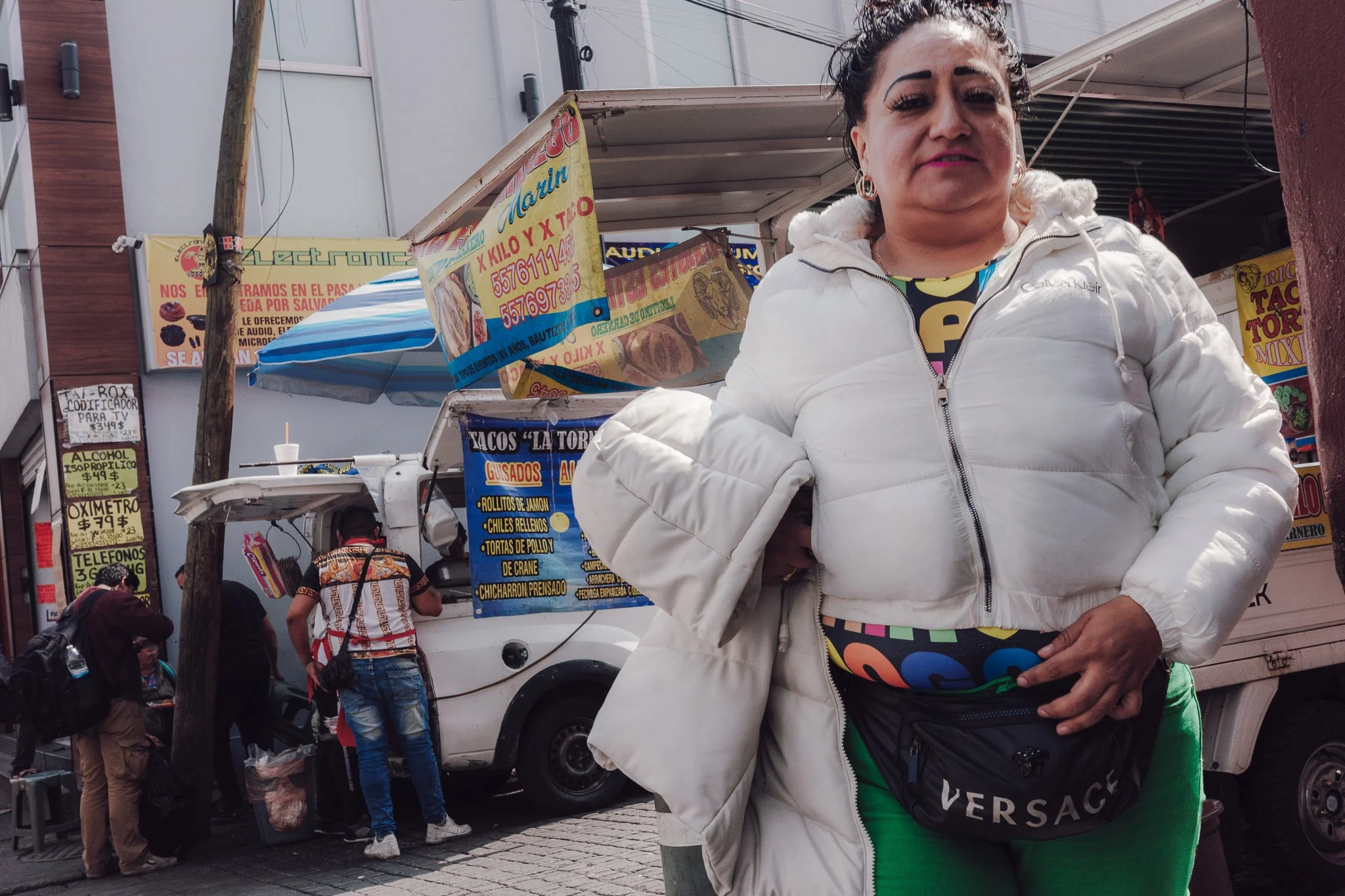
A woman on the street in Mexico City
The image above, made on a crowded sidewalk lined with food trucks, shows a woman standing confidently in the foreground while life churns behind her. The camera is close, the moment direct. This kind of photograph benefits from invisibility. A small camera like the Ricoh GR IIIx doesn’t announce itself. People don’t stiffen. The street doesn’t perform. You’re allowed to stand there, present but unthreatening, waiting for alignment. In street photography, that psychological footprint matters as much as technical capability.
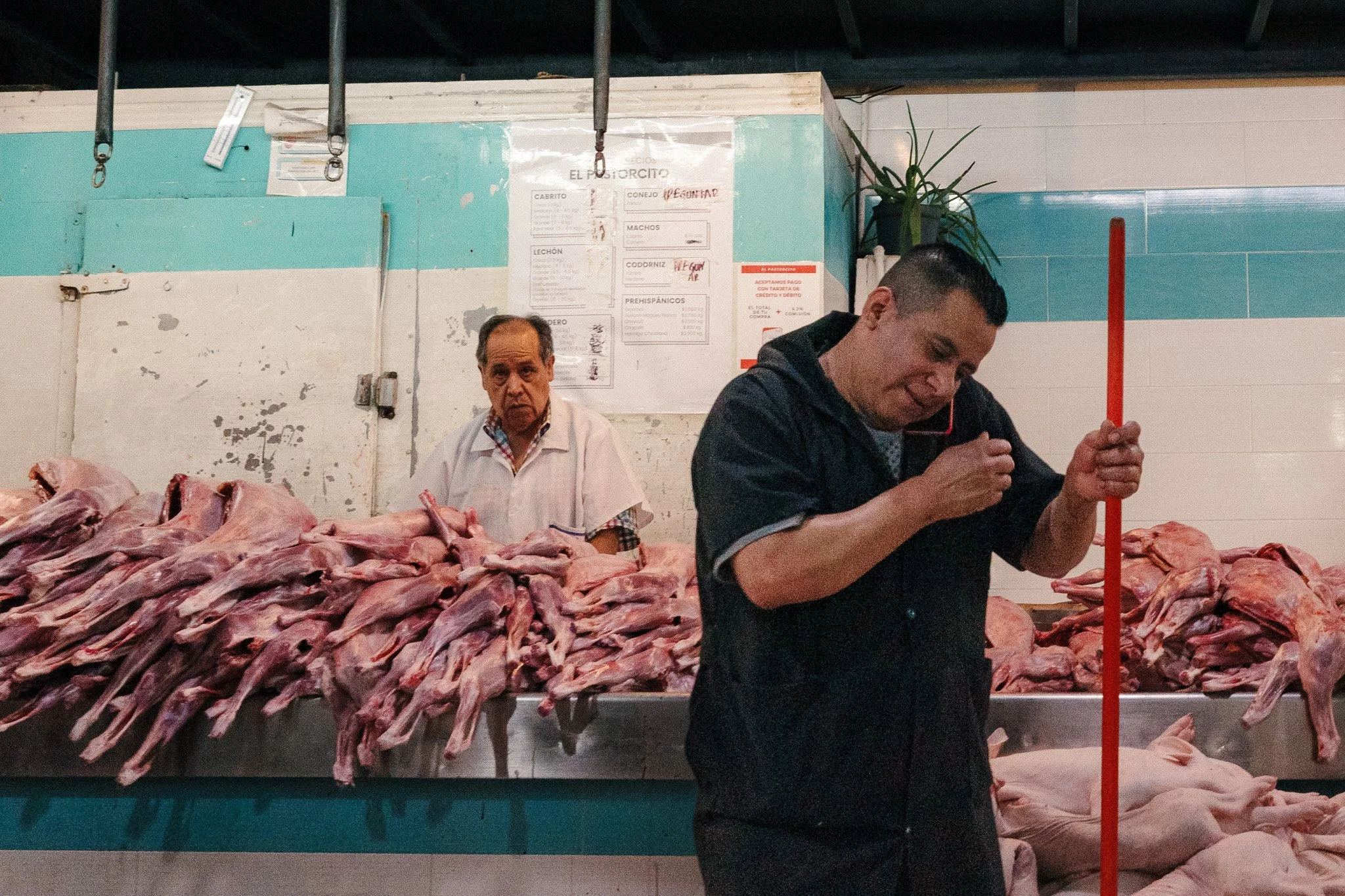
A butcher at a Mexico City market piers over his work
Traveling with one camera also simplifies your visual thinking. With a fixed focal length, you stop asking “Which lens should I use?” and start asking “Where should I stand?” The image above, made inside a butcher shop, is a good example. The frame is tight, layered, and balanced between motion and stillness. There’s no room for hedging. You commit to a perspective and wait for the moment to resolve itself. That consistency builds coherence across a body of work, something street photography often struggles with when photographers carry too many options.
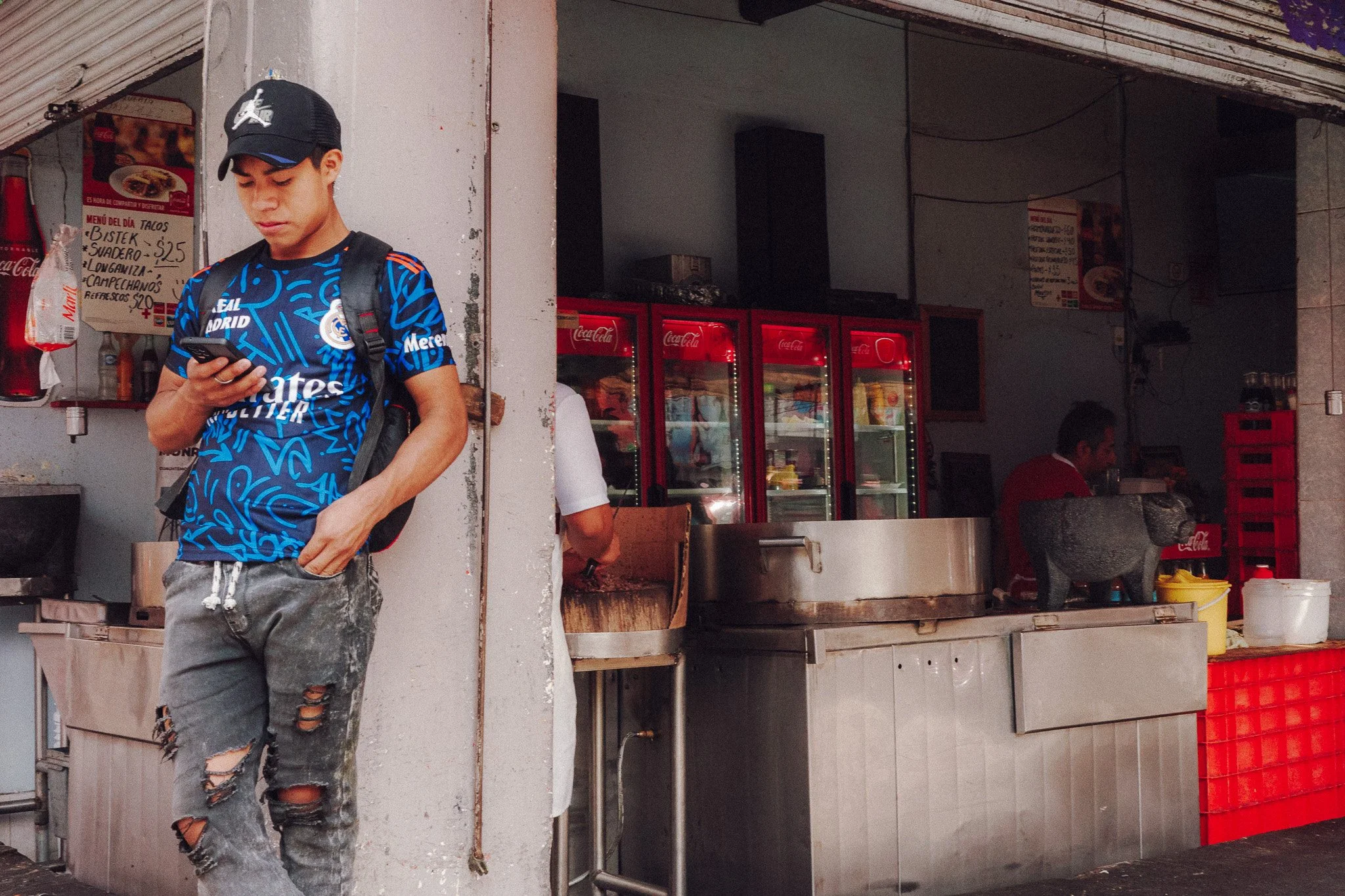
A man waits on a street corner in Mexico City
Mexico City is overwhelming in the best possible way. Every block offers signage, gestures, textures, contradictions. Carrying minimal gear reduces cognitive load. You’re not managing equipment; you’re reading the street. That awareness is visible in the next image, where a man rests at the edge of the sidewalk, partially enclosed by urban geometry while the city flows past behind him. This kind of quiet moment is easy to miss if you’re distracted by settings or gear anxiety. A simple camera fades into muscle memory, freeing your attention for timing and emotion.
There’s also a practical side. Traveling light means you walk more. You linger longer. You blend in. In street photography, stamina is underrated. The best images often happen after hours of nothing much happening. A small camera encourages patience because it never feels like a burden. You don’t talk yourself out of one more block, one more corner, one more pause in the shade.
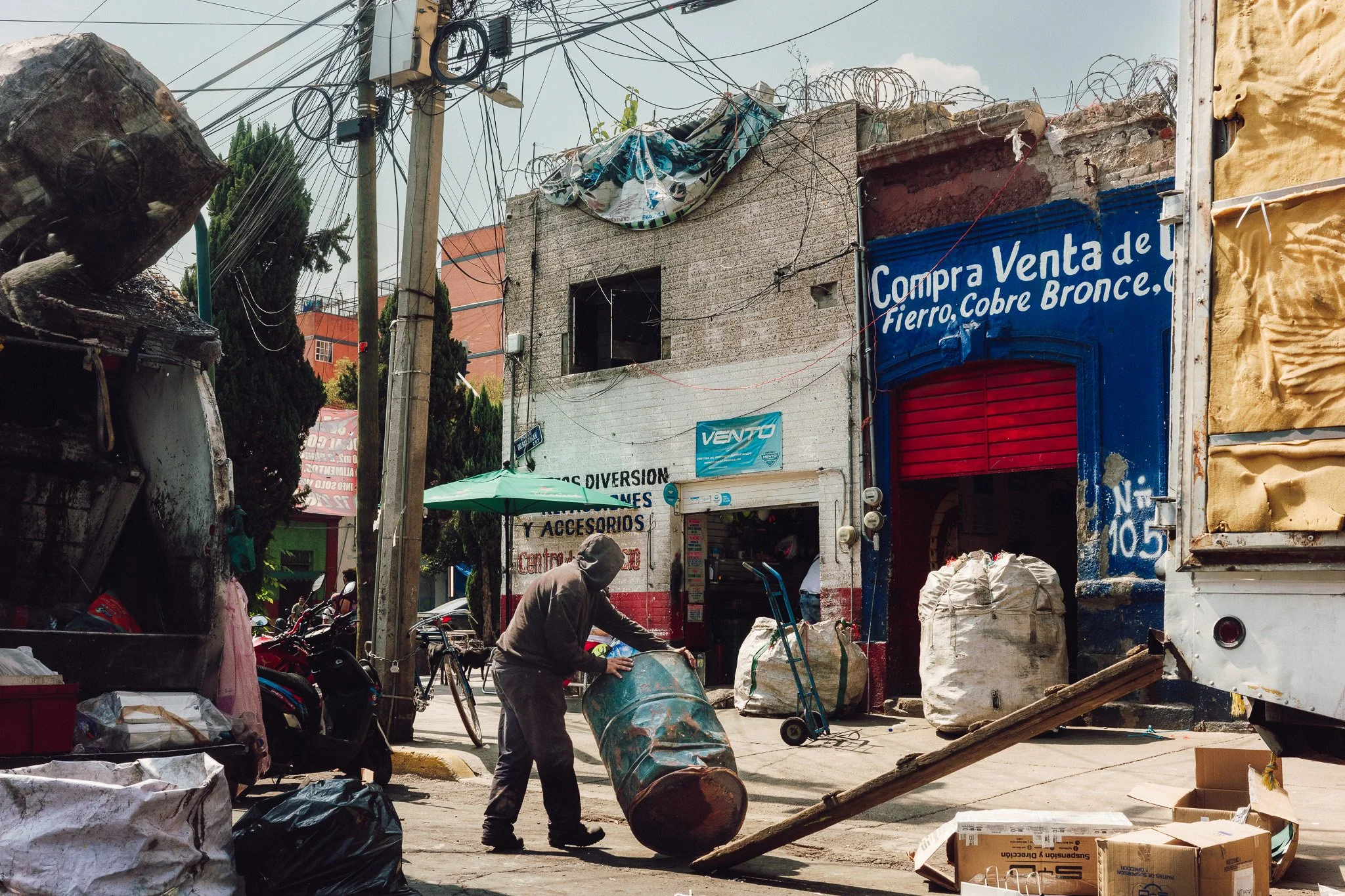
A man loading a truck in Mexico City
The Ricoh GR IIIx, in particular, excels here. Fast startup, excellent image quality, and intuitive controls make it ideal for travel street photography. But the larger point isn’t the model—it’s the mindset. One camera is a constraint, and constraints sharpen intent. They push you toward clarity. Instead of chasing technical perfection, you chase moments that feel true.
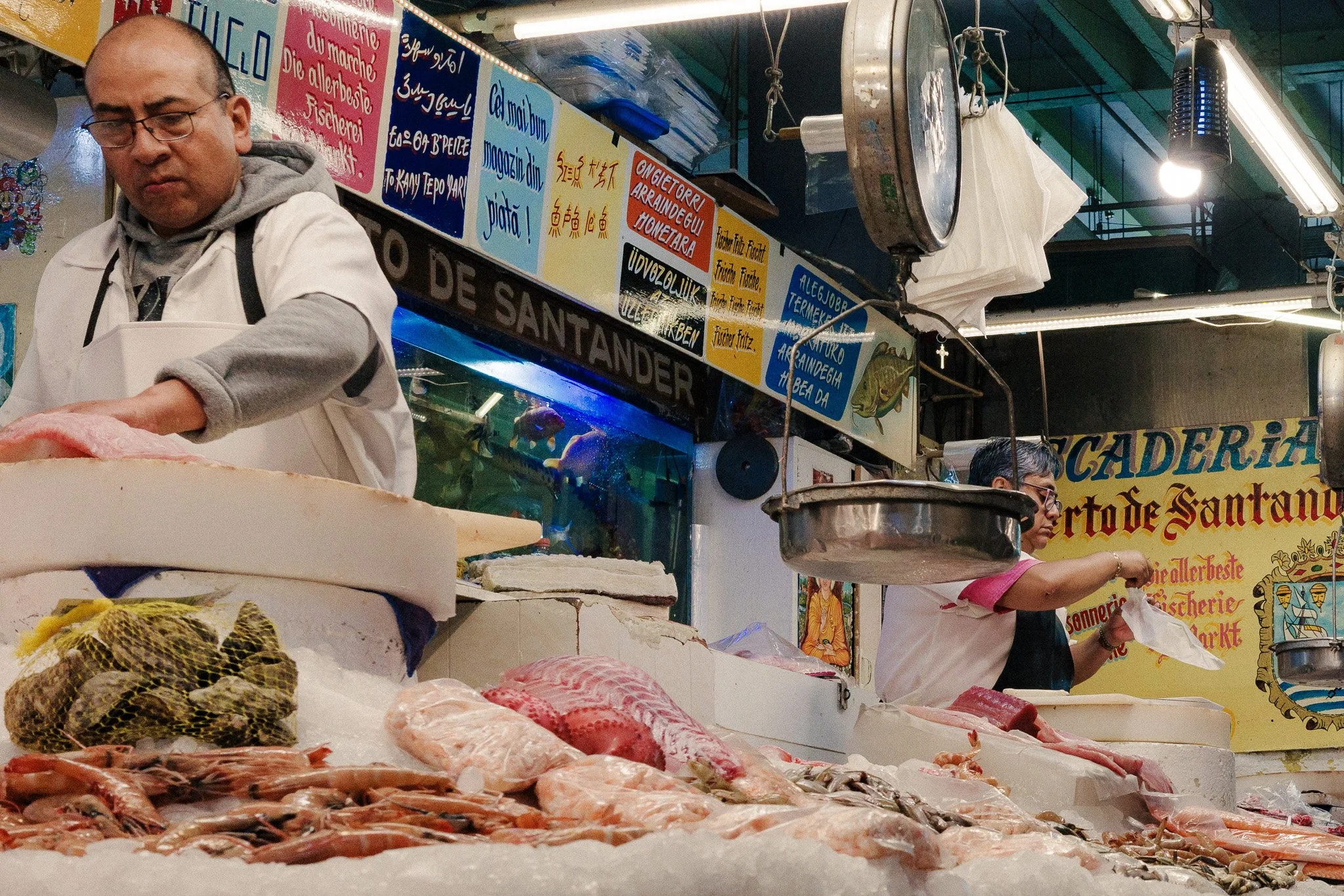
Fish mongers at a Mexico City market
Street photography has always been about responsiveness. Cartier-Bresson didn’t have autofocus. Winogrand didn’t chimp. What they had was commitment to seeing. Traveling with one simple camera recreates some of that discipline in a modern context. You’re not outsourcing decisions to gear. You’re making them with your body, your timing, and your attention.
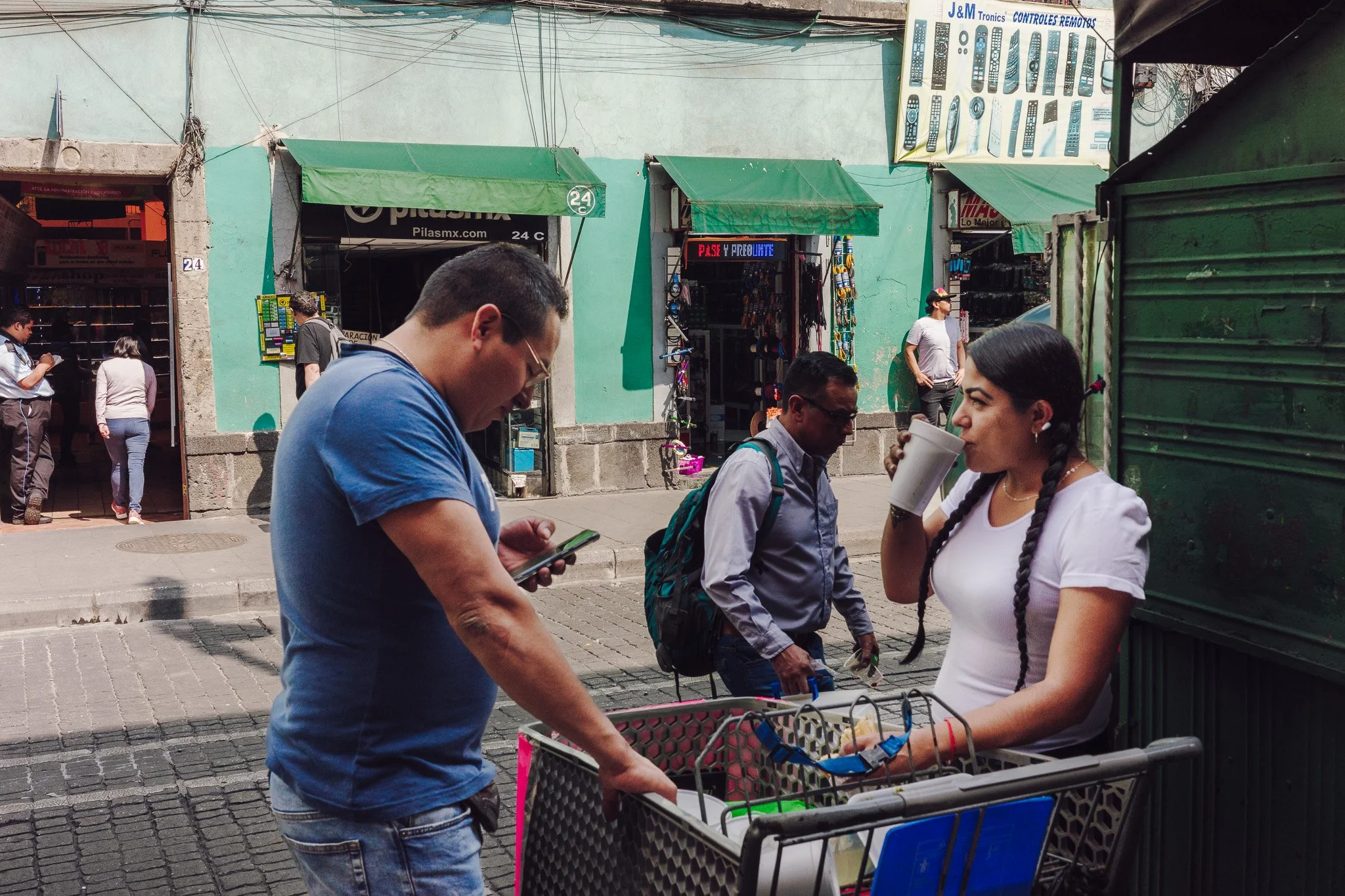
People on the streets of the Centro Storico in Mexico City
These photographs from CDMX are not about the camera used to make them. They’re about access—access to moments, to people, to fleeting alignments that only appear when you’re present and unencumbered. Traveling light didn’t limit what I could photograph. It clarified what I was looking for.
In street photography, less gear often means more photographs worth keeping.
To see tips on planning a street photography trip, check out this post.